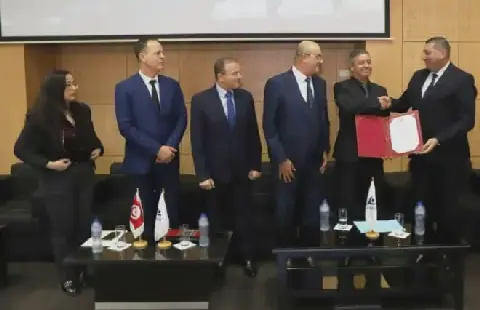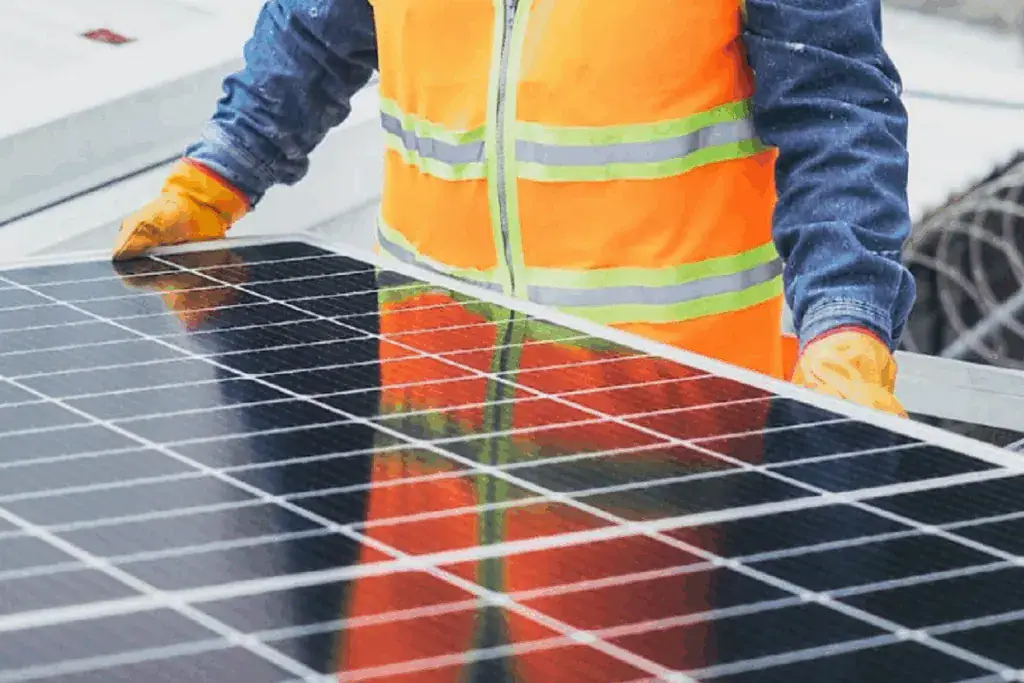
On November 9, Tunisian Prime Minister Sarra Zaâfrani Zenzri presented the country's 2027 budget and economic plans to the Assembly of People's Representatives and the National Council of Regions and Districts. The plans include measures to accelerate the country's energy transition. The finance bill for 2027 proposes reducing import duties on solar panels to 10%. This move aims to support the growth of renewable energy in Tunisia.
The 2027 budget also includes expanding the interventions of the Energy Transition Fund to finance environmental upgrading of enterprises. This initiative is part of Tunisia's efforts to promote sustainable development and reduce its carbon footprint. The country has been working to increase its use of renewable energy sources, including solar and wind power.
Tunisia's hydrocarbon production is expected to increase in 2027, driven by the start of production at the offshore oil and gas field "Cosmos" in the Gulf of Hammamet. The field is located about 45 km from the coast and is expected to contribute to the country's energy security. The government aims to increase the share of renewable energy in the country's energy mix.
Three solar projects with a total capacity of 200 MW began operating in the first half of 2026. The government has approved concessions for nearly 600 MW of solar power projects in Sidi Bouzid, Gafsa, and Gabès. An additional 455 MW of solar power projects are planned under a new call for proposals.
Tunisia is also pursuing its SoutH2 hydrogen corridor project and the ELMED electrical interconnection project with Italy. These projects aim to enhance the country's energy security and promote the use of renewable energy. The government is working to improve the efficiency of existing power plants and develop new energy sources.
To address peak electricity demand, the first unit of the Borj El Amri power plant (312 MW) was restarted in September. A third gas turbine (300 MW) will be added to the plant. The government plans to extend the Radès D power plant and convert it to a combined cycle (650-750 MW).
The national strategy includes improving the performance of existing power plants and developing new energy sources. The Smart Grid project is ongoing, with plans to generalize the use of smart meters. The 2027 budget includes funding for climate change adaptation and mitigation projects, including waste management and coastal protection.
Key points
- Tunisia plans to reduce import duties on solar panels to 10% in 2027.
- The country aims to increase its use of renewable energy sources.
- Tunisia is pursuing several energy projects, including the SoutH2 hydrogen corridor and ELMED electrical interconnection with Italy.
Reporting sources
- Panneaux solaires : les droits de douane ramenés à 10 % en 2027 · L'Économiste maghrébin