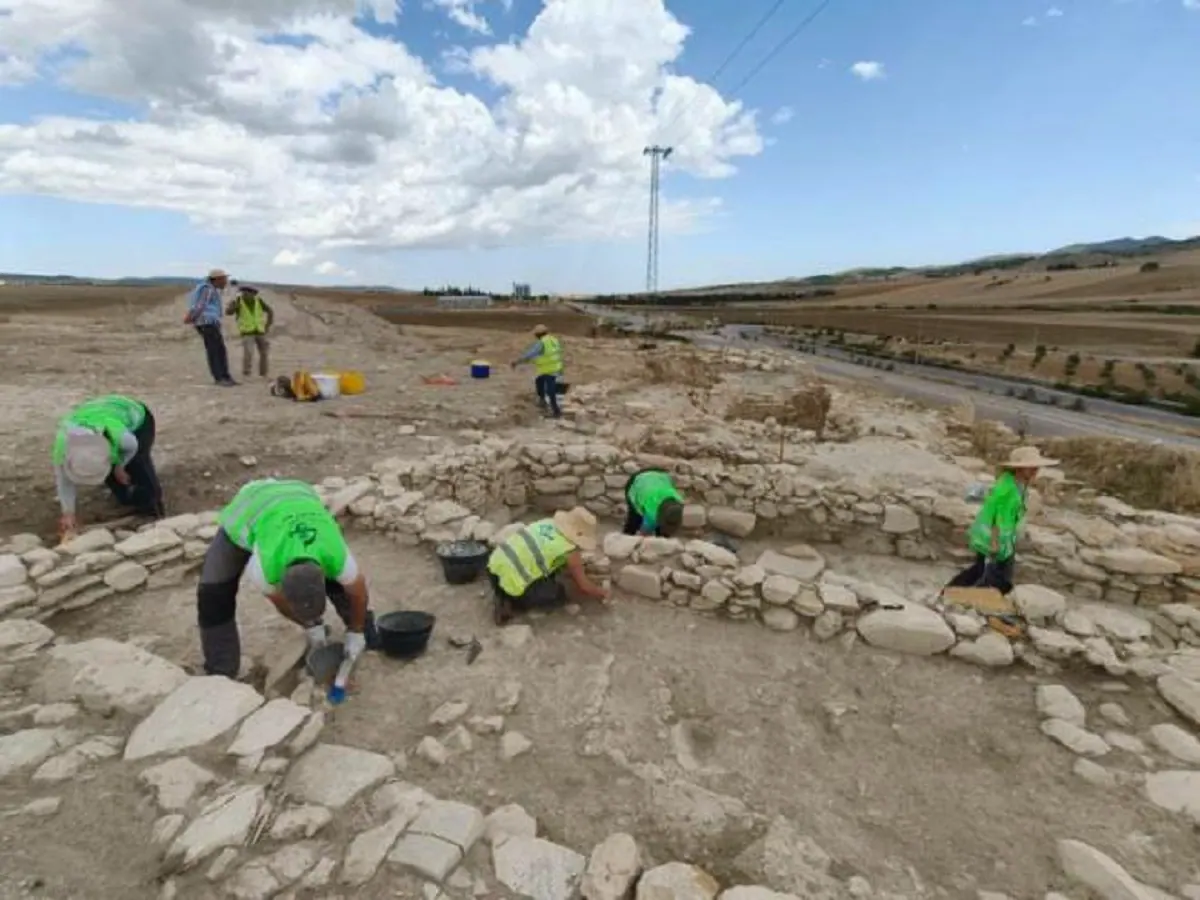
A recent archaeological mission, conducted from September 16 to October 6, 2026, has shed new light on the Numide site of Sidi Saïd in Bargou, Tunisia. The mission was a collaborative effort between the Tunisian National Heritage Institute (INP) and the Catalan Institute of Classical Archaeology (ICAC). This project is part of an ongoing international cooperation agreement between the two institutions.
The site of Sidi Saïd, located in the delegation of Bargou, Siliana governorate, has been the focus of previous excavations. Initial preventive excavations were conducted between 2017 and 2018, revealing the existence of a Numide urban complex. A large-scale campaign was also carried out in the summer of 2025. These efforts have provided valuable information about the site's significance and historical context.
The latest mission was co-directed by Tunisian researchers Yamen Sghaïer and Chokri Touihri from the INP, and Spanish researchers Maria Carme Belarte and David Montanero from the ICAC. The team comprised several researchers, conservators, and students from both countries. Their work focused on excavating and prospecting the site to further document its habitat structures and fortifications.
The investigations have uncovered dense vestiges dating back to the Numide period, specifically between the 5th and 3rd centuries BC. These findings offer insights into the organization of the indigenous populations in the region during that time. The site's structures and fortifications are considered particularly significant by the mission's archaeologists.
The mission's work has contributed significantly to the understanding of the site's historical context. The collaboration between the INP and ICAC has facilitated the sharing of expertise and knowledge, enabling a more comprehensive understanding of the site's importance. The findings will likely have a lasting impact on the field of archaeology and the study of Numide history.
The Tunisian and Spanish teams have worked together to advance the documentation of the site. Their efforts have built upon previous discoveries, providing a more detailed understanding of the site's layout and significance. The mission's results will be crucial in informing future research and conservation efforts.
The discovery of the Numide site's structures and fortifications has provided a unique window into the lives of the region's ancient inhabitants. As research continues, it is likely that further insights will be gained into the culture, traditions, and ways of life of the people who lived in this area over two millennia ago.
Key points
- The mission was a collaborative effort between the Tunisian National Heritage Institute (INP) and the Catalan Institute of Classical Archaeology (ICAC).
- The site's vestiges date back to the Numide period, specifically between the 5th and 3rd centuries BC.
- The mission's work has contributed significantly to the understanding of the site's historical context.