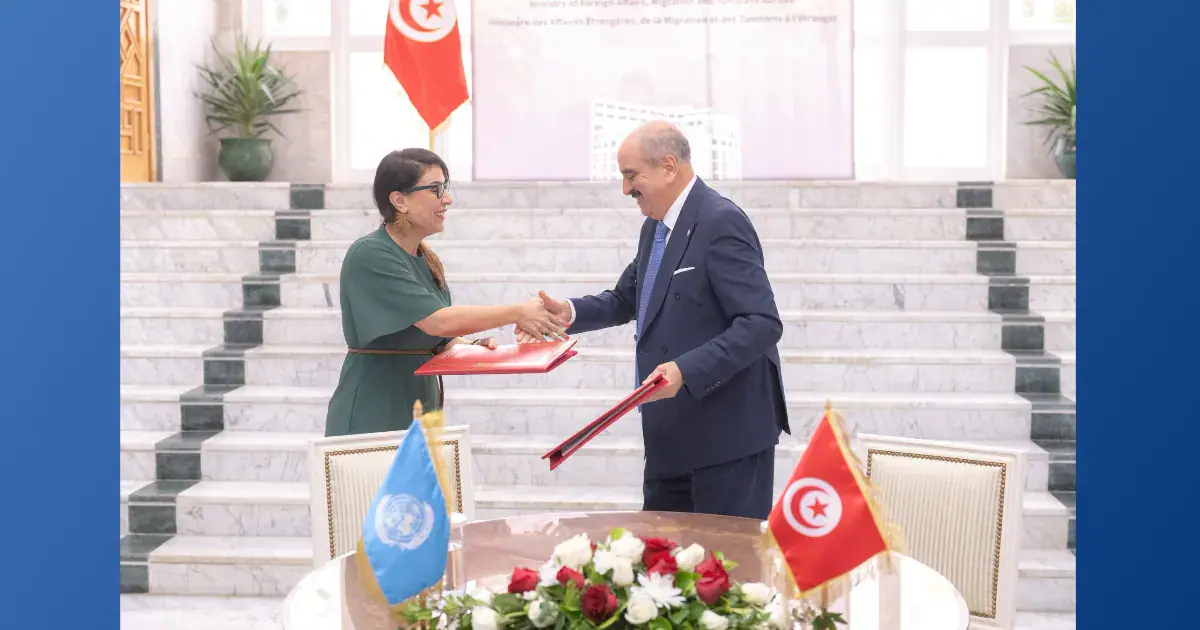
On November 27, 2026, Tunisian Foreign Minister Mohamed Ali Nafti and UN Resident Coordinator in Tunisia Rana Taha presided over the signing ceremony of the 2027-2031 strategic cooperation framework between Tunisia and the UN system. The ceremony was attended by representatives of UN agencies, funds, and programs, as well as national ministries and structures that contributed to the framework's development.
The cooperation framework serves as a strategic reference for the UN system's interventions in Tunisia, aligning with the country's national development priorities outlined in the 2026-2030 Development Plan. The framework aims to strengthen complementarity between UN programs and national efforts, promoting a partnership based on national ownership, role complementarity, and resource orientation towards concrete and sustainable results.
The framework focuses on three strategic axes: developing human capital and enhancing social inclusion, promoting inclusive economic transformation and decent job creation, and supporting ecological and energy transition, as well as improving water and food security. Minister Nafti emphasized that the framework is a strategic instrument to support Tunisia's national development choices and address economic, social, and environmental challenges.
Minister Nafti also highlighted the importance of the "UN 80" initiative's support for the reform of the UN development system, particularly in providing technical expertise, strengthening national capacities, facilitating partnerships, and mobilizing necessary resources. He stressed the need for strengthened coordination and complementarity among stakeholders during the framework's implementation phase.
Rana Taha, UN Resident Coordinator in Tunisia, underscored the significance of the new cooperation framework as a unifying reference for the UN system's action in Tunisia over the next five years. She noted that it presents an opportunity to consolidate partnership with national institutions and support efforts to achieve sustainable development goals in all their dimensions.
The cooperation framework is expected to guide UN interventions in Tunisia, ensuring alignment with national priorities and promoting a partnership focused on national ownership and sustainable results. The framework's implementation will require strengthened coordination and complementarity among stakeholders, as well as intensified efforts to mobilize financing.
The signing of the cooperation framework demonstrates the commitment of Tunisia and the UN to enhancing their partnership and supporting the country's development priorities. The framework's success will depend on the continued support of partner countries and donors, as well as effective coordination and complementarity among stakeholders.
Key points
- The 2027-2031 cooperation framework aligns with Tunisia's national development priorities and focuses on three strategic axes: human capital development, economic transformation, and ecological transition.