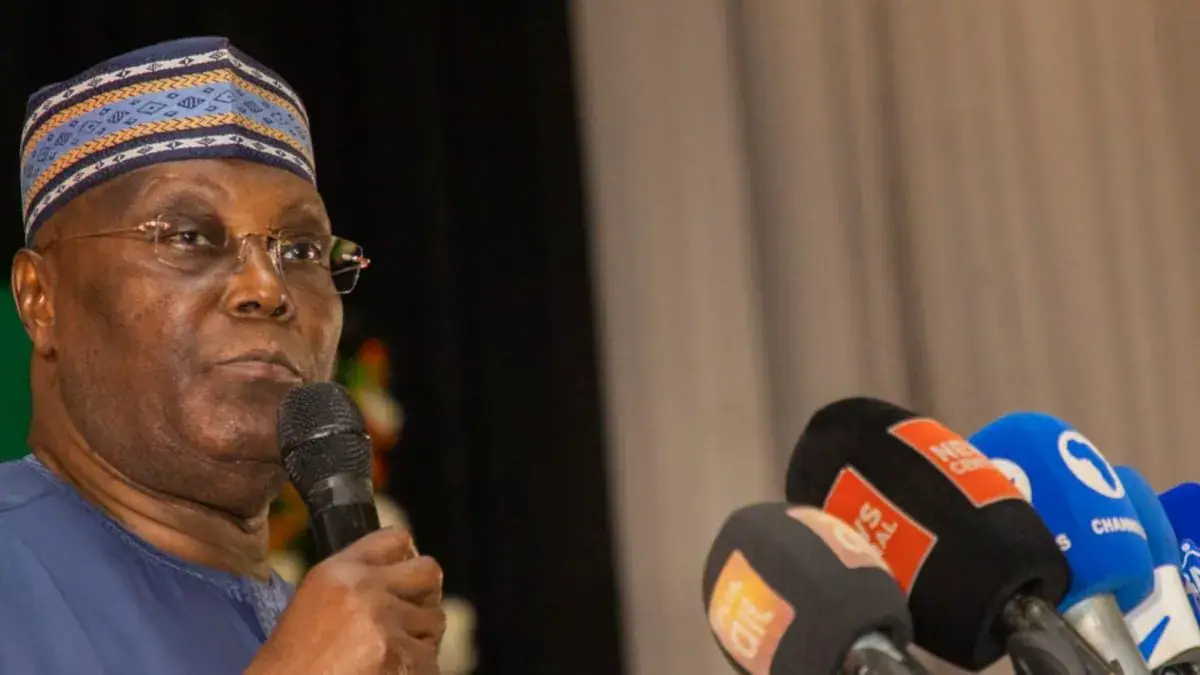
The African Democratic Congress presidential candidate, Atiku Abubakar, has accused President Bola Tinubu's administration of deceiving Nigerian farmers regarding claims of N450 billion in agricultural support. Atiku questioned the disbursement of these funds amid reports of rice mill closures and a concession granted to an importer. He demanded evidence of the government's claim that N250 billion had been committed to smallholder farmers and another N200 billion to a guaranteed minimum price program.
Atiku, in a statement issued by his Director of Strategic Communication, Phrank Shaibu, argued that the government's use of the word "committed" did not establish whether the funds had been disbursed or whether farmers had benefited from the programs. He criticized the government's announcement of a fortune without providing receipts, calling it a familiar trick. Atiku urged the government to show the farmers who received the money, the mills that reopened, and explain the import concession.
The former vice president cited reports that over 90 of Nigeria's 260 integrated rice mills had shut down due to shortages of locally produced paddy, rising production costs, and competition from imported rice. These closures have affected farmers, workers, and investors, and Atiku argued that the situation cannot be dismissed by government publicity. He emphasized that the closures have led to livelihoods disappearing, with farmers without dependable buyers, workers without jobs, and investors watching expensive machinery stand idle.
Atiku further alleged that farmers in Kano, Kebbi, Katsina, and other parts of the country have been grappling with insecurity, rising fertilizer and diesel costs, and competition from cheaper imported rice. He warned that continuing such policies for another four years could further undermine local rice production and threaten the livelihoods of farmers and mill workers. Atiku maintained that his Affordable Life campaign is committed to making food affordable while ensuring that local farmers can earn a living from agriculture.
Atiku questioned documents dated August 27 and September 9, 2026, which he claimed were presented as correspondence from the Federal Ministry of Finance and the Nigeria Customs Service approving Ocean Glory Commodities Limited to import 150,000 metric tonnes of husked brown rice. The alleged approval provided for a 10 percent duty, zero levy, and exemption from Value Added Tax (VAT) for one year. Atiku urged the government to authenticate the documents, publish the conditions attached to the approval, and disclose the quantity of rice imported under the concession, if any.
The former vice president accused the Tinubu administration of contradicting its stated commitment to local agricultural production by allegedly granting favorable terms to rice importers while local farmers struggle with rising costs. Atiku urged the government to publish the receipts for the N450 billion, explain the rice concession, and answer the farmers and mill workers. He emphasized that the harvest of this government's policy is visible, and it is not the one the APC is advertising.
Atiku's criticism comes as the government faces scrutiny over its agricultural policies and the impact on local farmers and mill workers. The situation highlights the challenges faced by Nigeria's agricultural sector and the need for transparency and accountability in government policies and programs. The government's response to Atiku's allegations and the effectiveness of its agricultural support programs remain to be seen.
Key points
- Atiku Abubakar accuses Tinubu's administration of misleading farmers about N450 billion in agricultural support claims.
- Over 90 of Nigeria's 260 integrated rice mills have shut down due to shortages of locally produced paddy and competition from imported rice.
- Atiku urges the government to authenticate documents approving Ocean Glory Commodities Limited to import 150,000 metric tonnes of husked brown rice.
Reporting sources
- Atiku Accuses Tinubu Of Lying To Farmers Over N450bn Support Claim · Politics Nigeria