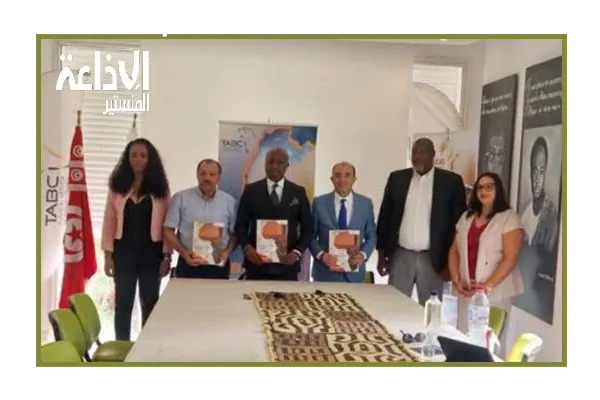
The Tunisian-African Business Council (TABC) and the Higher Institute of Information Technology, Programming and Analysis (ISIPA) have signed a partnership agreement aimed at strengthening cooperation between Tunisia and the Democratic Republic of Congo (DR Congo) in higher education and digitalization. This agreement is part of TABC's strategy to make education, training, and capacity development a key driver of economic cooperation between Tunisia and Africa. The partnership seeks to promote student exchange programs and enhance academic mobility between the two countries.
The agreement also aims to establish joint training programs and academic courses, as well as exchange experiences and expertise between institutions and professionals. Furthermore, the partnership will focus on developing cooperation in information technology, digitalization, and modern technologies. This will involve creating bridges between the academic and technological systems, as well as entrepreneurship ecosystems in both countries. By doing so, the partnership hopes to support the development of sustainable and structured projects that enhance employability and contribute to the development of Africa's human capital.
The Tunisian-African Business Council (TABC) is a non-governmental organization established to support and develop economic, trade, and investment relations between Tunisia and other African countries. TABC works to activate economic diplomacy and facilitate the integration of Tunisian institutions into promising African markets. The council plays a crucial role in promoting economic cooperation between Tunisia and Africa, and this partnership with ISIPA is a significant step in that direction.
The Higher Institute of Information Technology, Programming and Analysis (ISIPA) is a prominent private academic institution specializing in information technology and technology in the DR Congo. With over 50 years of experience in digitalization and commercial sciences, ISIPA brings significant expertise to the partnership. The institute's involvement will help enhance the quality of education and training in both countries, ultimately contributing to the development of a skilled and competitive workforce.
This partnership agreement is a significant development in the relations between Tunisia and the DR Congo. By strengthening cooperation in higher education and digitalization, both countries can benefit from each other's expertise and experiences. The partnership has the potential to create new opportunities for students, professionals, and institutions in both countries, ultimately contributing to the growth and development of the African continent.
The partnership between TABC and ISIPA is also expected to have a positive impact on the economic development of both countries. By promoting education, training, and capacity development, the partnership can help address the skills gap and enhance the employability of graduates. This, in turn, can contribute to the growth of the economy and the development of a competitive workforce in both Tunisia and the DR Congo.
In conclusion, the partnership agreement between TABC and ISIPA marks a significant milestone in the cooperation between Tunisia and the DR Congo. The agreement has the potential to enhance cooperation in higher education and digitalization, promote student exchange programs, and support the development of sustainable projects. As both countries move forward with the implementation of the partnership, it is expected that the agreement will have a positive impact on the economic development of both countries and contribute to the growth of the African continent.
Key points
- The partnership aims to promote student exchange programs and enhance academic mobility between Tunisia and the DR Congo.
- The agreement seeks to develop cooperation in information technology, digitalization, and modern technologies.
- The partnership has the potential to create new opportunities for students, professionals, and institutions in both countries.