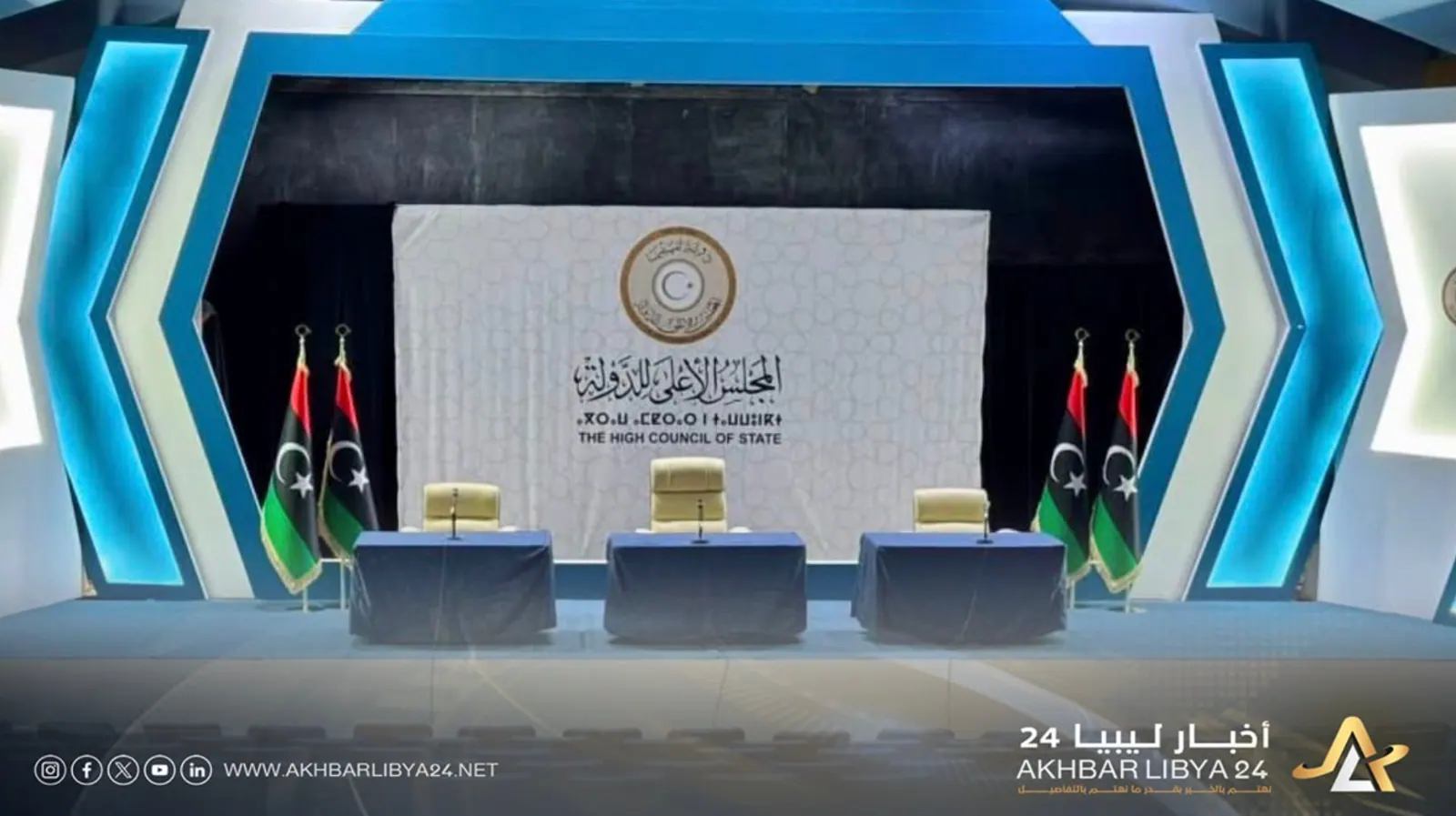
Libya's State Council has convened a session to discuss the 4+4 agreement, which was signed in August as part of the UN's efforts to push forward a political roadmap for the country. The agreement aims to pave the way for elections and the unification of state institutions. However, the session revealed divisions within the council, with some members rejecting the agreement outright and others calling for amendments.
According to Sadiq bin Sharada, a member of the State Council, the council has adopted a approach that involves responding to the 4+4 agreement with a package of reforms. Bin Sharada emphasized that the 2025 roadmap, which was adopted in August, represents a comprehensive package that should not be dealt with selectively. The council's stance comes amid a wider controversy over the nature of the 4+4 agreement and its compatibility with Libya's legal and constitutional frameworks.
The State Council has also rejected laws passed unilaterally by the House of Representatives, citing concerns that they contravene the rules governing the relationship between the two bodies. This development has reignited tensions between the council and the House of Representatives, with implications for the electoral process and the country's overall stability.
Another key issue discussed during the session was the unification of salaries for state employees, with the council agreeing on the need for a unified and fair salary scale. This move aims to address the disparities in income and promote equality among public sector workers. The issue of salaries has significant economic and social implications, with many Libyans struggling to make ends meet due to the country's ongoing instability.
Bin Sharada has called for a comprehensive agreement on the political process, warning that continued unilateral decision-making by either side will not lead to stability. He emphasized that the 4+4 agreement should not be seen as an end in itself, but rather as a starting point for correcting what needs to be corrected and achieving a mutually acceptable solution.
The divisions within the State Council reflect the broader challenges facing Libya's transition to stability and democracy. The country's political landscape remains complex, with multiple stakeholders and competing interests at play. The UN's 2025 roadmap aims to provide a framework for navigating these challenges, but its implementation will require significant compromise and cooperation from all parties involved.
Ultimately, the Libyan people are bearing the brunt of the ongoing divisions, with many struggling to access basic services and facing significant uncertainty about their future. As bin Sharada noted, it is essential for the country's leaders to move beyond their differences and work towards a comprehensive agreement that prioritizes the needs of the Libyan people.
Key points
- The Libyan State Council is divided over the 4+4 agreement, with some members rejecting it outright and others open to amendments.
- The council has also rejected laws passed unilaterally by the House of Representatives, citing concerns about their legitimacy.
- The unification of salaries for state employees is seen as a key step towards promoting equality and addressing the country's economic challenges.