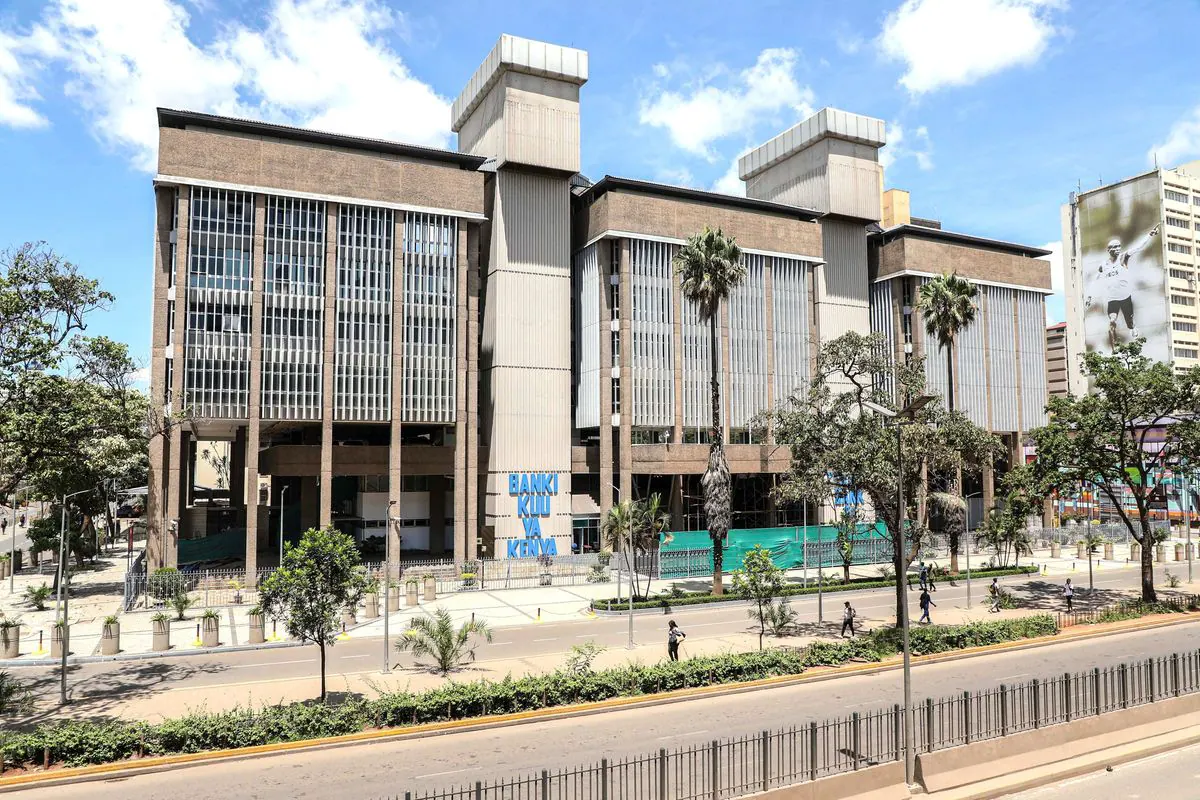
Kenyan commercial banks anticipate a decrease in borrowing costs even as the Central Bank of Kenya (CBK) is expected to maintain its benchmark rate unchanged for the fourth consecutive time. This expectation is based on the continued decline in domestic interest rates, such as Treasury bills, which indicate a less restrictive interest rate environment. The average commercial bank lending rate decreased to 14.34 percent in August from 14.78 percent in February.
The Kenya Bankers Association (KBA) noted that Treasury bill yields have declined, and the government securities yield curve suggests lower funding costs. This development is expected to reduce expectations of an increase in funding and benchmark pricing costs, allowing lending rates to continue declining. As a result, credit growth is anticipated to recover due to improved affordability. The CBK's benchmark lending rate has remained unchanged since February.
Despite the pause in the Central Bank Rate (CBR), banks have continued to pass on lower borrowing costs to businesses and households. This has contributed to the revival of lending to the private sector, which grew by 10.6 percent and 10.2 percent in June and July, respectively. The CBK cut the key rate in 10 consecutive meetings until February, resulting in lower borrowing costs.
The CBK is expected to maintain its benchmark rate at 8.75 percent, adopting a wait-and-see stance due to the ongoing Middle East crisis, which has raised inflationary concerns. Kenya's inflation rate increased to 6.8 percent in September from 6.6 percent in August but remains within the CBK's target range of 2.5 to 7.5 percent. The stability of the Kenya shilling exchange rate has also contributed to the expected hold in the policy rate.
Global central banks, such as the US Federal Reserve and the European Central Bank (ECB), have recently raised rates in response to supply-side inflationary pressures. However, the Kenya-US interest rate differential remains significant, supporting the attractiveness of shilling-denominated assets and maintaining exchange rate stability. The KBA notes that this differential is a key factor in keeping the exchange rate stable.
The CBK Governor, Kamau Thugge, previously stated that commercial bank lending rates would be lower if not for the Middle East crisis. The banking sector regulator had anticipated that banks would implement the revised risk-based loan pricing framework during a rate-easing cycle, which was disrupted by the crisis. The CBK is now in a wait-and-see situation.
Despite rising inflationary pressures, short-term interest rates have remained relatively stable, indicating optimal funding and liquidity conditions in the money markets. Treasury bill rates have only increased marginally since the start of the Middle East conflict, with the 364-day Treasury bill peaking at 9.0397 percent last week from 8.7893 percent at the end of February.
Key points
- The Central Bank of Kenya is expected to maintain its benchmark rate at 8.75 percent.
- Kenyan commercial banks expect borrowing costs to decrease due to declining domestic interest rates.
- The Kenya-US interest rate differential remains significant, supporting exchange rate stability.