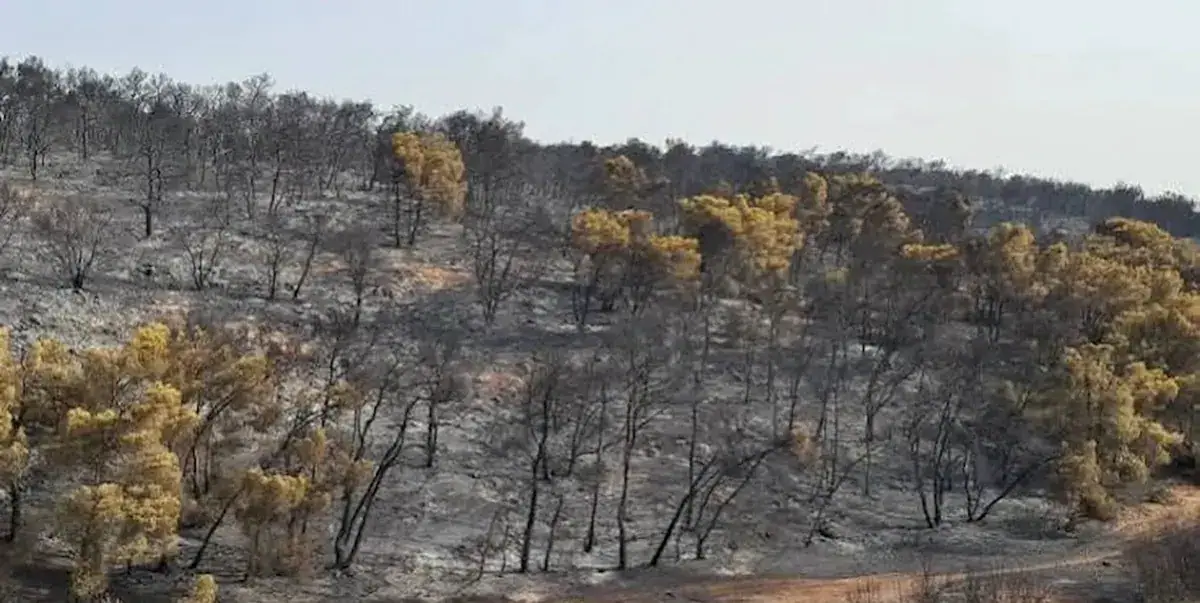
The Tunisian government has set a goal to reforest 30,000 hectares between 2026 and 2035 as part of its efforts to restore the country's forest ecosystems and adapt to climate change. This initiative comes after a particularly challenging period for Tunisia's national forest heritage, with 74,602 hectares ravaged by fires between 2011 and 2025. The financial and economic cost of these fires is estimated at 241.16 million dinars.
According to data published by the General Directorate of Forests and reported by TAP, the plan also includes modernizing fire prevention and surveillance systems, rehabilitating forest infrastructure, and mobilizing climate finance. The strategy prioritizes reforestation of cork oak and Aleppo pine forests, integrating local plant species adapted to climate conditions, and modernizing infrastructure to promote forest regeneration.
The prevention of fires is another crucial aspect of the program. Authorities plan to use digital platforms, install automated surveillance towers, and create water reserves in high-altitude areas. The goal is to enhance early fire detection and improve intervention capabilities. Participatory management is also a key aspect, with the mobilization of water resources, climate finance, and strengthened partnerships with the private sector and civil society.
A first phase of the program is planned for the 2026-2027 season, with interventions on nearly 24,000 hectares. This includes 15,260 hectares for natural regeneration and 8,716 hectares for forest and pastoral plantations. The program also involves producing and planting 10 million seedlings and rehabilitating infrastructure at ten forest nurseries.
An additional operation involves planting 1.8 million seedlings in partnership with associations, civil society organizations, and companies, as part of the United Nations Decade for Ecosystem Restoration (2021-2030). Tunisia will celebrate its National Tree Day on November 8, with this year's theme being "Today's Tree, Tomorrow's Forest".
The reforestation program is part of a broader effort to develop a "green belt" along Tunisia's highways. The initiative aims to not only restore forest ecosystems but also create jobs and stimulate local economies. With 73 million dinars allocated for reforestation efforts, the program is expected to create 4,500 jobs.
As Tunisia moves forward with its reforestation plans, the country is also highlighting the importance of community involvement and international cooperation in achieving its environmental goals. With a focus on sustainability and climate resilience, Tunisia's reforestation efforts are seen as a critical step towards protecting the country's natural resources and promoting economic development.
Key points
- Tunisia aims to reforest 30,000 hectares by 2035.
- 74,602 hectares of Tunisian forests were ravaged by fires between 2011 and 2025.
- The reforestation program includes modernizing fire prevention systems and rehabilitating forest infrastructure.