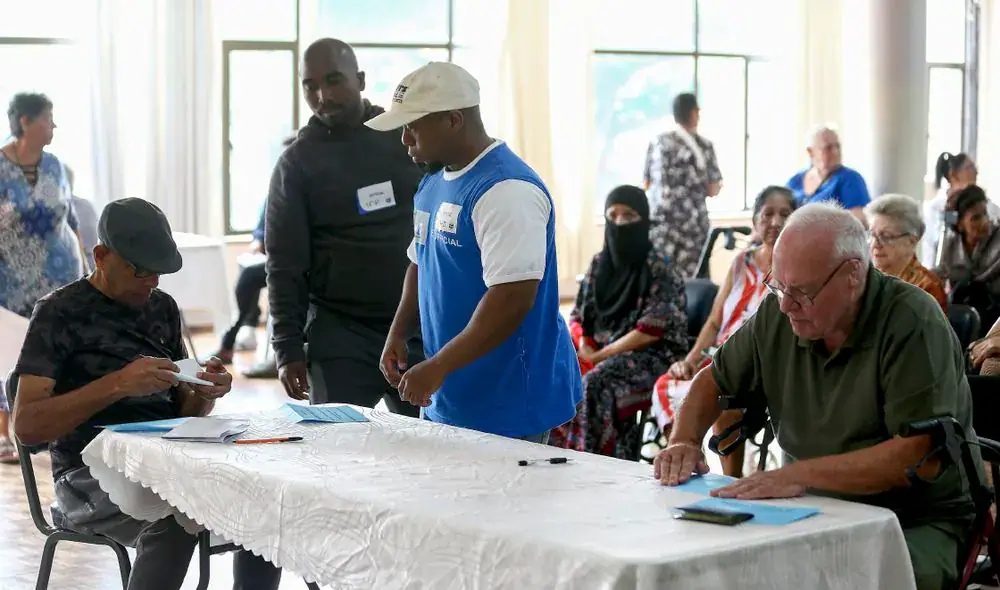
South Africa is set to go to the polls on November 4, 2026, for local government elections that will test the legacy of the country's liberation movement. The elections will formally focus on municipal leadership, service delivery, and council performance. However, their significance extends beyond municipal boundaries, with implications for the country's economic direction and the credibility of its democratic system. The elections follow the ANC's loss of its national parliamentary majority in 2024 and the formation of the Government of National Unity (GNU).
The 2024 National and Provincial Elections saw a significant scale of electoral disengagement, with only 16.29 million out of 39.75 million eligible voters casting their ballots. Nearly 23.5 million eligible voters stayed away, with registration among young people aged 20 to 29 at 48.6%, and as low as 27.1% among 18- and 19-year-olds. Not every non-voter is consciously rejecting the political system, with some facing practical barriers, others disengaged, or believing participation will make little difference. However, for many, staying away may signal that no available party offers a credible route to a better future.
The ANC and DA face different credibility tests in the elections. The ANC is judged against three decades of democratic government, its transformation promises, and its responsibility for the country's institutional and economic challenges. The DA must show that its market-oriented approach can deliver inclusive growth beyond its established support base. Both must explain why young people should trust their promises when jobs, economic security, and opportunity remain elusive. Ipsos findings suggest that 53% of eligible voters say no political party represents their views, and 68% of registered voters say politicians cannot be trusted.
At the heart of the contest is a longstanding disagreement over the role of the state and private sector. The liberation movement tradition emphasizes redistribution, public ownership, working-class representation, and redress of historical inequality. The DA's market-oriented proposition prioritizes private investment, fiscal discipline, competition, institutional efficiency, and economic liberalization. These approaches need not be mutually exclusive, but the questions are how these elements should be balanced, who benefits from growth, and how the state addresses structural inequality.
South Africa remains shaped by ownership patterns, spatial exclusion, and unequal opportunity inherited from colonialism and apartheid. Any economic program that fails to confront these realities will struggle to win majority confidence. Equally, a movement cannot rely indefinitely on its liberation credentials without showing that its policies improve people's material circumstances. The test of the liberation project is whether it can translate its history into employment, dignity, and opportunity.
The GNU marked a significant adjustment after the 2024 election, with the ANC entering an arrangement with the DA and other parties with different political and economic traditions. Supporters presented it as a means of restoring investor confidence, improving governance, and accelerating reform. However, growth and investor sentiment matter only if they produce jobs, household security, better services, and wider opportunity. Statistics South Africa reported that official unemployment rose to 33.6% in the second quarter of 2026, with youth unemployment among people aged 15 to 34 reaching 47.4%.
The youth crisis in South Africa extends beyond unemployment, with 45.6% of those aged 15 to 34 not in employment, education, or training in the first quarter of 2026. The 2025 matric cohort produced more than 345,000 Bachelor's passes, while the Department of Higher Education and Training projected about 235,000 first-year university places for 2026. Parties must restore the confidence of those who stay away, not simply compete for participating voters, and demonstrate that their economic propositions can generate broad-based opportunity and address the country's social and economic challenges.
Key points
- The 2026 local government elections will test the legacy of South Africa's liberation movement and the credibility of its democratic system.
- The elections will focus on municipal leadership, service delivery, and council performance, but their significance extends beyond municipal boundaries.
- The ANC and DA face different credibility tests, with the ANC judged against its transformation promises and the DA's market-oriented approach.