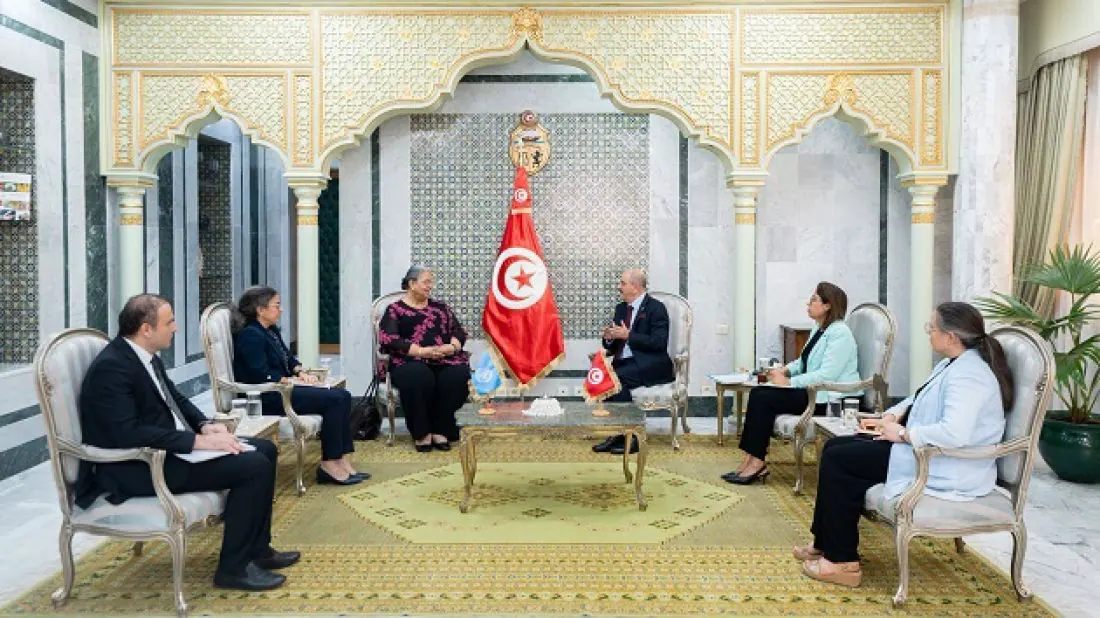
Tunisian Foreign Minister Mohamed Ali al-Nafsi has expressed his country's willingness to host talks aimed at advancing the Libyan political process. During a meeting with UN Special Envoy to Libya Hana Tietze, al-Nafsi emphasized Tunisia's commitment to neutrality and its support for a Libyan-led solution. He highlighted the importance of a comprehensive and inclusive political settlement that preserves Libya's sovereignty and territorial integrity.
Al-Nafsi reiterated Tunisia's backing for the UN's efforts to facilitate a peaceful resolution in Libya. He stressed the need for a Libyan-owned process, free from external interference, and underlined Tunisia's commitment to working closely with the international community to achieve this goal. The minister also praised the three-party consultation mechanism between Tunisia, Algeria, and Egypt as a constructive framework for promoting dialogue and coordination.
Tietze expressed her appreciation for Tunisia's principled stance in support of the UN's initiative and its efforts to promote a peaceful resolution in Libya. She briefed al-Nafsi on the latest developments in Libya and the progress made in implementing the UN's road map. The envoy emphasized the importance of continued coordination and consultation with Tunisia and other regional and international partners to advance the peace process.
The meeting between al-Nafsi and Tietze reflects the strong bilateral ties between Tunisia and the UN, as well as Tunisia's commitment to regional stability. The two officials discussed ways to strengthen cooperation and support for the Libyan peace process. Tunisia's readiness to host talks aimed at advancing the Libyan political process underscores its dedication to finding a peaceful solution to the crisis.
The Libyan conflict has had significant regional implications, with neighboring countries such as Tunisia, Algeria, and Egypt closely following developments. The three-party consultation mechanism has been instrumental in promoting a coordinated approach to addressing the crisis. Al-Nafsi's emphasis on the importance of this mechanism highlights Tunisia's commitment to regional cooperation and stability.
The UN's efforts to facilitate a peaceful resolution in Libya have been ongoing, with Tietze playing a key role in promoting dialogue and negotiation. Her meeting with al-Nafsi demonstrates the UN's commitment to working closely with regional partners to achieve a lasting solution. The two officials' discussion on the latest developments in Libya and the progress made in implementing the UN's road map reflects their shared commitment to advancing the peace process.
Tunisia's affirmation of its readiness to host talks aimed at advancing the Libyan political process underscores its dedication to regional stability and peace. The country's commitment to neutrality and its support for a Libyan-led solution have been welcomed by the international community. As the situation in Libya continues to evolve, Tunisia's role in promoting a peaceful resolution will remain crucial.
Key points
- Tunisia reaffirms its support for a Libyan-led peace process and its readiness to host talks aimed at advancing the political process.