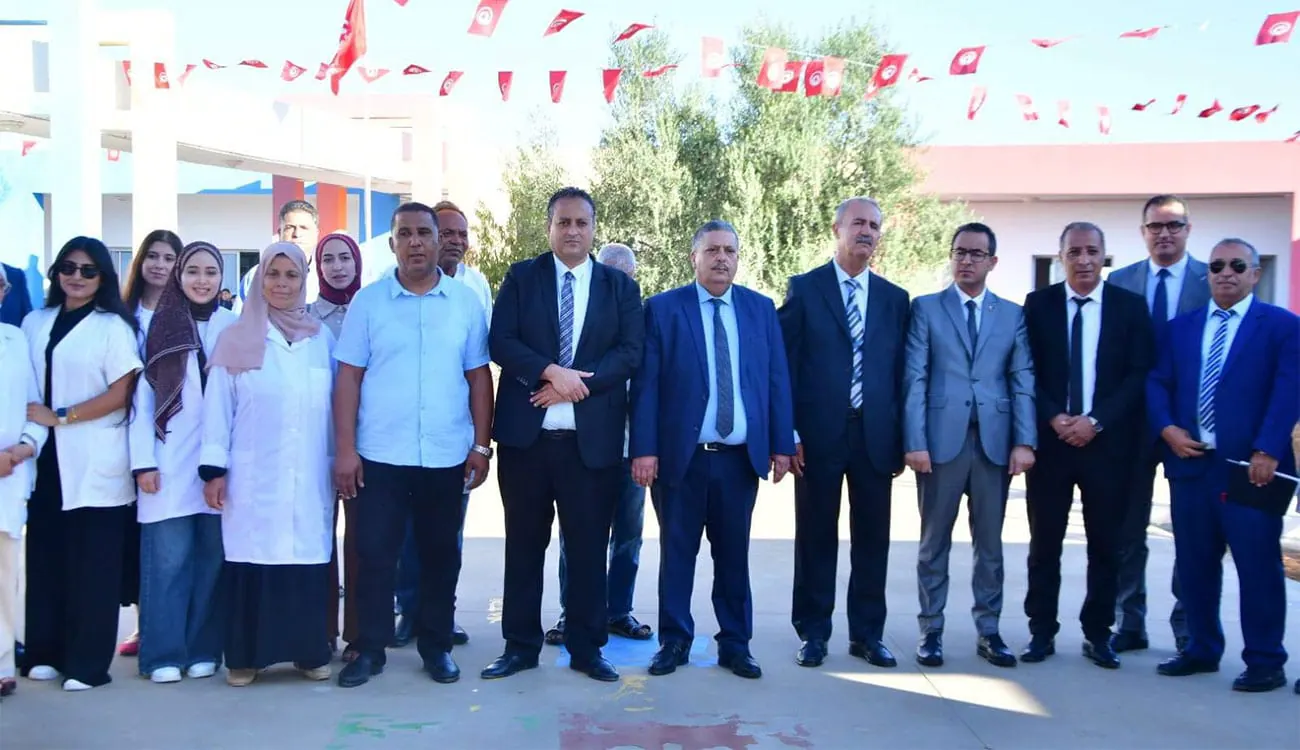
Tunisia's Minister of Education recently conducted a working visit to the Sfax governorate to oversee the acceleration of infrastructure and maintenance projects in schools. The visit aimed to ensure a smooth start to the new academic year and strengthen the foundations of public education. The minister's tour included visits to educational institutions in the regional delegations of Sfax 1 and Sfax 2, demonstrating a clear political will to shift from reactive management to proactive anticipation and modernization of infrastructure.
The interventions planned for Sfax 2 focus on addressing deep-seated structural needs. The acceleration of procedures involves several key projects, including the launch of the second phase of the rehabilitation program for El Hencha primary school, which will be equipped with enhanced educational equipment and furniture. Additionally, Al-Barmaki high school in Menzel Chaker will undergo a comprehensive overhaul, including its sports facilities and extensive spatial extensions.
The strategic vision also includes the programming of a second phase for Al-Saadi college in El Amra after the definitive reception of the current infrastructure, as well as the creation of state-of-the-art sports equipment at the Al Aouabed educational complex in Sfax Sud. These projects aim to improve the quality of education and provide students with modern and safe learning environments.
In Sfax 1, the ministry has undertaken significant measures to address material dysfunctions. The 15 November 1955 high school in Sfax Ville is the subject of a comprehensive and multidimensional intervention plan, covering the rehabilitation of reception areas, courtyards, technological modernization, air conditioning of professorial rooms, and the renewal of ergonomic furniture.
The dynamic also extends to Agareb college, whose global rehabilitation studies have been approved, and the strategic project of Bir Ali Ben Khalifa college and high school. For the latter, the minister has demanded that companies exceed their usual rhythms to complete the work before the end of the civil year, while initiating innovative opportunity studies, such as the establishment of a primary school within the high school premises.
The minister's visit also emphasized the importance of proximity governance and active listening. By participating in republican rituals and saluting local pedagogical initiatives, the minister valued the commitment of the educational community. The various stages of the visit allowed for direct and constructive dialogue with administrative teams, teachers, and parents' associations, ensuring that public investments respond precisely to ground realities.
Ultimately, these decisions are part of a comprehensive overhaul of Tunisia's public education service. By combating class overcrowding, modernizing learning platforms, and securing dignified working environments, the ministry reaffirms that the quality of learning is inextricably linked to the quality and safety of school spaces.
Key points
- The Tunisian government is investing in education infrastructure to improve the quality of learning environments.
- The minister's visit aimed to ensure a smooth start to the new academic year and strengthen the foundations of public education.
- The projects focus on addressing deep-seated structural needs and providing students with modern and safe learning environments.