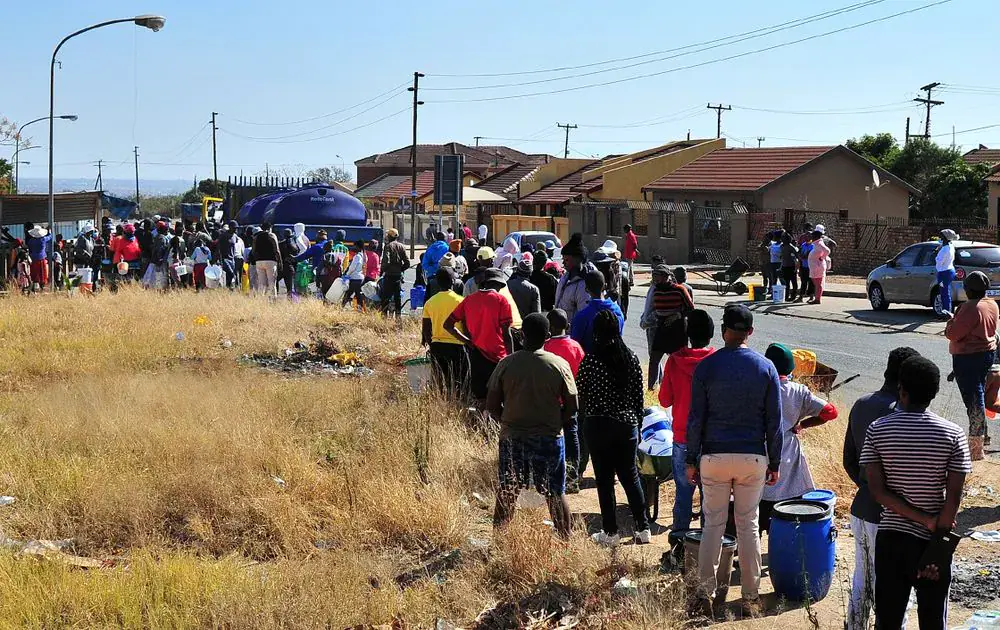
The City of Tshwane is grappling with severe water shortages and a staggering R22.8 billion in unauthorised, irregular, fruitless and wasteful expenditure. According to the South African Human Rights Commission's (SAHRC) final report, the city's water and sanitation service delivery are hampered by a lack of money, people and functioning infrastructure. The report highlights that Tshwane's response to the crisis has been insufficient to overcome the scale of its accumulated infrastructure, wastewater and institutional deficiencies.
The SAHRC report reveals that Tshwane carries an estimated R23 billion infrastructure backlog and loses 39% of its water, with water losses alone amounting to about R1.7 billion annually. The city's spending on externally procured water tankering has risen significantly, from approximately R47 million in 2021/22 to R777 million in 2024/25, before declining to about R362 million in 2025/26. The Commission notes that this expenditure requires particular attention, as it demonstrates the cost of dependence on road-based water distribution.
The city's institutional and technical-capacity constraints are severe, with an overall vacancy rate of 41%, including 28% of senior-management positions and 25% of finance positions vacant. The Water and Sanitation Business Unit is particularly concerning, with only 966 of an approved 1,826 positions filled. The Commission found that the scale of these vacancies materially limits the city's operational capacity, leading to increased dependence on overtime and decreased service delivery.
The consequences of these capacity constraints are visible in daily service delivery, with the city's overtime budget generally exhausted by April. Employees may then decline emergency or unplanned work where payment cannot be confirmed. The Green Drop assessment identified a need for 16 process controllers, while Blue Drop technical-skills scores varied from 0% to 93.1% between systems. The Commission notes that capacity constraints have demonstrable operational consequences for maintenance, emergency response, water-quality monitoring and treatment operations.
Wastewater treatment is a serious weakness in Tshwane's water-services system, with the city achieving an overall Green Drop score of 33.8%, placing its performance in the poor category. The city operates 16 wastewater treatment works, but operating-capacity information was unavailable for 14. Daspoort Wastewater Treatment Works was operating at 119% of design capacity, and several facilities have been identified as having continuing non-compliant discharges.
Tshwane's drinking-water safety performance is uneven and requires continued attention, with an overall Blue Drop score of 35.2% falling within the low-risk category. However, results vary considerably across its 12 water-supply systems, and monitoring has been affected by shortages of samplers, vehicles, process controllers and technical personnel. The District Health Barometer recorded 1,950 diarrhoea separations and 16 deaths among children under five during 2024/25.
The city's infrastructure backlog is estimated at about R23 billion, with ageing infrastructure contributing to leaks and service interruptions. The Commission cautions that Tshwane's comparatively developed operational monitoring should not be read as evidence of more failures, but rather as evidence of its efforts to address the crisis. The Commission's overall finding is that Tshwane demonstrates substantial operational, infrastructure and governance pressures, requiring sustained attention and corrective action to restore adequate wastewater performance and drinking-water safety.
Key points
- The City of Tshwane has accumulated about R22.8 billion in unauthorised, irregular, fruitless and wasteful expenditure.
- Tshwane loses 39% of its water, with water losses alone amounting to about R1.7 billion annually.
- The city's infrastructure backlog is estimated at about R23 billion, with ageing infrastructure contributing to leaks and service interruptions.
Reporting sources
- Tshwane drowns in R22.8bn waste · Pretoria News