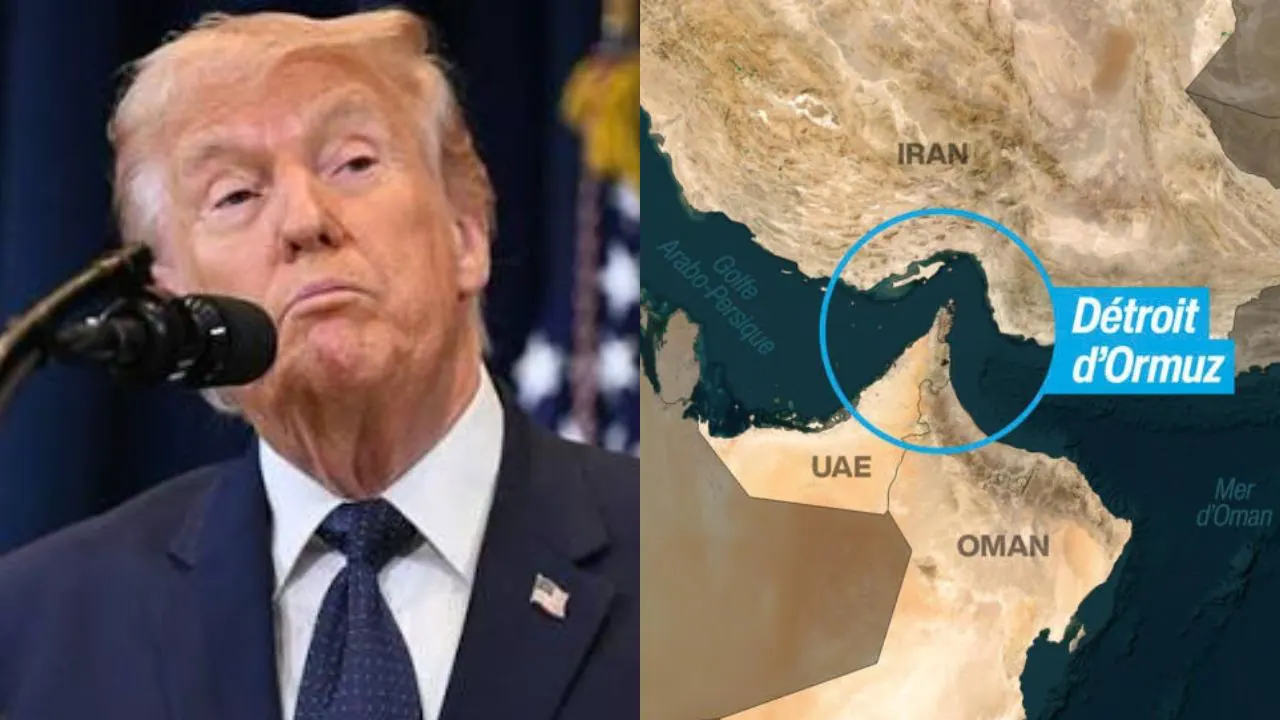
US President Donald Trump has rejected an Iranian plan to reopen the Strait of Hormuz, a vital waterway in the Persian Gulf, within seven days. The plan was submitted to Washington by Tehran as a way to ease tensions between the two countries. Trump made the announcement on Saturday, stating that he rejected the proposal because Iran wanted the deal as they were "getting badly hurt".
The Iranian proposal was announced on Friday by the country's foreign minister, Abbas Araghchi, who stated that the plan had been submitted to the US and that the decision was now up to Washington. Araghchi did not provide details on the proposal, but Iranian President Massoud Pezeshkian said it had been developed in coordination with the country's supreme leader, Mojtaba Khamenei.
The Strait of Hormuz is a critical waterway for global oil exports, with around a fifth of the world's oil passing through it. The waterway has been at the center of tensions between Iran and the US since February, when the US and Israel launched airstrikes on Iranian targets. Iran has since claimed control of the strait, and the US has imposed a blockade on Iranian ports.
Trump's rejection of the Iranian plan comes amid ongoing tensions between the two countries. The US president has faced criticism at home for his handling of the conflict, with rising fuel prices and an increasingly unpopular war in the Middle East. The US has not launched airstrikes on Iranian soil since September 1, but has targeted Iranian ships in the Strait of Hormuz.
The Iranian proposal was part of a broader plan to revive a protocol agreement signed in June between Iran and the US. The agreement aimed to bring an end to the conflict, reopen the Strait of Hormuz, and launch talks on Iran's nuclear program. However, the agreement fell apart over issues related to the passage of ships through the strait.
The conflict between Iran and the US has also had implications for other countries in the region. The conflict in Yemen, which pits Iranian-backed Houthi rebels against the Saudi-backed government, has intensified in recent months. The Houthis have launched a series of attacks on Saudi targets, and the conflict has raised concerns about the stability of the region.
The rejection of the Iranian plan has raised concerns about the potential for further escalation in the region. The US and Iran have been engaged in a war of words and actions for several months, with no clear end in sight. The international community has called for restraint and diplomacy to resolve the crisis, but so far, tensions remain high.
Key points
- The US and Iran have been engaged in a tense standoff over the Strait of Hormuz, a critical waterway for global oil exports.
- The Iranian plan was part of a broader effort to revive a protocol agreement signed in June between Iran and the US.
- The conflict between Iran and the US has had implications for other countries in the region, including Yemen.