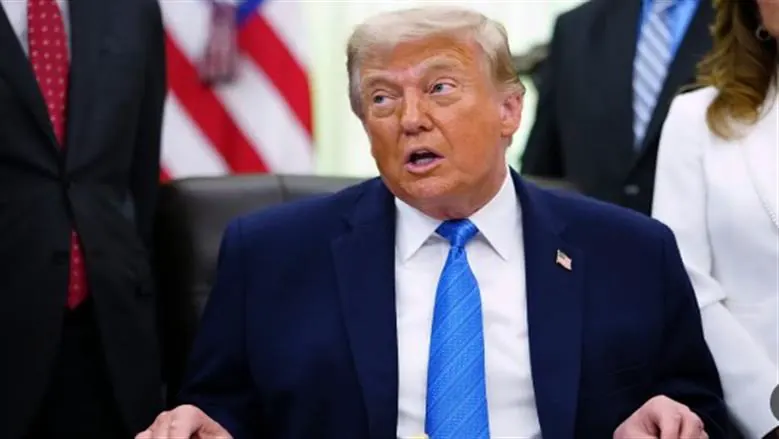
On September 26, 2026, US President Donald Trump announced that he had rejected an Iranian proposal aimed at achieving a 7-day ceasefire and reopening the Strait of Hormuz to navigation. According to reports from the Cairo News Channel, Trump stated that the United States is achieving a significant victory and has full control over the strategic waterway. He emphasized that he would not accept an agreement that would allow Iran to immediately resume trade, which has been severely impacted by the closure of the strait.
Trump claimed that the United States has imposed a significant blockade on Iran, resulting in substantial losses for the country. He attributed these losses to the closure of the Strait of Hormuz, which is a crucial source of revenue for Iran. The President boasted that the US has effectively created a "steel wall" around the strait, crippling Iran's ability to generate income. He argued that Iran has maneuvered itself into a difficult situation by closing the strait.
Iranian Foreign Minister Abbas Araghchi had previously stated that his country's proposal to the US involves reopening the Strait of Hormuz and initiating negotiations on Iran's nuclear program once the conflict subsides. According to Araghchi, the plan includes a 7-day period to end the war, which is part of a broader diplomatic effort by Tehran to address outstanding issues with Washington.
The ongoing conflict between the US and Iran has had significant implications for global trade and security. The Strait of Hormuz is a critical waterway through which a substantial portion of the world's oil supply passes. The closure of the strait has resulted in increased tensions between the two nations, with the US imposing severe economic sanctions on Iran.
Trump's rejection of the Iranian proposal suggests that the US is unwilling to engage in diplomatic efforts to resolve the conflict at present. The President emphasized that while he is open to negotiating agreements, the current proposal is unacceptable. This stance has raised concerns about the potential for further escalation in the conflict.
The situation remains fluid, with both sides appearing to be entrenched in their positions. The international community has expressed concerns about the potential consequences of a prolonged conflict between the US and Iran. Efforts to de-escalate tensions and promote diplomatic engagement are ongoing, but a resolution to the crisis remains elusive.
The conflict has also had significant regional implications, with various countries seeking to navigate the complex geopolitics of the situation. The European Union, in particular, has been actively engaged in efforts to promote a peaceful resolution to the crisis, but progress has been slow.
Key points
- The US has rejected an Iranian proposal for a 7-day ceasefire and reopening of the Strait of Hormuz.
- The rejection has raised concerns about the potential for further escalation in the conflict.
- The situation remains fluid, with both sides appearing to be entrenched in their positions.