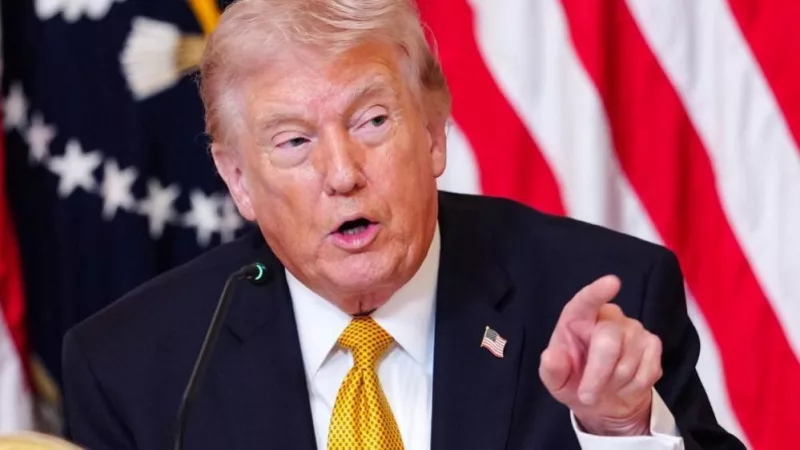
US President Donald Trump has rejected an Iranian proposal to reopen the Strait of Hormuz to commercial shipping within a week. The Strait of Hormuz is a vital waterway through which around a fifth of the world's gas and oil supply usually flows. It has been effectively closed since the outbreak of war in February. Trump told reporters at the White House that Tehran wants to make a deal where they open the Strait immediately because they're losing so badly.
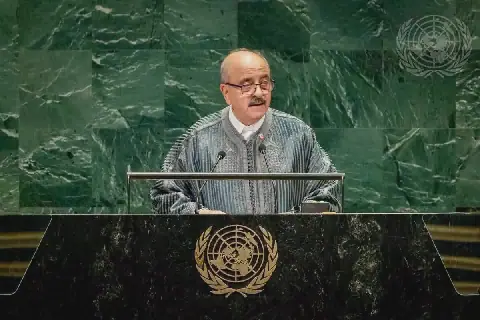
Iran's Foreign Minister Abbas Araghchi told reporters at the UN in New York that an agreement could be reached if the necessary conditions are met. These conditions are contained in a memorandum of understanding (MOU) signed by the two countries in June. The MOU was designed to bring about a ceasefire and at least partly reopen the Strait of Hormuz. The 14-point agreement said Iran would never have a nuclear weapon and noted that the US, Iran, and their allies would end military operations on all fronts.
Trump added that the US already has total control of the strait, with massive amounts of oil passing through it. He said, "They want to make a deal, and I think that's fine. I like making a deal, too. But that deal would not be acceptable." The US and Iranian economies have been severely impacted by the closure of the strait, causing wild fluctuations in energy prices. The economic effects have also increased pressure on Trump to find a way of ending the conflict, particularly as the US heads towards Congressional elections in November.
Araghchi said on Friday that if the necessary conditions are met, the strait can be reopened, and a normal maritime passage restored within seven days. He added that the actions that the United States should take are not new and are already in the MOU. Iranian President Masoud Pezeshkian told CBS News that if the United States agrees to proceed in that way, everything will return to the way it was before.
However, Kirsten Fontenrose, who served on the National Security Council during the first Trump administration, told the BBC that there is no appetite for restarting the conversation around the MOU. She said it is seen as a bad deal in the US and Iran is pushing against a very closed door. The MOU fell apart after both sides resumed strikes. Iran has attacked vessels it says have attempted to cross the strait without authorization.
The situation has been exacerbated by Houthi attacks on Saudi oil installations. Yemen's Houthis, allied to Iran, have recently intensified attacks aimed at disrupting Saudi oil exports via the Red Sea. The group seized strategic stretches of Yemen's Red Sea coast this month, including the port of Mokha, which overlooks the Bab al-Mandab Strait, another chokepoint for global shipping.
On Saturday, the Saudi-led coalition in Yemen said it had intercepted two ballistic missiles and drones launched by the Houthis towards Saudi Arabia. US media report that Saudi leadership has requested military support from Trump. The US president told the UN General Assembly this week that he believed a deal with Iran would come after November's elections, while pondering whether he should annihilate the Islamic Republic to rebuild it quickly. Araghchi said on Friday that peace cannot be built through threats of annihilation.
Key points
- The Strait of Hormuz is a vital waterway that accounts for around a fifth of the world's gas and oil supply.
- The US and Iran have been engaged in a conflict since February, with the closure of the Strait of Hormuz causing significant economic disruption.
- Trump has rejected Iran's proposal to reopen the Strait of Hormuz within seven days, citing that the deal would not be acceptable.