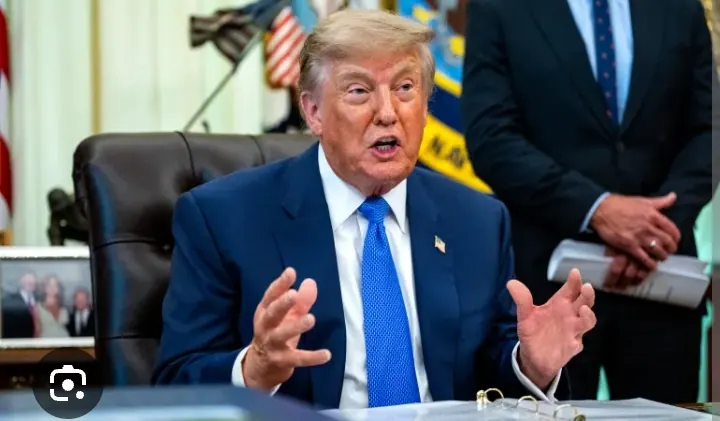
US President Donald Trump on Saturday rejected a truce deal proposed by Iran that Tehran said could have reopened the Strait of Hormuz to shipping within a week. The waterway is key to the world’s energy supply and is now central to the conflict between the US and Iran, which is at a stalemate after nearly seven months. Trump made the announcement while speaking to reporters outside the White House.
According to Trump, Iran wants to make a deal where they open the Strait immediately because they’re losing so badly. He expressed his willingness to make a deal, stating that he likes making deals too. Iran’s President Masoud Pezeshkian had proposed the deal, which was developed in coordination with supreme leader Mojtaba Khamenei. Pezeshkian was on his way back to Tehran after attending the UN General Assembly in New York.
Iran’s plan calls for a cessation of all hostilities in the Middle East, including in Lebanon, according to Foreign Minister Abbas Araghchi. Araghchi met earlier in the week with Trump’s envoy Steve Witkoff and stated that the conditions were the same as those laid out in a memorandum of understanding signed with the US earlier this year. The memorandum called for the release of frozen Iranian assets, the lifting of sanctions on Iranian oil, and an end to the US naval blockade.
On the seventh day of the truce, Iran would reopen Hormuz, according to Pezeshkian. He told CBS that the “process will begin from the very day they accept it”. In New York, Pezeshkian met with UN Secretary-General Antonio Guterres, according to his office. The meeting was part of Pezeshkian's efforts to garner international support for Iran's proposal.
The Strait of Hormuz is a critical waterway for the world’s energy supply, with a significant portion of global oil exports passing through it. The conflict between the US and Iran has disrupted shipping in the region, leading to concerns about the stability of the global energy market. The US has imposed sanctions on Iranian oil, which has significantly impacted Iran's economy.
The rejection of Iran's proposal by Trump has significant implications for the conflict between the two nations. The US and Iran have been at odds for nearly seven months, with tensions escalating in recent weeks. The conflict has raised concerns about the potential for a wider war in the Middle East, which could have far-reaching consequences for global security and stability.
The international community is closely watching the developments in the conflict between the US and Iran. The UN Secretary-General has expressed concerns about the conflict, calling for restraint and diplomacy to resolve the crisis. The fate of the Strait of Hormuz and the global energy market remains uncertain, as the conflict between the US and Iran continues.
Key points
- US President Donald Trump has rejected a truce deal proposed by Iran that aimed to reopen the Strait of Hormuz to shipping within a week.
- The conflict between the US and Iran has disrupted shipping in the region, leading to concerns about the stability of the global energy market.
- The rejection of Iran's proposal by Trump has significant implications for the conflict between the two nations.