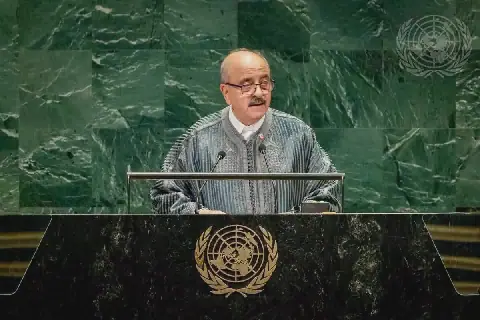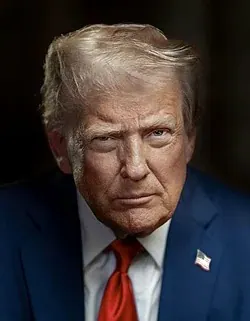
United States President Donald Trump has rejected a seven-day proposal by Iran to reopen the strategic Strait of Hormuz. Iranian Foreign Minister, Abbas Araghchi, had announced the proposal at the United Nations General Assembly in New York. Tehran was prepared to restore normal maritime passage through the vital waterway within seven days if the United States met conditions set out by Iran. These conditions included lifting the naval blockade and oil sanctions.
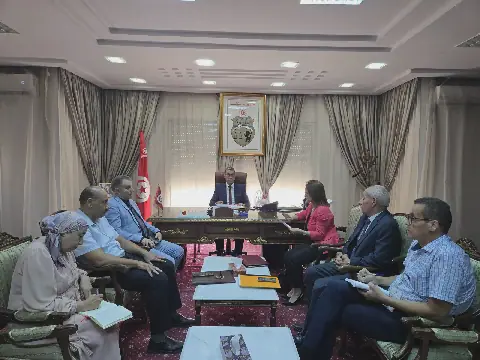
The development came as Iranian President Masoud Pezeshkian returned to Tehran following his participation in the UN General Assembly. He held talks with UN Secretary-General António Guterres and reiterated Iran’s willingness to negotiate with Washington. “Iran has not walked away from the negotiating table, but given past experiences, it no longer trusts the United States,” Pezeshkian said, according to Iranian state media.
Araghchi said Iran had conveyed the proposal to the United States through Qatar. The responsibility for its implementation rested on Washington. “Iran has conveyed to the United States, through Qatar, a concrete seven-day plan. If the necessary conditions are met, the strait can be reopened, and normal maritime passage restored within seven days. The choice now rests with the United States,” he stated.
Under the proposal, Iran was demanding a cessation of hostilities across the Middle East for seven days, including in Lebanon. Tehran was also seeking the lifting of US sanctions on Iranian oil and the release of frozen Iranian assets estimated at more than $12 billion. An end to the US naval blockade of Iran was another condition. Iran said these conditions were based on a memorandum of understanding reached with the United States earlier in the year.
The memorandum of understanding was intended to provide a framework for ending the conflict, reopening the waterway, and resuming negotiations over Tehran’s nuclear programme. Pezeshkian said the implementation of the proposal could begin immediately if Washington accepted the terms. “The process will begin from the very day they accept it. We had previously reached an agreement based on the MoU that was signed in Pakistan,” he added.
The Strait of Hormuz emerged as one of the central flashpoints in the conflict due to its importance to global oil supplies and international shipping. Iran maintains that vessels must obtain authorisation before passing through the waterway, citing security and sovereignty concerns. Ships accused of refusing to comply have been targeted, while the United States has carried out retaliatory strikes against Iranian coastal areas.
The rejection of the proposal by Trump signals a continued rift between the United States and Iran. The two nations have been engaged in a prolonged conflict, with tensions escalating in recent months. The situation remains volatile, with diplomatic efforts ongoing to de-escalate tensions and find a peaceful resolution.
Key points
- US President Donald Trump rejected Iran's seven-day proposal to reopen the Strait of Hormuz.
- Iran demands a cessation of hostilities, lifting of US sanctions, and release of frozen assets.
- The Strait of Hormuz is a critical waterway for global oil supplies and international shipping.