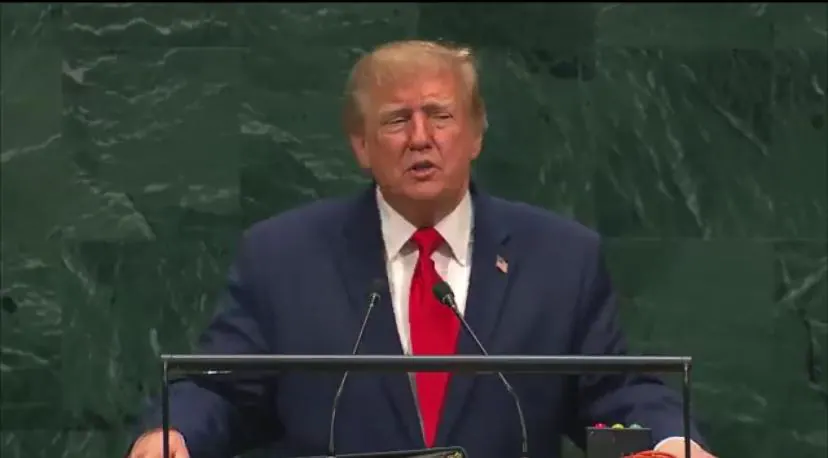
On September 22, 2026, US President Donald Trump addressed the High-Level General Debate of the 81st United Nations General Assembly in New York, where he proposed a significant change in the terminology used to describe a rapidly evolving technology. Trump suggested that the term "Artificial Intelligence" be replaced with "Super Intelligence" in all US government documents. This proposal was made to accurately reflect the capabilities and potential of the technology, according to the President.
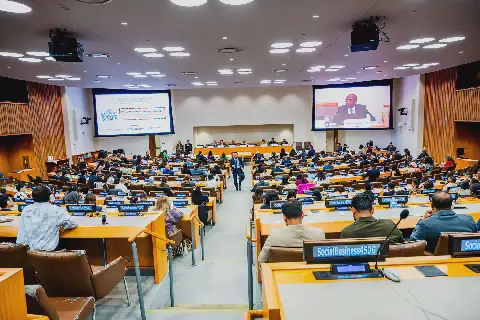
The President's remarks were met with attention as he explained his reasoning behind the proposed terminology change. Trump stated that the word "artificial" could make the technology appear less genuine than he believes it is. He emphasized that the technology is not fake, but rather "amazing." This perspective was shared as world leaders gathered at the United Nations Headquarters in New York for the opening of the High-Level General Debate of the 81st session of the General Assembly.
In addition to the proposed terminology change, Trump also addressed the issue of global control and regulation of the technology. He rejected efforts to establish a global framework for controlling the development and use of artificial intelligence, stating that the United States would not support such an arrangement. This stance was clear in his address to the General Assembly, where he emphasized the US position on the matter.
The 2026 General Debate is being held from September 22 to 26 and on September 28, under the theme, "Restoring Trust, Managing Transformation: A United Nations That Delivers for All." This theme sets the stage for discussions on various global issues, including the development and use of emerging technologies like artificial intelligence. Trump's proposal and stance on the issue have sparked interest and debate among world leaders and experts.
Trump's suggestion to rename artificial intelligence to super intelligence is not just a matter of semantics, but rather a reflection of his vision for the technology. He expressed his hope that the world's documents will also be changed to use the term "super intelligence" instead of "artificial intelligence." This could potentially have implications for how the technology is perceived and addressed globally.
The development and use of artificial intelligence, or super intelligence as Trump prefers to call it, require caution and careful consideration. The President acknowledged this need, while also emphasizing the potential benefits of the technology. As the world continues to navigate the complexities of emerging technologies, the debate on terminology and regulation is likely to continue.
In conclusion, Trump's proposal to rename artificial intelligence to super intelligence has sparked a significant discussion on the terminology and regulation of the technology. The US position on the issue is clear, and it will be interesting to see how the rest of the world responds to this proposal. The debate on artificial intelligence, or super intelligence, is likely to continue in the coming years, with various stakeholders weighing in on the issue.
Key points
- Trump proposes replacing "Artificial Intelligence" with "Super Intelligence" in US government documents.
- Trump rejects global efforts to control the development and use of artificial intelligence.
- The proposal has sparked debate on the terminology and regulation of emerging technologies.