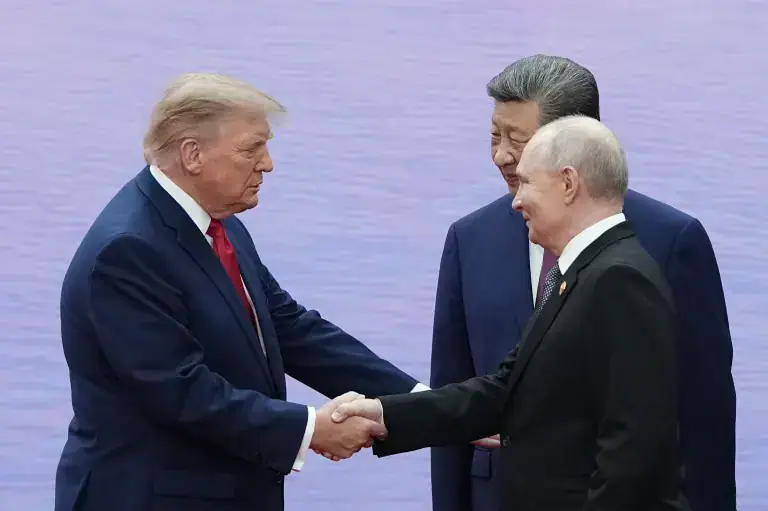
The leaders of the United States, Russia, and China - Donald Trump, Vladimir Poutine, and Xi Jinping - concluded an unprecedented trilateral summit in Shenzhen, issuing a joint statement that outlines their shared ambitions and criticisms of multilateral institutions. The meeting, which took place over two days, marks a significant development in international diplomacy, with the three leaders engaging in approximately 1 hour and 20 minutes of discussions. The joint statement emphasizes the importance of strategic stability and commits the countries to a dialogue on reducing nuclear risks and preventing nuclear proliferation.
The joint statement also calls for reforms to the United Nations and criticizes the International Criminal Court, which recently issued an arrest warrant for Vladimir Poutine. Furthermore, the leaders expressed their commitment to increasing oil supplies, which have seen significant price hikes in recent months. As major players in the global market, the US and Russia, along with China's substantial reserves, are well-positioned to influence the energy landscape. The statement reflects a coordinated effort to address pressing global issues, amidst ongoing conflicts in Ukraine and the Middle East.
The summit has drawn comparisons to the 1945 Yalta Conference, which shaped the post-World War II order in Europe. For China, this meeting represents an opportunity to assert its growing influence in global affairs. Donald Trump, seeking to bolster his diplomatic credentials following his party's losses in the US midterm elections, described the meeting as a historic moment. Vladimir Poutine, meanwhile, has sought to portray Russia as an equal partner to the US and China, despite ongoing economic sanctions from Western nations.
The meeting also highlighted the personal rapport between the three leaders, with Trump describing Poutine and Xi as friends. The Chinese and Russian leaders have expressed optimism about the potential for cooperation on key issues, including the control of artificial intelligence. Xi Jinping emphasized the need for AI to remain under human control, while Trump reiterated his opposition to global regulation of AI.
The summit has been met with skepticism from European nations, who fear that the rapprochement between Trump and Poutine may come at the expense of their interests. The French Foreign Minister, Jean-Noël Barrot, expressed doubts about the potential outcomes of the meeting, suggesting that the three leaders' differing positions would hinder meaningful agreements. Taiwan, which China claims as part of its territory, has also been monitoring the situation closely.
The tensions between Washington and Beijing remain, despite a temporary truce in trade tensions agreed upon in October 2025. The two nations continue to engage in a competitive dynamic, particularly in the realms of technology and strategy. As global leaders navigate these complex relationships, the outcomes of this summit will likely have far-reaching implications for international diplomacy and global stability.
The trilateral summit marks a significant moment in international relations, with the US, Russia, and China committing to cooperation on key issues. As the international community continues to grapple with pressing challenges, the effectiveness of this new diplomatic channel will be closely watched. The joint statement issued by the leaders represents a cautious step towards greater cooperation, amidst ongoing tensions and competing interests.
Key points
- The US, Russia, and China have agreed to a joint statement emphasizing strategic stability and cooperation on nuclear issues.
- The summit has drawn comparisons to the 1945 Yalta Conference, which shaped the post-World War II order in Europe.
- European nations have expressed skepticism about the potential outcomes of the meeting, fearing that it may come at their expense.