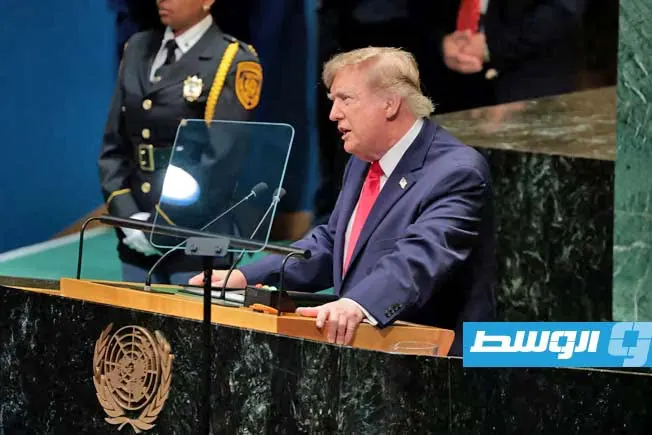
US President Donald Trump has rejected calls for international supervision of artificial intelligence, describing it as a "global project" to control the new technology. In his address to the UN General Assembly, Trump announced that the US government will use the term "super intelligence" instead of "artificial intelligence" in its reports. He emphasized that the US is leading in this field and will maintain its position.
Trump stated that the technology could revolutionize the world, surpassing the industrial and internet revolutions. He assured that his administration will encourage the development of AI without imposing restrictions, while ensuring responsible and safe usage through the Department of Justice and law enforcement agencies. This approach aims to balance innovation with caution.
The President criticized previous warnings about climate change and technological risks, suggesting that current concerns about AI are similar to unfounded alarms. He stressed the need for careful consideration of AI's challenges and highlighted the importance of defending fundamental principles. Trump's stance on AI regulation has sparked debate among experts and lawmakers.
Trump announced plans to appoint a new AI advisor, known as the "AI Czar," and establish an AI task force. However, details about these initiatives are scarce. His comments come amid growing concerns among US lawmakers about AI's potential risks to humans and property. Some experts warn that AI could pose significant threats if not developed responsibly.
The use of AI has raised concerns about job displacement, bias, and security risks. Despite these concerns, Trump has downplayed the risks, suggesting that excessive regulation is unnecessary. His approach contrasts with that of other countries, which are exploring ways to regulate AI development and deployment.
The European Union has established guidelines for AI development, emphasizing transparency, accountability, and human oversight. In contrast, Trump's administration has opted for a more laissez-faire approach, focusing on encouraging innovation while ensuring public safety. This approach has sparked debate about the role of government in regulating emerging technologies.
As AI continues to evolve, experts stress the need for careful consideration of its implications. Trump's comments have highlighted the need for a balanced approach that promotes innovation while addressing concerns about AI's potential risks. The global community will be watching how the US and other countries navigate the complex issues surrounding AI development and regulation.
Key points
- Trump rejects international supervision of AI, opting for a more US-centric approach.