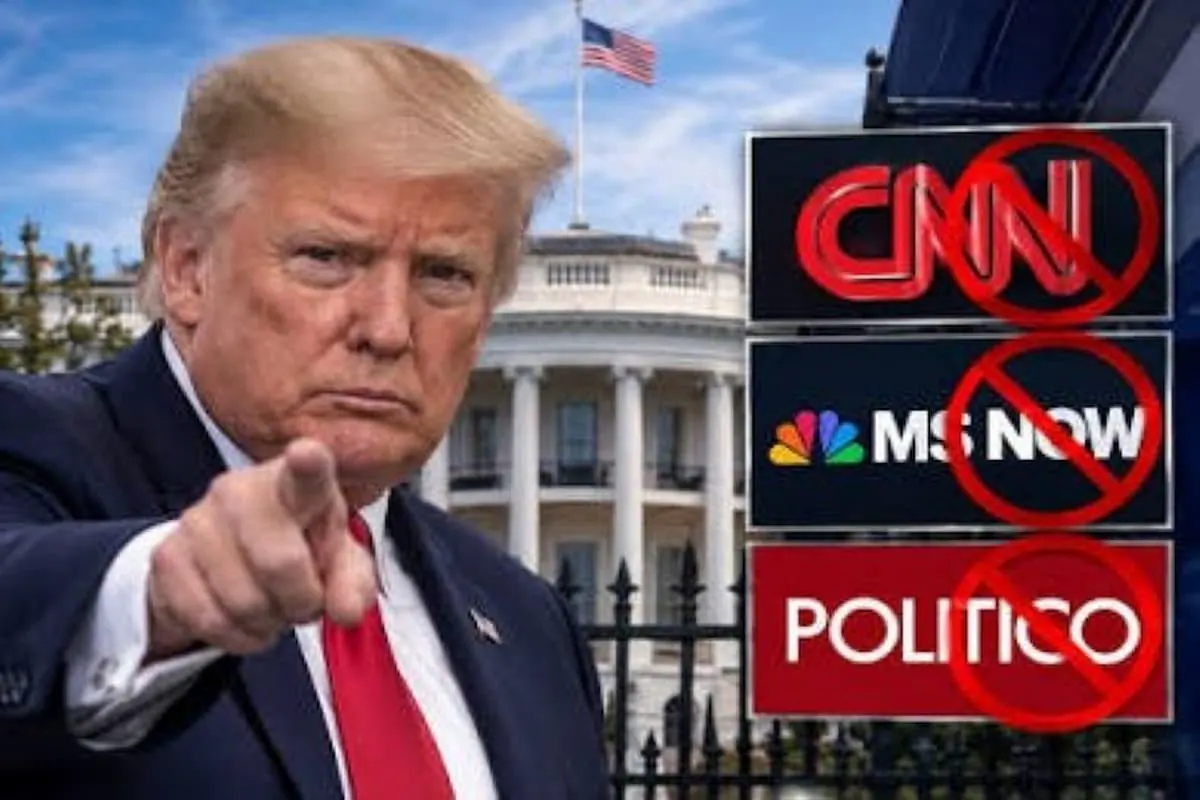
US President Donald Trump has intensified his confrontation with American media, launching a private YouTube channel and banning certain outlets from the White House. On September 19, 2026, Trump excluded journalists from CNN, MSNOW, and Politico, accusing them of spreading "fake news" and "fiction." This move has sparked widespread criticism and concern about the erosion of press freedom in the United States. Trump's actions have been seen as a direct challenge to the First Amendment of the US Constitution, which guarantees freedom of the press.
The decision to ban certain media outlets from the White House has been met with a strong backlash from the journalism community. Many media outlets, including some conservative ones, have expressed solidarity with the banned outlets. The three banned media outlets, CNN, MSNOW, and Politico, have filed a lawsuit seeking an emergency suspension of the ban, arguing that it constitutes a direct attack on the First Amendment. The lawsuit claims that Trump's actions are a "flagrant violation of our most fundamental constitutional principles."
In response to Trump's actions, several major US networks, including CBS, ABC, NBC, and Fox, have suspended their participation in the presidential press pool. This move means that they will not provide coverage of Trump's official events, including his recent trip to New York for the United Nations General Assembly. The boycott is a significant escalation of the feud between Trump and the media, and it highlights the deepening divisions between the White House and the journalism community.
Trump's new private YouTube channel, "Trump TV," is available 24/7 and features content exclusively about him. The channel is seen as an attempt by Trump to bypass traditional media outlets and communicate directly with the public. However, critics argue that this move is an attempt to undermine the role of independent media in holding those in power accountable. Trump's actions have sparked concerns about the future of press freedom in the United States and the ability of journalists to report critically on the administration.
The timing of Trump's actions is also significant, as it comes just weeks before the US midterm elections. Trump's approval ratings have been declining, and his administration is facing criticism on several fronts, including the economy and foreign policy. The feud with the media is likely to further polarize the US political landscape and reinforce concerns about Trump's commitment to democratic norms.
The ban on certain media outlets from the White House has also sparked concerns about the potential for other governments to follow suit. The Committee to Protect Journalists has expressed concern about the implications of Trump's actions for press freedom globally. The organization has called on Trump to reconsider his decision and respect the rights of journalists to report critically on the administration.
The future of the feud between Trump and the media remains uncertain, but it is clear that the confrontation is far from over. The lawsuit filed by the banned media outlets will likely take several weeks to resolve, and it is unclear whether Trump will be forced to lift the ban. In the meantime, the journalism community is likely to continue to push back against Trump's attempts to undermine press freedom, and the debate over the role of the media in a democratic society is likely to continue.
Key points
- Trump's actions have sparked widespread criticism and concern about the erosion of press freedom in the United States.
- The ban on certain media outlets from the White House has been met with a strong backlash from the journalism community.
- Trump's new private YouTube channel is seen as an attempt to bypass traditional media outlets and communicate directly with the public.