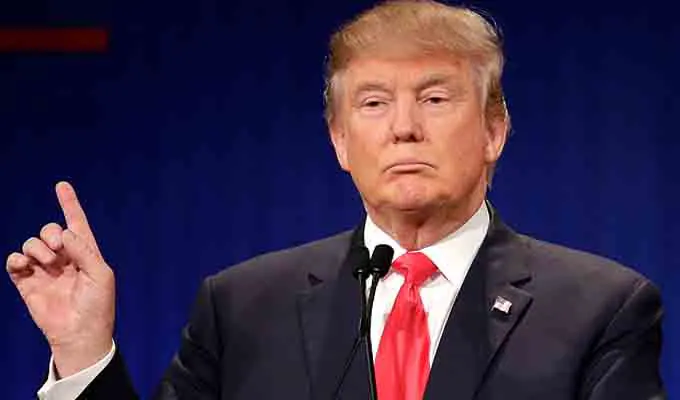
On September 22, US President Donald Trump delivered a 37-minute address to the 81st United Nations General Assembly in New York. During his speech, Trump defended his administration's foreign policy and emphasized the importance of American sovereignty. The President highlighted several key issues, including the situation in Iran, Ukraine, and the development of artificial intelligence. Trump's address was closely watched by international leaders and diplomats.
Trump placed Iran at the center of his speech, justifying the US decision to engage in conflict with the country by claiming that it had prevented Tehran from acquiring nuclear capabilities. However, he also issued a stern warning, stating that the Islamic Republic would face "annihilation" if an agreement was not reached. Despite this threat, Trump expressed openness to negotiations, suggesting that a deal could be possible after the US midterm elections on November 3.
The US President also touched on the crisis in Ukraine, stating that Washington was working closely with Russian and Ukrainian leaders to find a swift resolution. However, he did not provide specifics on the potential outcome. Additionally, Trump addressed the issue of artificial intelligence, preferring the term "super intelligence" and reiterating his opposition to restrictions that could hinder its development.
Trump was critical of the International Criminal Court, calling on member states to withdraw from the organization. He also emphasized a tough stance against cartels and highlighted the importance of defending US interests in multilateral forums. The President's address reflected a clear doctrine: the US will remain engaged in international institutions while prioritizing its own interests through a combination of negotiation, economic pressure, and demonstrations of power.
The Iranian issue extends beyond the military sphere, with the UN emphasizing the strategic importance of the Strait of Hormuz and global oil prices. The organization's concerns highlight the far-reaching consequences of the conflict. Trump's comments on Iran were made seven months after the US entered into conflict with the country.
In addition to his address, Trump's speech was also notable for its tone and style, which was seen as a reflection of his administration's priorities. The President's comments on Ukraine, artificial intelligence, and the International Criminal Court provided further insight into US foreign policy under his leadership.
The international community is closely watching the developments in Iran and the broader implications for global security. The situation remains fluid, with many stakeholders eagerly awaiting the outcome of the US midterm elections and any potential impact on US foreign policy.
Key points
- Trump issues a direct threat to Iran, warning of "annihilation" if an agreement is not reached.
- The US President emphasizes the importance of defending American sovereignty in multilateral forums.
- Trump addresses several key issues, including Ukraine, artificial intelligence, and the International Criminal Court.