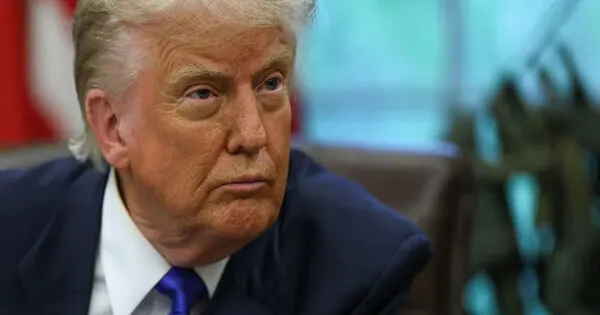
US President Donald Trump has defended his decision to bar CNN, MS NOW, and Politico from the White House, characterising the media access ban as an action against "fake news" rather than an attack on constitutional press freedoms. In a statement posted on Truth Social, Trump said the White House was not instituting an assault on the free press, but rather on what he termed "fake news" that has grown like a "cancer" in the United States.
The ban was announced on Friday, with Trump accusing the outlets of reporting "fake news". He claimed that other media organisations could also face restrictions if they continued to report what he considered "fiction and lies" about his administration. The move was met with a joint lawsuit from the three news organisations, which argued that the ban threatened press freedom and government interference in independent journalism.
The lawsuit, filed in the US District Court in Washington, called the action a threat to press freedom and government interference in independent journalism. The news organisations stated that the White House revoked their journalists' credentials without notice or process, simply because it objected to their reporting. They argued that this threatened not only their own rights but also the public's right to independent journalism free from government interference.
On Saturday, journalists from the three affected organisations were denied access to the White House complex, and some had their press credentials confiscated. The joint legal action comes days after reporters from the three news outlets were turned away at security gates and had their press badges confiscated by Secret Service officers. The dispute now centres on the White House television pool, a rotating arrangement involving five major networks.
Trump has strongly rejected allegations that his ban is an attack on press freedom, instead calling it a necessary measure to counter what he sees as a threat to national security. He described the media coverage of his administration as "corrupt, purposeful, pervasive, fully coordinated, and totally out of control". Trump added that the ban was not an assault on the free press, but rather a necessary measure to protect the country from what he sees as a threat.
The impact of the decision became apparent on Saturday, with journalists from the affected organisations being denied access to the White House complex. CNN, MS NOW, and Politico have announced that they will continue to cover the US government despite the restrictions. The emergency filing is set for review by a federal judge in the DC District Court, with administration officials potentially facing hearings and legal arguments in the coming days.
The White House ban has sparked a heated debate about press freedom and government interference in independent journalism. While Trump argues that the ban is necessary to counter "fake news", the news organisations argue that it threatens their constitutional protections and the public's right to independent journalism. The dispute is likely to continue in the coming days, with the lawsuit set to be reviewed by a federal judge.
Key points
- The US President Donald Trump defends his decision to ban CNN, MS NOW, and Politico from the White House, citing "fake news" rather than an attack on press freedom.
- The ban has sparked a joint lawsuit from the three news organisations, which argue that it threatens press freedom and government interference in independent journalism.
- The dispute centres on the White House television pool, a rotating arrangement involving five major networks that provides shared footage of the President's activities.