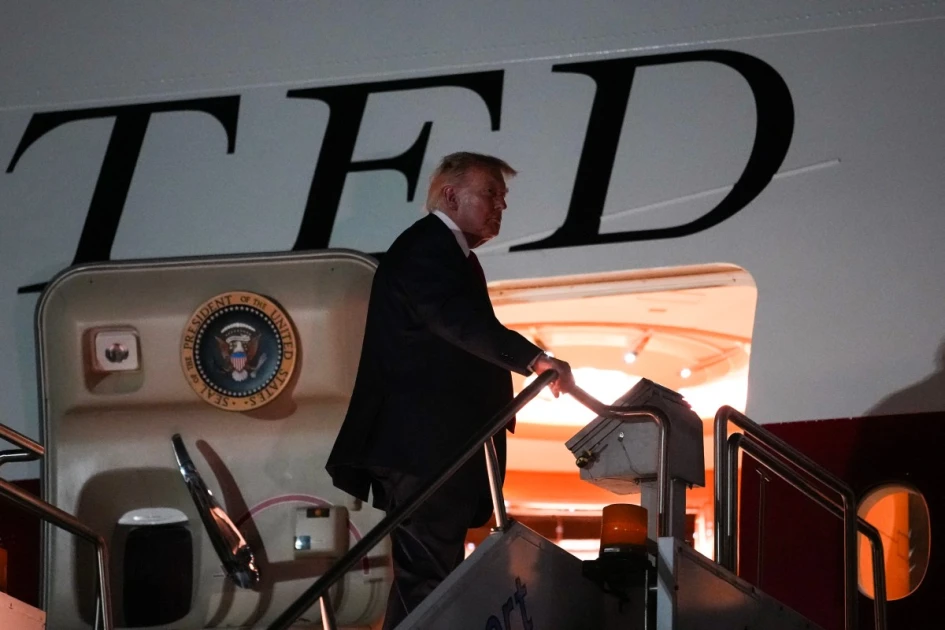
US President Donald Trump has cut short his weekend stay at Camp David and returned to the White House on Saturday. The sudden change in plans came as tensions rose in the Middle East, with the Saudi-led coalition fighting Yemen's Houthis reporting that the Iran-backed group had fired a ballistic missile at Riyadh. The missile attack occurred at dawn, and a fire broke out near the Saudi capital's international airport.
The administration did not provide an explanation for Trump's early return, but it is not uncommon for White House travel plans to change on weekends, including due to weather conditions. Forecasts had shown rain and thunderstorms in the hilly Camp David area on Sunday, which may have contributed to the decision. Trump's return to the White House came as the region was bracing for potential escalation in the conflict.
The State Department and several US embassies issued security alerts to Americans in the region, citing the potential for unforeseen escalation. The alerts noted that Iranian-supported Houthis had engaged in hostilities against Saudi Arabia, including civilian airports. The warnings advised Americans outside the Middle East to seriously reconsider travel to and through the region.
The conflict in Yemen has been ongoing for several years, with the Saudi-led coalition fighting to restore the government and the Houthis, who are backed by Iran, controlling large parts of the country. The situation has been volatile, with both sides suffering heavy losses. The US has been providing military support to the coalition.
Trump's return to the White House came as he was preparing for the midterm elections in the US, which are scheduled to take place on November 3. The President had been campaigning for Republican candidates, highlighting his administration's achievements and rallying support. The early return to the White House may indicate a shift in focus towards the crisis in the Middle East.
The situation in the Middle East remains volatile, with concerns about the potential for further escalation. The US and other countries have been urging restraint and a peaceful resolution to the conflict. The crisis has significant implications for regional and global security, and Trump's administration will likely be closely monitoring developments.
The early return to the White House by Trump underscores the gravity of the situation in the Middle East. The US and its allies will be watching closely for any further developments, and the situation is likely to remain a key concern for the administration in the coming days and weeks.
Key points
- Trump cut short his weekend stay at Camp David and returned to the White House on Saturday amid rising tensions in the Middle East.
- The Saudi-led coalition reported that the Iran-backed Houthis had fired a ballistic missile at Riyadh, which may have contributed to Trump's early return.
- The US State Department and several embassies issued security alerts to Americans in the region, citing the potential for unforeseen escalation.