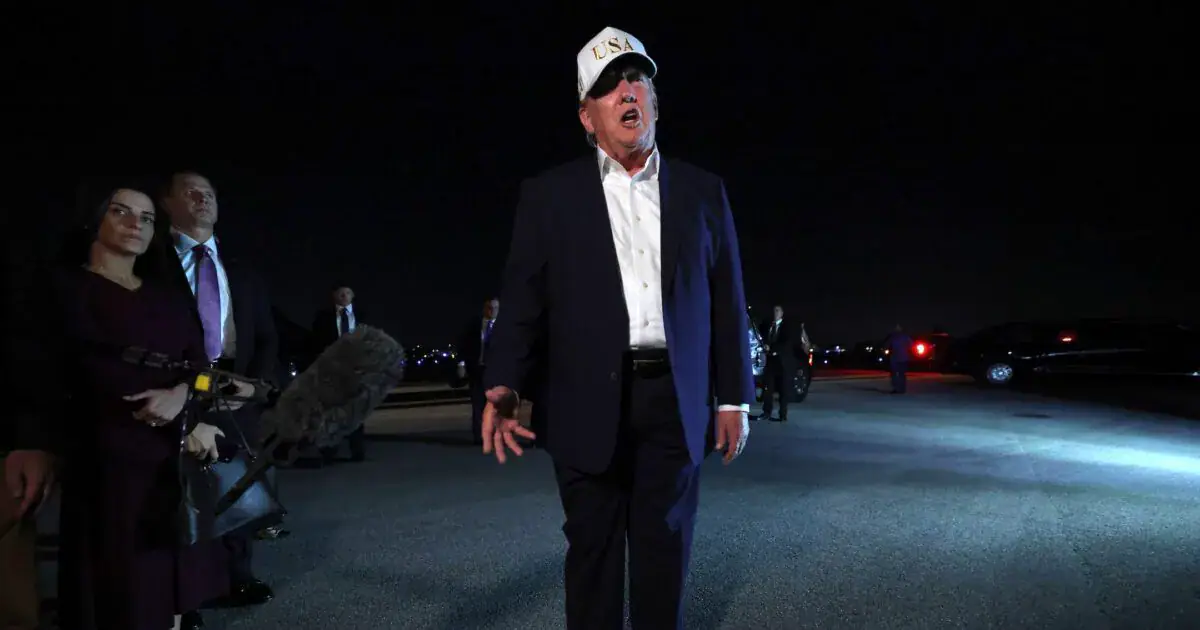
US President Donald Trump has stated that antipathy towards Israel and objections to the Iran war contributed to the Republican losses in the November 3 midterm elections. In an interview with CBS's 60 Minutes, Trump mentioned that a great dislike for Israel was a factor, alongside rising gasoline prices and the war in Iran. His comments echo those of Vice-President JD Vance, who wrote on X on November 4 that the US should end the Iran war and reassess its relationship with Israel.
Vance's post sparked controversy among Jewish Republicans and Israel supporters, with Jonathan Greenberg, director for combatting antisemitism at Defending Education, calling it "nonsense". Trump, however, expressed agreement with Vance's views, stating that he had encouraged him to "write what you feel". When questioned about his decision to support Israel's "decapitation strikes on Iran", Trump did not directly respond but reiterated his commitment to preventing Iran from acquiring nuclear weapons.
Trump defended his decision to launch a military campaign against Iran, which included joint Israeli-US strikes on its nuclear facilities. He claimed that the decision would be vindicated historically, even if it was unpopular at the time. Trump emphasized that the US had to protect its interests and that countries protected by the US would eventually reimburse the costs of the war. He specifically mentioned Israel, stating that without US support, the country would not exist.
Trump has consistently argued that his leadership is crucial to Israel's survival, and he repeated this claim during the interview. He referenced the joint US-Israeli attack on Iran's nuclear facilities in June 2025, stating that Israel would not exist without his intervention. The US and Israel have been engaged in a conflict with Iran, which has been ongoing for over three years, and Trump expressed his willingness to continue supporting Israel.
Despite growing disapproval among the American public for US strikes on Iran, which have led to increased gas prices, Trump defended the war as necessary to prevent Iran from acquiring nuclear capabilities. He claimed that if Iran had a nuclear weapon, it would pose a threat to the entire world. Trump also commented on Israeli President Isaac Herzog's decision to task Gadi Eisenkot with forming a new government, stating that both Eisenkot and Benjamin Netanyahu share similar policies and views.
Trump expressed his support for Eisenkot, who has reportedly made positive comments about him. The US-Israel relationship has been a subject of discussion in light of the midterm elections, with some questioning the impact of Trump's policies on the Republican party's losses. Trump's comments have sparked debate about the role of Israel in US foreign policy and the potential consequences of a continued conflict with Iran.
The controversy surrounding Trump's comments highlights the complexities of US-Israel relations and the challenges of navigating the Middle East conflict. As the US and Israel continue to grapple with the implications of their alliance, Trump's statements have underscored the significance of Israel in US foreign policy. The ongoing conflict with Iran and its implications for regional stability remain a pressing concern for both countries.
Key points
- Trump cites dislike for Israel as factor in Republican midterm losses
- US President defends decision to support Israel's strikes on Iran
- Trump expresses support for Gadi Eisenkot as potential Israeli prime minister