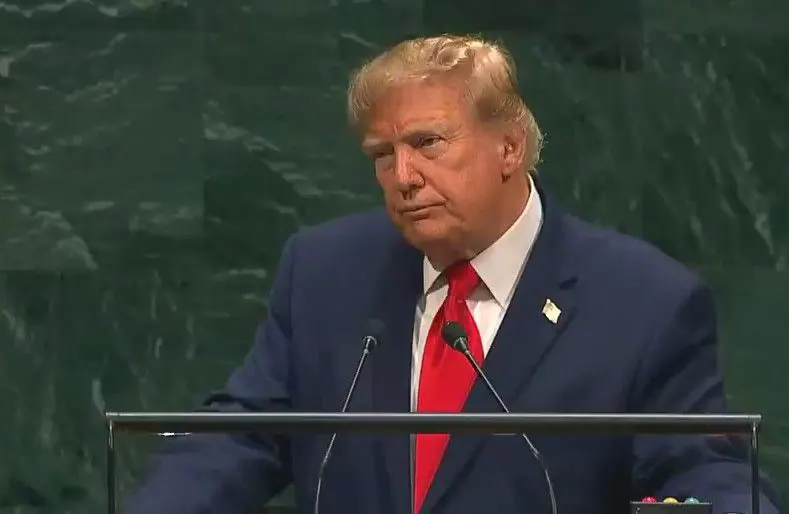
US President Donald Trump has reaffirmed America's strong opposition to the International Criminal Court (ICC). Speaking at the high-level General Debate of the United Nations General Assembly in New York on September 22, Trump described the ICC as an "out-of-control institution". He emphasized that the United States would not permit its military personnel to be investigated or tried by the ICC, citing the court's lack of jurisdiction over the US.
Trump urged ICC member states to "officially resign" from the institution, labeling it a "rogue institution". He accused the ICC and international human rights officials of unfairly targeting the United States over its domestic policies. These policies include immigration enforcement and those concerning transgender minors. Trump's comments reflect the longstanding US opposition to the ICC exercising jurisdiction over US nationals without US consent.
The US has consistently opposed the ICC since its inception. The court's establishment in 2002 was a significant step towards international criminal justice. However, the US has never ratified the Rome Statute, the treaty that established the ICC. This opposition stems from concerns about the court's potential to prosecute US nationals without US consent.
Trump's criticism of the ICC has been a recurring theme during his presidency. In 2020, the US imposed sanctions on ICC officials investigating alleged war crimes by US personnel in Afghanistan. The move was widely condemned by human rights groups and other countries. The US has also refused to cooperate with ICC investigations into its own nationals.
The ICC has faced criticism and challenges from various countries, including the US, Israel, and China. These countries have questioned the court's jurisdiction and legitimacy. Despite these challenges, the ICC has continued to investigate and prosecute international crimes. These crimes include genocide, war crimes, and crimes against humanity.
The ICC has jurisdiction over nationals of countries that have ratified the Rome Statute. Currently, 123 countries have ratified the treaty. The court's jurisdiction also extends to crimes committed on the territory of a state party or by a national of a state party. The ICC has investigated and prosecuted crimes committed in various countries, including the Democratic Republic of Congo, Uganda, and Sudan.
The US has significant influence at the UN and often uses its veto power to block decisions critical of its actions. Trump's comments at the UN General Assembly reflect the US's longstanding opposition to the ICC. The ICC's future actions and investigations will likely continue to be a point of contention between the US and the international community.
Key points
- The US has consistently opposed the ICC since its inception.
- Trump urged ICC member states to "officially resign" from the institution.
- The ICC has jurisdiction over nationals of countries that have ratified the Rome Statute.