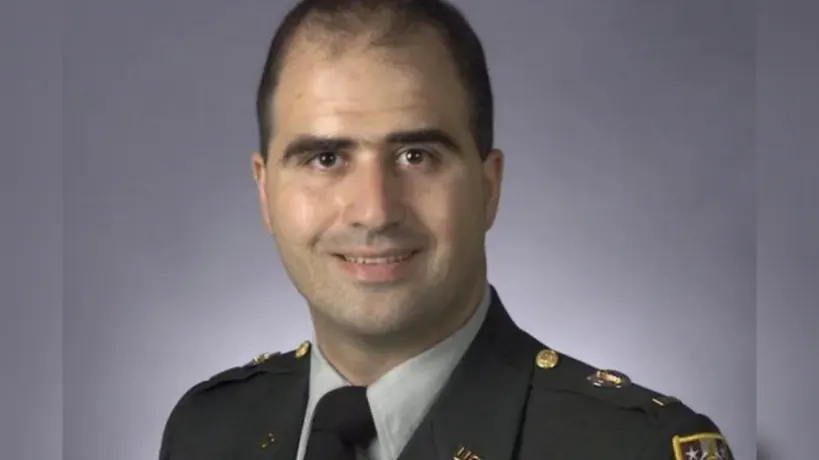
US President Donald Trump has approved the execution of Major Nidal Hassan, a US Army psychologist who killed 13 people at Fort Hood military base in 2009. The execution will be carried out by a US Army firing squad, marking the first time the US military has executed a prisoner since 1961. The decision was announced by the Pentagon, which said that Defence Secretary Pete Hedges had recommended the execution and Trump had approved it.
Major Nidal Hassan, a Muslim-American of Palestinian origin, carried out the attack on November 5, 2009, at Fort Hood in Texas. He killed 13 people and injured more than 30 others using a semi-automatic handgun. The attack was widely condemned, and Hassan was subsequently charged with murder and terrorism-related offences. A military jury found him guilty and sentenced him to death in 2013.
Hassan's defence team had expressed concerns that he was seeking a death sentence, and during the trial, he chose to defend himself, did not call any witnesses, and did not testify in his own defence. The prosecution presented evidence that Hassan had been in contact with Anwar al-Awlaki, a prominent leader of Al-Qaeda, via the internet. Al-Awlaki was later killed in a US drone strike in Yemen.
The execution decision has been widely reported, with Pentagon spokesperson Sean Parnell stating that the Army will determine the date and location of the execution. Parnell added that Hassan's crimes were heinous and that the decision marked a measure of justice for the victims and their families. The US military has not carried out an execution since 1961, making this a significant and rare event.
Major Nidal Hassan was a psychologist who had been working at Fort Hood, where he was based before being deployed to Iraq. His actions were seen as a shocking betrayal of the trust placed in him as a member of the US military. The attack also raised concerns about the mental health of soldiers and the potential for insider threats within the military.
The case has been closely watched, with many questioning how Hassan was able to carry out such a devastating attack. An investigation into the attack found that there had been warning signs about Hassan's behaviour before the attack, but they were not acted upon. The incident led to changes in the way the US military handles mental health and threat assessments.
The execution of Major Nidal Hassan will be closely watched, both within the US and internationally. While some have argued that the death penalty is justified in cases of terrorism and mass murder, others have raised concerns about the use of capital punishment and its effectiveness as a deterrent. The event is likely to spark further debate about the use of the death penalty in the US and its application in cases of terrorism.
Key points
- Trump approves execution of Major Nidal Hassan for 2009 Fort Hood attack.