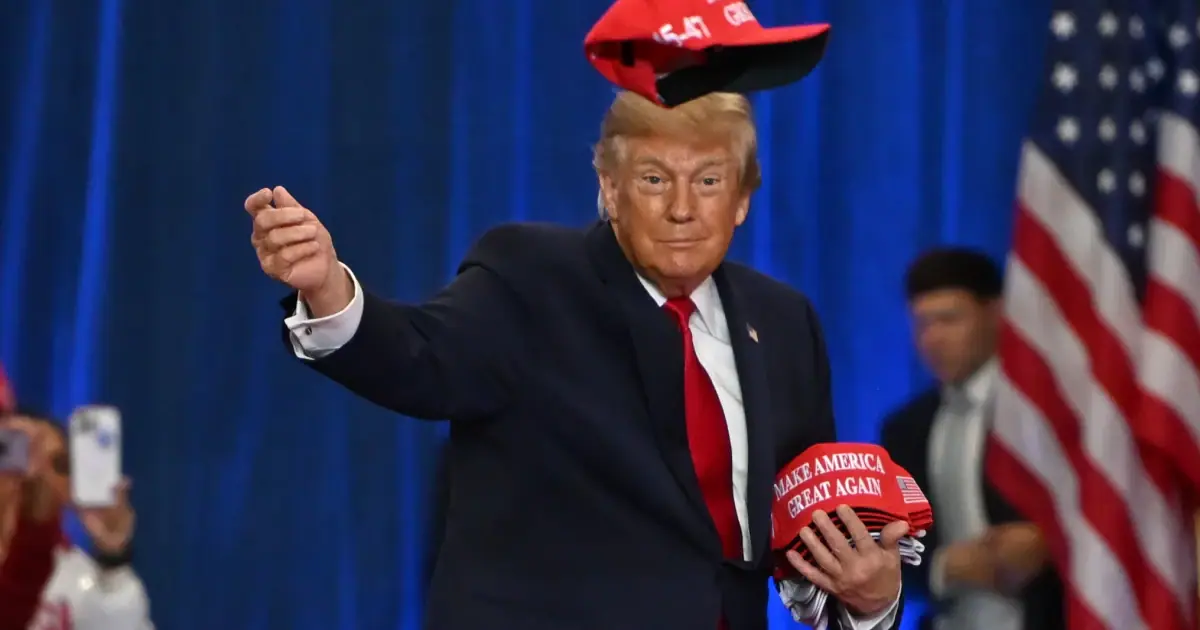
On October 28, 2026, President Donald Trump announced that his administration would be terminating a rule implemented by the Biden administration to reduce planet-warming emissions of methane from oil and gas drilling. The rule, which aimed to cut methane emissions by 58 million tons by 2038, was seen as a crucial step in slowing climate change. Methane is responsible for about a third of greenhouse gas emissions and is far more potent than carbon dioxide in the short term.
The Trump administration claims that the rollback will save companies and consumers billions of dollars and unlock 210 million barrels of oil, equivalent to about 10 days of US petroleum consumption. The move is seen as an effort to encourage more domestic drilling, amid criticism over high fuel prices. Environmental Protection Agency Administrator Lee Zeldin previewed the changes last month, saying they would eliminate the agency's "Super Emitter Program" that requires companies to investigate and repair major methane releases.
The methane rule was announced by officials, including former Vice President Kamala Harris, during a 2023 UN climate conference in the United Arab Emirates. The rule regulated existing wells, not just new ones, and required operators to plug leaking methane from smaller wells that produce a significant portion of the nation's oil and gas. The final rule was published in 2024 and was crafted to be coordinated with a methane fee, approved in the 2022 climate law.
Environmental groups have strongly criticized the rollback, saying it will let companies continue polluting the atmosphere with gas that could be captured and provide energy to millions of households. Environmental Defense Fund President Fred Krupp said it gives a "free pass" to companies at the expense of American consumers. The EPA estimated that the methane rule would have yielded $98 billion in benefits by 2034.
The Trump administration's move is part of a broader effort to dismantle climate policies enacted under former President Joe Biden. This includes the revocation of a scientific finding central to US action on greenhouse gas emissions, lower fuel economy standards for vehicles, and a move to repeal emission restrictions for coal and natural gas power plants. The methane rule was seen as a key component of the Biden administration's climate agenda.
The rollback of the methane rule has significant implications for the oil and gas industry, which is the largest industrial source of methane emissions. The industry will no longer be required to investigate and repair major methane releases, and will face less restrictive standards for small oil and gas wells. This could lead to increased methane emissions and contribute to climate change.
The decision to terminate the methane rule has sparked controversy, with environmental groups and some lawmakers expressing concerns about the impact on public health and the environment. The EPA estimated that the rule would have prevented 58 million tons of methane emissions by 2038 and reduced other pollutants that cause health problems. The Trump administration's move is likely to be met with legal challenges and criticism from environmental groups.
Key points
- The Trump administration's rollback of the methane rule is expected to save companies and consumers $45 billion in costs.
- The rule would have prevented an estimated 58 million tons of methane emissions by 2038 and reduced other pollutants that cause health problems.
- Environmental groups have criticized the rollback, saying it will let companies continue polluting the atmosphere with gas that could be captured and provide energy to millions of households.