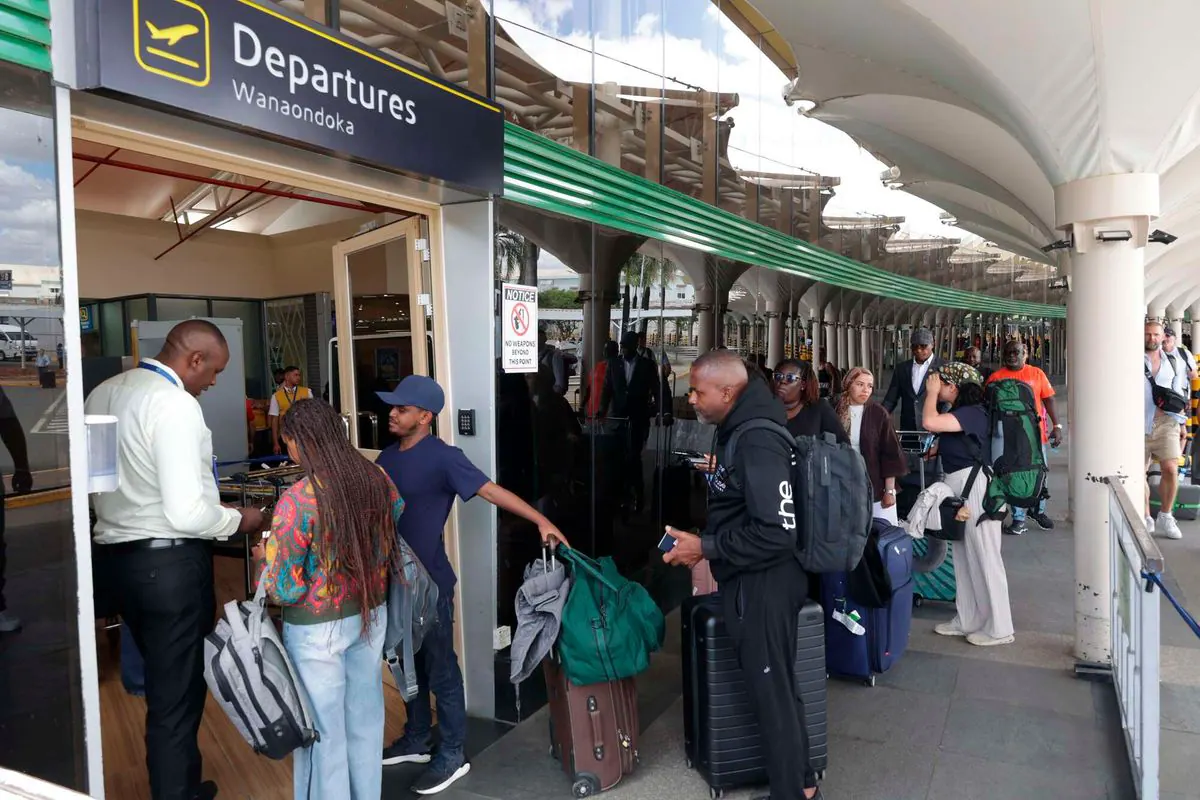
Multiple incidents have been reported of travellers being moved up queues at the immigration checkpoint at Jomo Kenyatta International Airport (JKIA) after paying bribes to officials. A traveller, who wished to remain anonymous, described the experience as "extremely disheartening" after arriving from a country where systems are applied consistently and without favour. The traveller expressed disappointment, saying such practices create a perception of preferential treatment and undermine confidence in public institutions.
Another traveller reported being expedited through the immigration checkpoint after paying a Sh5,000 enticement. These incidents highlight a deeper problem at Kenya's main international gateway, where congestion and long queues are creating opportunities for immigration officials to bypass established clearance procedures and solicit unofficial payments from frustrated passengers. The Directorate of Immigration Services did not respond to queries on the bribery claims.
The Kenya Airports Authority (KAA) asked affected travellers to report such incidents, stating that immigration clearance is undertaken by the Directorate of Immigration Services. KAA remains responsible for coordinating airport service delivery and working with relevant agencies to address concerns affecting the passenger experience. The authority requested travel dates, approximate times, clearance locations, and other relevant details to enable referral to the Directorate for investigation and follow-up.
Air travel experts argue that such practices threaten to undermine confidence in JKIA, at a time when Kenya is seeking to position the airport as a competitive regional aviation hub and expand its capacity to handle rising passenger traffic. Travellers have expressed frustration with such incidents, which create a perception of unfair treatment. Sources indicate that immigration officials typically approach people with Kenyan passports, while foreign travellers are moved up the queue with the help of local tour firms or hotels waiting for them at the airport.
Travellers are typically expected to be treated the same at ports of entry, except for unique situations that may require a traveller to be moved up the queue or processed separately. Priority passengers, including elderly travellers, pregnant women, disabled people, or sick individuals, do not need to queue for immigration checks. However, as the airport increasingly gets congested, frequent flyers worry that fast service may become a reserve for a few individuals willing to bend the law and pay more.
KAA says there are ongoing projects to ease congestion at JKIA, including the installation of electronic immigration gates, beginning with Terminal 1A. The installation is expected to be completed by the end of October 2026, and the e-gates are expected to expedite clearance for eligible passengers and reduce pressure on staffed counters. The JKIA modernisation project also provides for the optimisation and reconfiguration of existing terminals, modernisation of passenger-processing systems, and development of additional terminal capacity.
This year, JKIA is expected to handle over 9 million passengers, far above the 7.5 million it was designed to process every year. The current terminal is supposed to be upgraded to immediately raise capacity to at least 12 million passengers a year, while a new terminal will raise the airport's capacity to 25 million passengers a year. The ongoing projects aim to ease current bottlenecks and accommodate growing traffic.
Key points
- Travellers report paying bribes to immigration officials to skip long queues at JKIA.
- The incidents highlight a deeper problem of congestion and inadequate capacity at Kenya's main international airport.
- Ongoing projects, including electronic immigration gates and terminal modernisation, aim to ease congestion and improve the passenger experience.