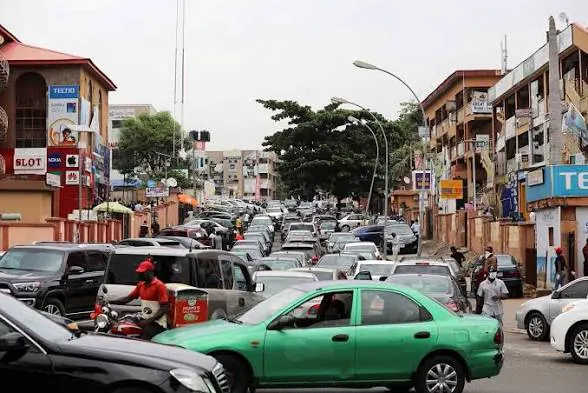
Residents of the Federal Capital Territory (FCT) in Nigeria have expressed frustration over the increase in transportation fares during and after rainfall. This phenomenon is particularly noticeable at night, when the scarcity of taxis, tricycles, and commercial motorcycles compounds the problem. Many transporters attribute the fare hike to additional costs incurred during rainy periods, such as increased fuel consumption and vehicle maintenance.
Commuters have reported paying significantly higher fares during rainfall, with some citing increases of up to 100% or more. For instance, a civil servant from Mararaba, Nasarawa state, Mrs. Philomena Okeke, stated that her daily commute to the Federal Secretariat can cost up to N5,000, with fares soaring to N1,000 for a single ride during heavy rain. Similarly, an office assistant, Daniel Bassey, claimed that transporters increase fares out of greed, citing an example of a N1,500 fare rising to N2,000 during rainfall.
Taxi operators have provided insight into their pricing strategies during rainy periods. According to Mr. Raphael Kehinde, a taxi driver in Abuja, the use of air conditioners and wipers to clear windshields for visibility incurs additional fuel costs. He noted that drivers who are equipped with functional vehicles and safety features, such as wipers and heaters, are more likely to increase their fares to cover these expenses. Kehinde added that commuters often willingly pay the higher fares, allowing drivers to recoup their costs.
Not all transporters increase their fares during rainfall, however. A tricycle driver in Dutsen Alhaji, Ibrahim Mustapha, stated that he prefers to park his vehicle during rainy periods rather than raise his fares. In contrast, a commercial motorcycle operator in Bmuko Dutse, Musa Bello, reported charging higher fares during rainfall to compensate for the increased demand and to cover the cost of medications to prevent colds.
The behavior of transporters during rainfall has been analyzed by social commentator Solomon Nnamdi, who noted that the cost of maintenance and the risk of vehicle breakdowns contribute to the fare increases. He explained that heavy rainfall leads to flooded roads, traffic gridlocks, and increased travel times, prompting drivers to factor these risks into their charges. As a result, passengers often bear the cost of these additional expenses.
The impact of rainfall on transportation fares is a recurring issue in the FCT, with commuters often facing significant challenges in getting around during and after heavy rainfall. While some transporters view the fare increases as necessary to cover their costs, others see it as an opportunity to profit from the desperation of passengers. The issue highlights the need for more efficient and reliable transportation systems in the FCT.
The phenomenon of increased transportation fares during rainfall is likely to persist, given the current state of infrastructure and transportation systems in the FCT. As the city continues to grow and develop, residents and transporters will need to adapt to the challenges posed by rainfall and other environmental factors. By understanding the underlying causes of these fare increases, stakeholders can work towards finding solutions to mitigate the impact on commuters.
Key points
- Transporters in Nigeria's Federal Capital Territory increase fares during and after rainfall due to additional costs such as fuel and vehicle maintenance.
- Commuters face significant challenges in getting around during and after heavy rainfall, with some reporting fare increases of up to 100% or more.
- The issue highlights the need for more efficient and reliable transportation systems in the FCT to mitigate the impact of rainfall on commuters.