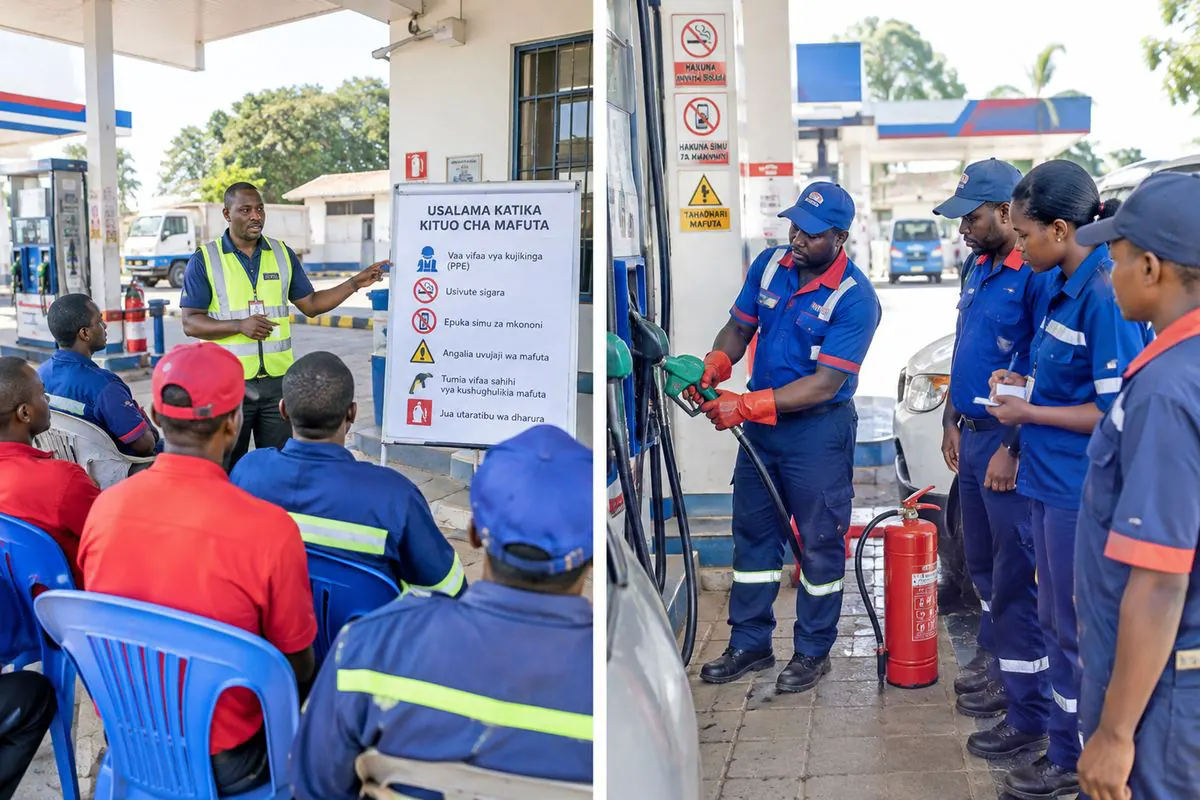
A recent investigation in Mbeya and Tanga regions found that some fuel station attendants in Tanzania were working without essential safety gear, such as shoes, gloves, or masks. Moreover, many had not received training in fire safety, the use of fire extinguishers, and emergency response procedures. This raises concerns about the safety of workers in the fuel sector, particularly in rural areas where the number of fuel stations is increasing rapidly. According to the Energy and Water Utilities Regulatory Authority (Ewura), the number of rural filling stations grew by 22.08 percent between June 2024 and June 2025.
The investigation's findings highlight the need for a comprehensive safety system that defines the responsibilities of employers, workers, and regulators. This system should ensure that shortcomings are identified and addressed promptly. Ewura's 2024/25 annual report shows that while 83.37 percent of inspected petroleum products' facilities and infrastructure complied with required standards, 157 facilities failed to meet the requirements. The report emphasizes the importance of follow-up inspections and monitoring to ensure corrective actions are taken.
Fire safety training is a critical aspect of protecting workers at fuel stations. Inspector Damian Muheya, spokesperson for the Fire and Rescue Force, stresses that every worker should have basic knowledge of fire safety and be able to use a fire extinguisher in an emergency. He advocates for practical training that enables workers to identify hazards, report incidents, and take appropriate action in the event of a fire or fuel spill. This training should include the use of fire extinguishers, emergency assembly points, and reporting procedures.
Petrol station owners and operators, particularly those in rural areas, must ensure that their workers understand fire safety procedures. Muheya emphasizes the importance of adhering to safety procedures and avoiding distractions in high-risk areas, such as using mobile phones around fuel pumps. Daniel Mwemba, a petrol station supervisor in Tanga, notes that workers must use provided protective equipment and follow safety procedures without waiting for supervision.
Occupational health and safety is not solely the responsibility of employers and owners but also of workers. Mwemba stresses that failure to follow procedures can have consequences, including the closure of stations that fail to meet required standards. Dr. Ernest Winchislaus, a specialist in internal medicine at Mbeya Zonal Referral Hospital, emphasizes that prevention should be at the center of workplace safety. He advocates for employers to invest in protective equipment, training, and monitoring their use.
Gerald Mrema, vice president of the Association of Occupational Health and Safety Professionals (Tahosa), calls for a coordinated approach to inspections. He suggests that the Occupational Safety and Health Authority (OSHA), Ewura, and the Fire and Rescue Force should establish a system for sharing inspection information to ensure that shortcomings identified at a station are addressed promptly. This system should track inspections, identify shortcomings, and verify corrective actions.
The government of Tanzania has pledged to continue educating employers and workers about the importance of safety in the fuel sector. Minister of State in the Prime Minister's Office (Labour, Employment and Relations), Deus Sangu, emphasized the government's commitment to ensuring that employers and workers are aware of their responsibilities in maintaining a safe working environment.
Key points
- The growing number of fuel stations in Tanzania requires stronger safety systems to protect workers.
- Practical training in fire safety and emergency response is essential for workers at fuel stations.
- A coordinated approach to inspections and monitoring is necessary to ensure that safety shortcomings are addressed promptly.