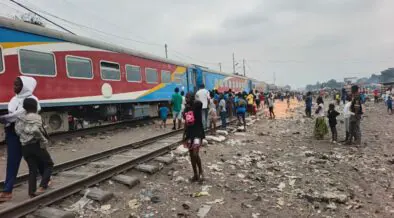
The urban train service connecting Kinshasa's central station to N'djili International Airport resumed on September 3, a day after a derailment occurred in the Masina commune. The incident happened on September 2 at around 6 pm local time. According to reports, the locomotive derailed for about a meter but no casualties or injuries were officially reported. The quick resumption of service has raised questions among users and sector observers.
The derailment was attributed to the presence of sand and trash on the railway tracks, as well as the passage of vehicles and motorcycles near the railway area, according to Martin Lukusa Panu Cibangu, Director-General of the National Transport Office (ONATRA SA). However, concerns remain about the state of certain sections of the track, particularly in areas prone to flooding and waste accumulation.
The urban train in Kinshasa had been relaunched recently after nearly 15 years of interruption. Its return is seen as a significant advancement in a capital city facing daily mobility problems and chronic congestion. The train service is crucial in addressing these challenges and providing an efficient transportation option for residents.
The resumption of the train service comes as a relief to commuters who rely on it for their daily travels. The service operates between the central station and N'djili International Airport, providing a vital link between the city center and the airport. The train's return has been welcomed by many, but concerns about the safety and maintenance of the tracks remain.
The incident has highlighted the need for continued investment in the maintenance and upkeep of the railway infrastructure. The presence of sand and trash on the tracks, as well as the passage of vehicles and motorcycles near the railway area, are issues that need to be addressed to prevent similar incidents in the future.
An investigation into the causes of the derailment is expected to be conducted to determine the root cause of the incident. This will help to identify measures that can be taken to prevent similar incidents from occurring in the future and ensure the continued safe operation of the train service.
The urban train service plays a critical role in Kinshasa's transportation network, and its continued operation is essential for the city's mobility and economic development. Efforts to maintain and improve the service will be crucial in ensuring its long-term sustainability and benefits to the city's residents.
Key points
- The urban train service in Kinshasa has resumed after a derailment in Masina on September 2.
- The derailment was attributed to the presence of sand and trash on the railway tracks.
- The resumption of the train service has raised questions about the safety and maintenance of the tracks.