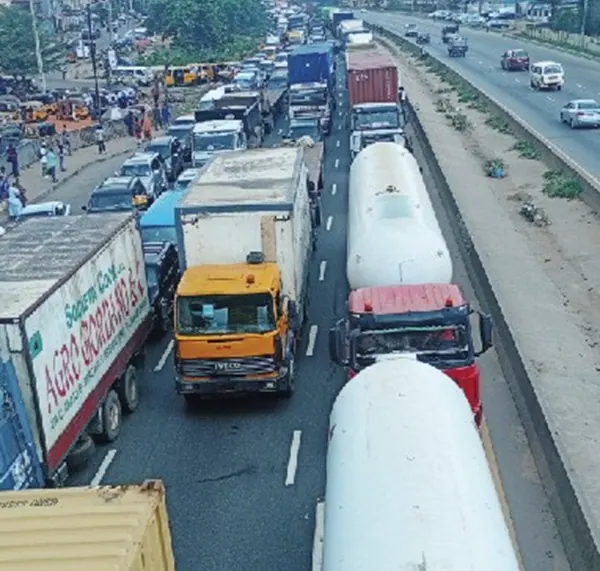
The Lagos-Ibadan Expressway, a vital transportation link between Lagos and the northern states, as well as the eastern parts of the country, is facing a crisis. The road, which was extensively rehabilitated less than a decade ago, has been blocked several times for repairs, causing significant disruptions to commuters. This has raised concerns about the country's ability to maintain its critical infrastructure. The expressway's importance extends beyond the Southwest region, as it serves as a major conduit for the movement of goods and people across the country.
The road's significance cannot be overstated, with millions of people passing through it daily. However, the presence of haphazardly located industries along the expressway has contributed to the chaos. Long articulated trucks often park on the road, causing gridlocks and increasing the risk of accidents. This situation has sparked fears that the Lagos-Ibadan Expressway may suffer the same fate as the Apapa port, which has become notorious for its gridlocks and inefficiencies.
The Apapa gridlock is a cautionary tale of what can happen when infrastructure development fails to keep pace with growing demands. The port, which handles 90 percent of Nigeria's imports, has become a bottleneck, with trucks often queuing for days, leading to congestion and accidents. A similar scenario on the Lagos-Ibadan Expressway would have devastating consequences for the country's economy, which relies heavily on the movement of goods and people.
Experts have attributed the problem to poor planning and a lack of vision. The country's leaders have been accused of failing to prioritize infrastructure development, leading to a situation where critical roads like the Lagos-Ibadan Expressway are on the verge of collapse. The issue is not just about the road itself but also about the need for a comprehensive plan to address the country's infrastructure challenges.
The consequences of inaction are dire. If the bridges over the Ogun River were to collapse, it would cut off the road from Lagos, causing widespread disruptions to the economy. To mitigate this risk, there is a need for alternative link roads to be developed, such as the Lagos-Abeokuta to Ibadan expressway and the Lagos-Epe-Ibadan road. These roads would provide a backup in case of an emergency and help to distribute traffic more evenly.
The need for innovative thinking and bold leadership has been emphasized. The German Chancellor, Helmut Kohl, once created a "ministry of the future" to focus on long-term planning and development. A similar approach is required in Nigeria, where leaders must think outside the box to address the country's infrastructure challenges. This includes investing in road infrastructure and developing contingency plans to mitigate the impact of potential disasters.
The Lagos-Calabar road project, recently embarked upon by the president, has been welcomed as a step in the right direction. However, more needs to be done to address the country's infrastructure challenges. The Badagry-Sokoto road, which is equally important, should also be prioritized. By investing in these critical roads, Nigeria can secure its future and ensure that its economy continues to grow and develop.
Key points
- The Lagos-Ibadan Expressway requires urgent attention to prevent a repeat of the Apapa gridlock disaster.
- Poor planning and lack of vision have contributed to the country's infrastructure challenges.
- Alternative link roads, such as the Lagos-Abeokuta to Ibadan expressway, are needed to mitigate the risk of disruptions to the economy.