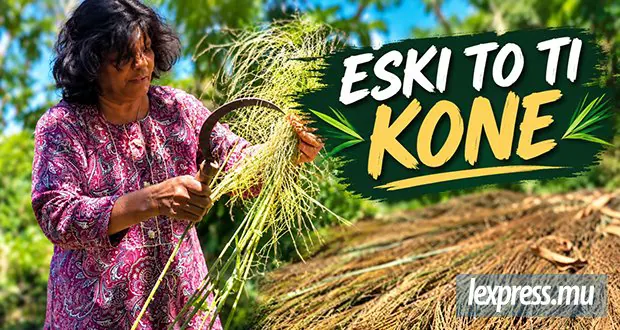
In a world dominated by modern brooms readily available in supermarkets, Gyantee Puryag from Laventure, Mauritius, has been practicing the traditional fatak broom making for 30 years. This craft has been passed down through her family, where she initially learned it from her parents. After her marriage, she continued this activity with her late husband. The fatak broom, made from the fatak plant, is a testament to her dedication to preserving this traditional skill.
The journey of creating a fatak broom begins with planting a tige of the fatak plant with its roots. It takes about a year or more for the plant to grow and multiply its tiges. Once the plant flowers, typically in May, the tiges of flowers are cut and dried in the sun for several weeks. After drying, the tiges are cleaned, worked on to become smoother, and then assembled to form the broom. The length of the broom varies according to individual preferences.
Gyantee's client base extends beyond Mauritius, with foreigners also showing interest in purchasing these handmade brooms. Some even travel from afar to acquire these traditional brooms. According to Gyantee, many people appreciate the value of this traditional broom, which requires time, effort, and patience to create. Unlike modern brooms, the fatak broom demands care and attention to ensure its longevity.
The price of the fatak broom has evolved over the years, from approximately Rs 35 to Rs 200. Despite the time and effort required, the broom remains a sought-after item. Gyantee emphasizes the importance of preserving this traditional craft, which is a part of Mauritius' heritage. She believes that the fatak broom is not just a household item but a symbol of tradition and cultural identity.
The feature on Gyantee Puryag and her craft marks the final episode of the "Eski to ti Kone" series, which has been showcasing traditional Mauritian practices and skills since July 2025. This series has highlighted various aspects of Mauritian culture, from traditions to occupations and skills that define the island nation's heritage.
A new weekly series will replace "Eski to ti Kone," focusing on human-interest stories and reports. This upcoming series aims to continue sharing the stories of individuals who have unique experiences and insights to share. The legacy of "Eski to ti Kone" will continue through this new series, which promises to delve into the lives of Mauritians and their experiences.
Gyantee's dedication to preserving the traditional fatak broom making is a testament to her passion for her craft and her culture. As the series comes to a close, it highlights the importance of preserving traditional skills and practices that define a nation's identity. The story of Gyantee Puryag and her fatak brooms serves as a reminder of the value of tradition and cultural heritage.
Key points
- - The traditional fatak broom making is a dying craft that requires patience and skill. - Gyantee Puryag has been practicing this craft for 30 years and continues to preserve it. - The fatak broom is a symbol of Mauritian tradition and cultural identity.