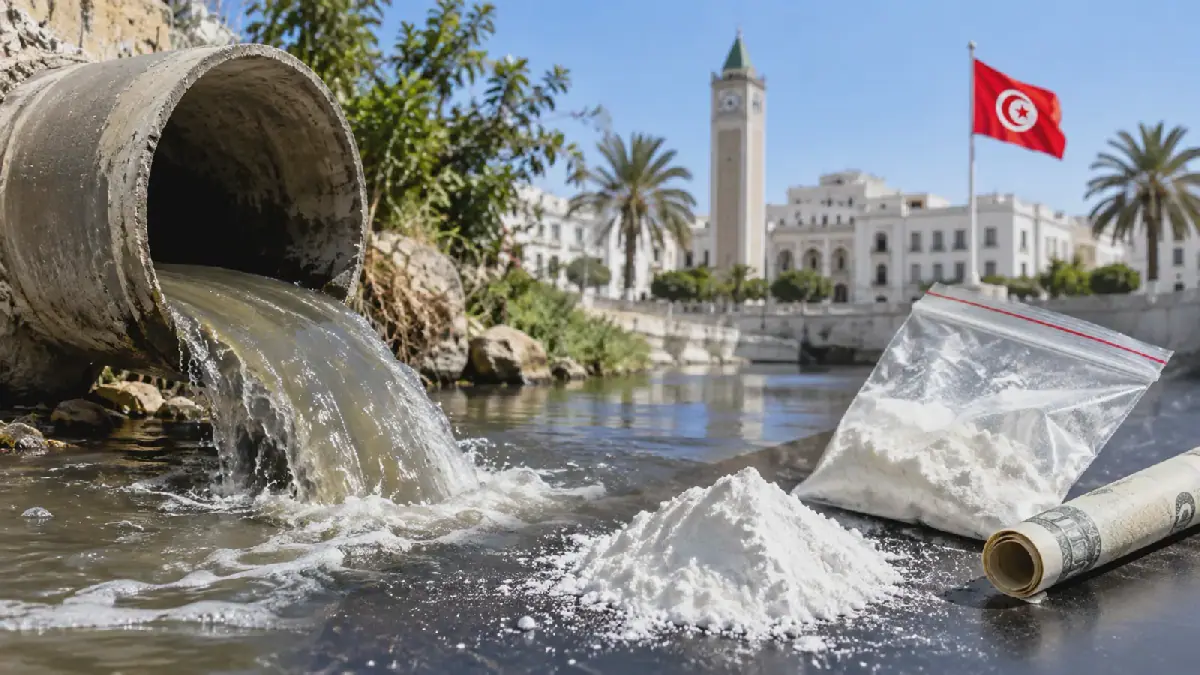
A recent scientific study has revealed the presence of cocaine in the wastewater of several Tunisian cities, with notably high concentrations found in Tunis and Ariana. The research, published in the Integrated Environmental Assessment and Management journal in March 2026, analyzed samples from 15 wastewater treatment plants across six major cities. The study, conducted between November and December 2021, tested for 11 substances and their metabolites.
The study found that cannabis, commonly referred to as "zatla," remains the most consumed drug in the areas studied. However, cocaine was also detected, with significant local peaks in Tunis and Ariana. The findings suggest that while the Tunisian market for cocaine appears relatively limited, indicators point to a growing trend. This trend is likely driven by increased trafficking routes to Europe via North Africa.
A 2021 survey of 6,201 Tunisian high school students provided additional insights into drug use among young people. The survey found that 0.52% of respondents reported having used cocaine at least once, while 3.3% believed it was easy to obtain. These statistics highlight the potential for expansion of the cocaine market in Tunisia.
The study's authors emphasize the dangers associated with cocaine use, including high dependency rates, cardiovascular issues, heart attacks, strokes, and severe psychiatric complications. The detection of cocaine in wastewater, particularly in urban areas like Tunis and Ariana, raises concerns about public health and safety.
The research underscores the importance of monitoring wastewater for drug traces, as it provides a unique window into drug consumption patterns. By analyzing wastewater samples, researchers can gather data on drug use without relying on self-reported surveys or other methods that may be subject to biases.
The study's findings and methodology contribute to a better understanding of drug use trends in Tunisia. The data collected can inform public health policies and interventions aimed at addressing substance abuse. Furthermore, the research highlights the need for continued monitoring and analysis to track changes in drug consumption patterns over time.
The publication of these findings in March 2026, followed by media coverage in Tunisia on November 1, 2026, serves as a reminder that the data reflects consumption patterns from 2021. As such, it does not necessarily reflect current usage trends in 2026. Nonetheless, the study provides valuable insights into the historical context of drug use in Tunisia.
Key points
- Cocaine detected in wastewater of Tunis and Ariana, Tunisia.
- Study analyzed samples from 15 wastewater treatment plants across six major cities.
- Cocaine use among Tunisian high school students reported at 0.52%.