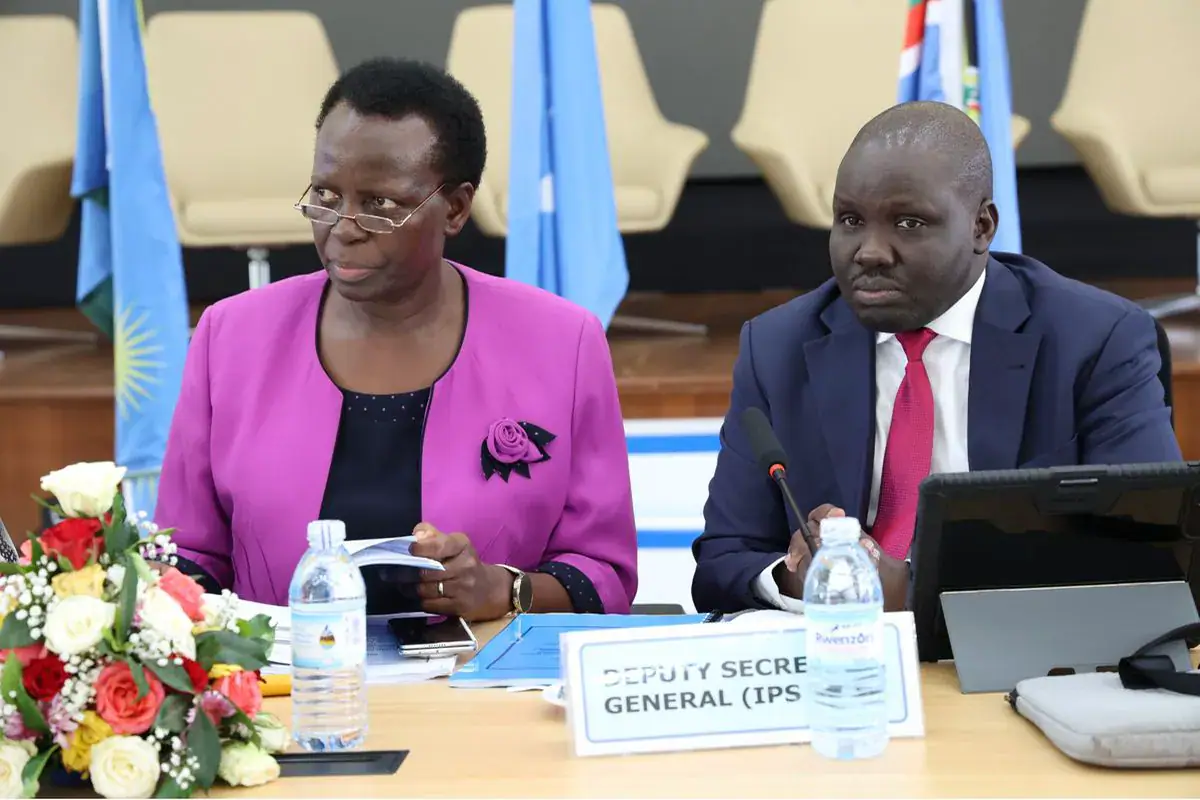
The East African Community (EAC) ministers responsible for education, science, technology, culture, and sports have adopted regional artificial intelligence (AI) and digital transformation strategies. This decision was made at the 21st Sectoral Council meeting held on October 31, 2026, at the Inter-University Council for East Africa (IUCEA) headquarters in Kampala, Uganda. The meeting was chaired by Uganda's Minister of State for Education and Sports, Phyllis Chemutai. The adopted strategies aim to establish common technological frameworks for education, health, agriculture, and social services across the region.
A special AI module will be taught across disciplines in undergraduate programs to equip students with skills for the appropriate and responsible use of emerging technologies. The IUCEA, in collaboration with the East African Science and Technology Commission (EASTECO), will oversee the regional AI university network. This initiative seeks to enhance the quality of education and prepare students for the demands of the digital age. The AI module is expected to promote innovation and technological advancements in the region.
The ministers also agreed to establish criteria for recognizing AI systems in Kiswahili, aligning with efforts by the East African Kiswahili Commission (EAKC) to make the language an official working language of the Community. This move aims to promote the use of Kiswahili and enhance cultural and linguistic diversity in the region. The EAKC's efforts to standardize Kiswahili will facilitate communication and cooperation among EAC member states.
The Sectoral Council expressed dissatisfaction with some public and private universities that continue to charge students from EAC partner states higher tuition fees than local students. This practice contradicts directives requiring equal treatment and payment in the host country's currency. The IUCEA has been directed to conduct a regional audit of these violations, which should not continue. All partner states, through their universities, are aware of the requirement to charge equal fees for students from EAC member states.
In preparation for the 2027 Africa Cup of Nations (AFCON), co-hosted by Tanzania, Kenya, and Uganda, the three countries were urged to accelerate plans for a "Pamoja Visa" to facilitate the movement of fans across borders. The Secretariat will convene technical experts by November 2026 to review a proposal on the EAC's cultural and commercial participation in the tournament. This initiative aims to promote regional cooperation and enhance the overall experience for fans and participants.
The ministers also called for faster progress on mutual recognition agreements for professional qualifications among partner states. These agreements will cover engineers, architects, accountants, and veterinary doctors, allowing them to work across borders without unnecessary restrictions. The agreements will promote the free movement of professionals and enhance cooperation in the region. The adoption of the Regional Qualifications Framework for Technical and Vocational Education and Training seeks to harmonize technical certificates across the region.
The Regional Qualifications Framework for Technical and Vocational Education and Training will enhance the quality and recognition of technical and vocational education in the region. This framework will promote the mobility of skilled workers and enhance cooperation among EAC member states. The framework's adoption demonstrates the EAC's commitment to promoting regional integration and cooperation in education and training. The next steps will involve implementing the adopted strategies and frameworks.
Key points
- EAC ministers adopt AI strategy and university tech module to enhance education and digital transformation
- Ministers agree to establish criteria for recognizing AI systems in Kiswahili
- The EAC urges Tanzania, Kenya, and Uganda to accelerate plans for a "Pamoja Visa" for the 2027 AFCON.