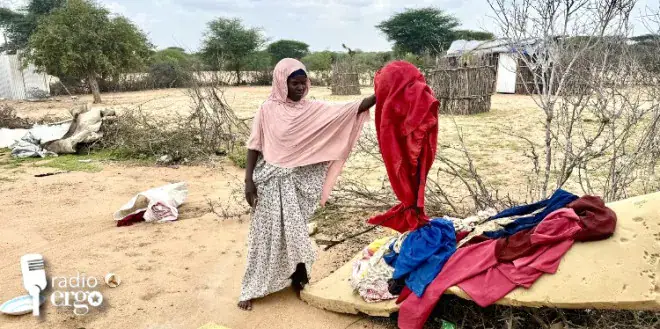
Torrential rain and strong winds have destroyed shelters and swept away household possessions in Dadaab, northeastern Kenya, leaving many Somali refugee families without food and shelter. The storms, which began on October 29, have forced some families to seek shelter with relatives, while others have nowhere to turn for food or protection from the rain. Faisa Mohamed Hassan, a refugee who lost her shelter, said the floodwater swept away everything inside, including their last food ration.
Faisa, a widow with seven children, fled with her family to her mother's home after the storm destroyed their shelter in the Macalin Farah area of Hagadera camp. She said the water took all their food and mattresses, and she is afraid the floods will carry away her children. Her relatives, who are also poor refugees affected by the rain, cannot offer much help. Faisa's children had stopped attending school following their displacement, and she used to pay 2,000 Kenyan shillings a month for their education.
The Hagadera camp chairman, Khalif Dhubow Jelle, said about 100 families had lost their shelters, while hundreds of others had suffered damage but managed to salvage belongings. Many of the worst-affected households were recent arrivals and young couples who had settled in undesignated areas, including drainage channels, making them vulnerable to flooding. The chairman said refugees had received no shelter support for about 10 years, leaving many in weak structures vulnerable to collapse.
Batulo Mohamed Abdi's family of nine were not displaced, but floodwater soaked all their belongings. One of their two shelters collapsed completely, and part of the other fell in, leaving them with inadequate shelter and food. Batulo said they had not received a latrine since arriving in the camp in 2023, and rainwater has mixed with human waste around their shelter, raising fears of disease. Her seven-year-old child has had diarrhoea for two days, and she has no money to buy medicine.
Batulo has been unable to work for two months because of a kidney problem and used to earn 3,500 Kenyan shillings a month washing clothes. Her husband, who collects and sells firewood, has been without work for a month after nearby sources of wood ran out. The family fled drought and insecurity in Buale, southern Somalia's Middle Juba region, in 2023. They had a four-hectare farm that had become unproductive because of poor rainfall.
Recently arrived refugees have cards allowing them to access limited food aid but continue to face difficulties with accessing water, healthcare, shelter, and education. The destruction comes as the October-December short rainy season is forecast to bring above-average rainfall to parts of East Africa. The IGAD Climate Prediction and Applications Centre (ICPAC) gave northeastern Kenya a 90 per cent likelihood of enhanced rainfall, raising concerns that further flooding could worsen conditions for refugees.
The situation in Dadaab is dire, with many refugees struggling to access basic necessities. The destruction of shelters and loss of belongings has exacerbated the challenges faced by refugees, who are already struggling with reductions in humanitarian assistance. The forecast of above-average rainfall in the coming months raises concerns that further flooding could worsen conditions for refugees living in poorly constructed shelters and flood-prone areas.
Key points
- Refugee families in Dadaab are struggling to access basic necessities like shelter, food, and healthcare after torrential rains destroyed their homes and belongings.
Reporting sources
- Downpours destroy Dadaab refugees’ homes and belongings · Hiiraan Online