Lomé, October 2 - Three Togolese referee trainers and three coaches who participated in the first "Collectif Afrique Pacifique Rugby (CAP Rugby)" training in Côte d'Ivoire in 2025 are receiving a three-day pedagogical follow-up in Lomé. This initiative aims to strengthen the competencies of the trained actors and contribute to the development of rugby in Togo. The training is led by three trainers from the French Rugby Federation (FFR) under the direction of Malick Ndaw, head of the CAP Rugby project.
The follow-up training focuses on evaluating the coaches' knowledge of rugby fundamentals through practical exercises on non-contact rugby, scrum, tackling, kicking, and touch. The training also covers the physical, technical, tactical, and mental aspects of the sport. Participants will work on endurance, strength, speed, flexibility, passing, kicking, game reading, decision-making, concentration, and teamwork. Additionally, the trainers will address the importance of athlete lifestyle, including sleep, nutrition, and recovery.
The referee trainers will focus on several modules, including offside and challenges in current play, tackling, scrum, and advantage. Upon completion of this process, the trained referees will be tasked with contributing to the training of eight new referees from the Togolese Rugby Federation (FTR). Malick Ndaw explained that the project is based on two axes: developing rugby through the training of coach and referee trainers, and making the sport a genuine development tool.
The CAP Rugby project, financed by the French Development Agency (AFD) and implemented by Expertise France in partnership with the French Rugby Federation, covers 15 countries in Africa and the Pacific. The project's goal is to strengthen rugby development through the training and accompaniment of sector actors, including administrators, coach trainers, and referee trainers.
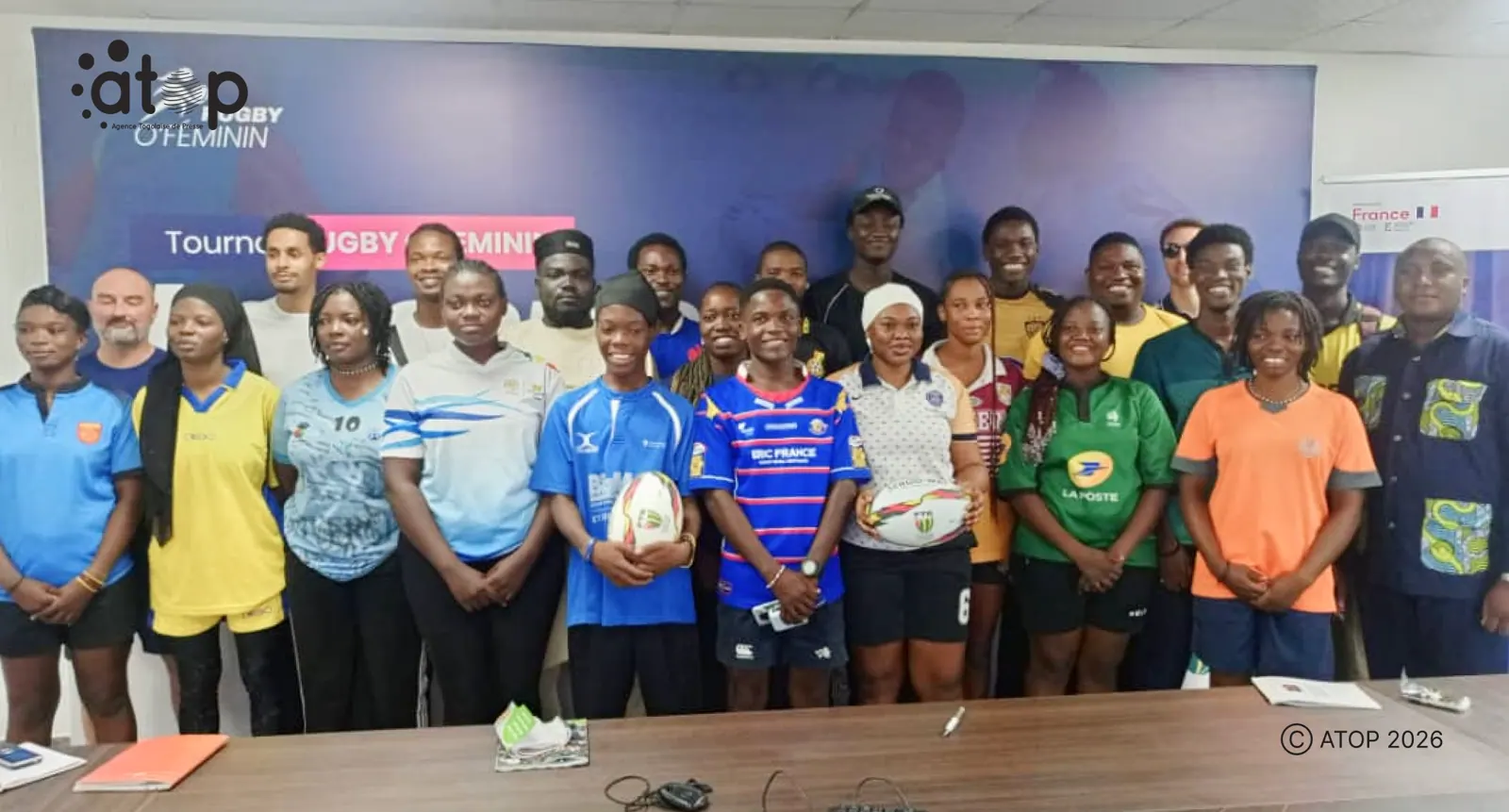
The pedagogical follow-up also provided an opportunity to launch the "Rugby O'Féminin Tournament", supported by the Togolese Rugby Federation with financial backing from CAP Rugby. The three-month project involves the Lycée de Togblékopé and the Lycée de Cacavelli. Four physical education teachers and six FTR educators will be trained by the three Togolese coaches who participated in the CAP Rugby training.
The trained educators will then introduce young girls to rugby in the two schools. A tournament featuring the two schools is planned for December. The project aims to create six women's rugby teams, three in each school. This choice is justified by the fact that these structures have already hosted the "Get Into Rugby" program, designed for young girls and boys.
The CAP Rugby project and the "Rugby O'Féminin Tournament" reflect the ongoing efforts to develop rugby in Togo and promote women's participation in the sport. The project's success will depend on the effective implementation of the training and the engagement of the local rugby community.
Key points
- The CAP Rugby project covers 15 countries in Africa and the Pacific.
- The project aims to strengthen rugby development through the training and accompaniment of sector actors.
- The "Rugby O'Féminin Tournament" aims to create six women's rugby teams in two schools in Lomé.