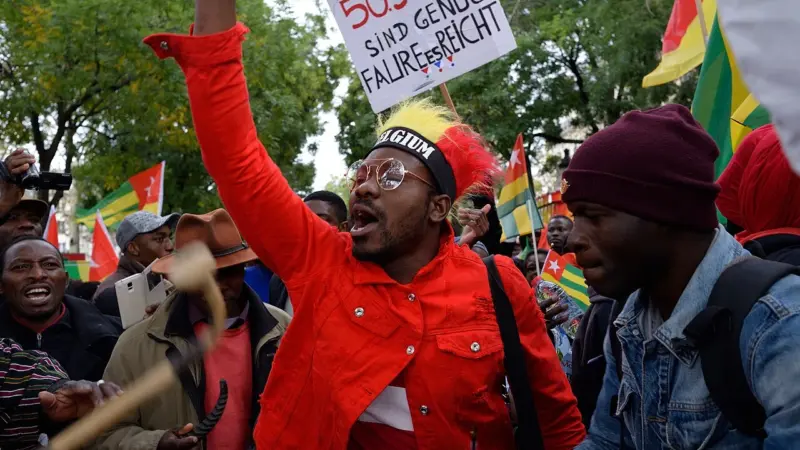
The Togolese people are facing significant challenges due to the country's ongoing economic and political crisis. The government's crackdown on civil society and restrictions on freedom of expression have severely limited opportunities for demonstrations and civil disobedience. Despite these challenges, citizens are finding alternative ways to make their voices heard. With in-person gatherings becoming increasingly difficult to organize, online protest has emerged as a common form of political dissent in Togo.
A key factor in the current crisis is the contested constitution adopted by the National Assembly on March 25, 2024. The new constitution shifted Togo from a presidential to a parliamentary system, with the President of the Republic now elected by members of parliament rather than by direct universal suffrage. This change has resulted in a largely ceremonial president, with most power concentrated in the President of the Council, a position with no term limits. Faure Gnassingbé has held this position since May 2025, after twenty years as head of state.
The ruling government claimed that the constitutional reform would promote stability and collaborative governance, but the opposition disagreed. El Hadj Madi Djabakaté, a political scientist, noted that the reform has "enshrined the concentration of power in the constitution" rather than creating a new balance of power. This change sparked significant backlash, leading to the June 2025 protests, one of the largest in Togo since 2017. The protests were triggered by the arrest of Togolese rapper Aamron, who had spoken out online about declining living conditions and political corruption.
The June 2025 protests were primarily economic and social in nature, with protesters demanding a minimum wage of CFA francs 52,500 per month (approximately USD 93) and limits on power outages to a maximum of four to six hours a day. However, police forces violently suppressed the protests, resulting in at least seven deaths and over 140 arrests throughout the month. Former Defense Minister Essossimna Marguerite Gnakadé publicly condemned the violence, but was later arrested on September 17, 2025, for inciting rebellion.
The arrest of Aamron and the subsequent protests highlight the challenges faced by civil society in Togo. The government's crackdown on protesters and civil society has resulted in a significant increase in online protests, as citizens seek alternative ways to express their dissent. This shift to online protest has become a common form of political dissent in Togo, as citizens attempt to make their voices heard despite the restrictions on freedom of expression.
The situation in Togo has been closely monitored by international organizations, including CIVICUS Lens and Amnesty International. These organizations have documented the violent suppression of protests and the arrest of protesters, including Aamron and Essossimna Marguerite Gnakadé. The international community has expressed concern about the situation in Togo, highlighting the need for the government to respect the rights of citizens to freedom of expression and assembly.
As the situation in Togo continues to evolve, it remains to be seen how the government will respond to the demands of its citizens. The shift to online protest has provided a platform for citizens to express their dissent, but it is unclear whether this will lead to meaningful change. Key to the situation are the government's willingness to engage with civil society and the international community's continued attention to the situation.
Key points
- The Togolese government has cracked down on civil society and restricted freedom of expression amid an ongoing political crisis.
- A new constitution adopted in 2024 shifted power from the president to the President of the Council, with Faure Gnassingbé holding the position since May 2025.
- Online protest has emerged as a common form of political dissent in Togo, as citizens seek alternative ways to express their dissent.