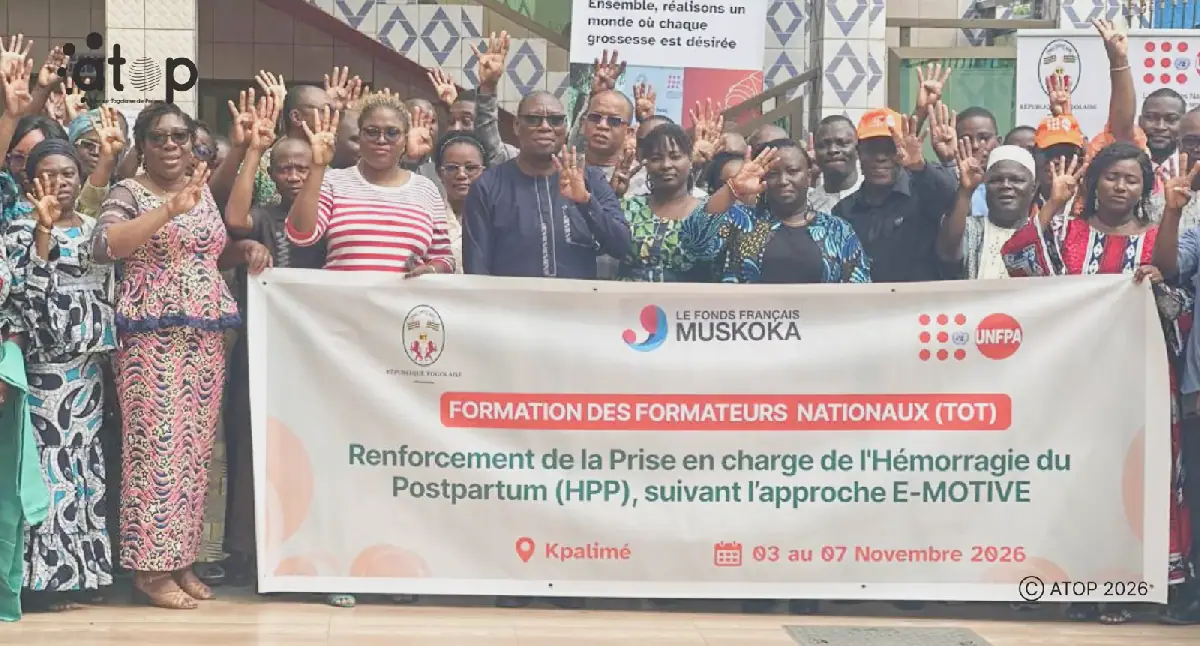
Kpalimé, Togo - A four-day training session began on November 3 in Kpalimé, Togo, focusing on the prevention and management of postpartum hemorrhaging (PPH). The event, organized by the United Nations Population Fund (UNFPA) in collaboration with the Togolese Ministry of Health and the Société togolaise de médecine périnatale (SOMOPI), brings together around 60 maternal and neonatal health professionals from Togo's six health regions. The training aims to equip participants with the skills and knowledge needed to effectively manage PPH, a leading cause of maternal mortality.
The training session is centered on the E-MOTIVE approach and the World Health Organization's (WHO) recommendations for managing PPH. E-MOTIVE is a comprehensive approach that emphasizes early detection and objective measurement of blood loss, followed by immediate and coordinated care. The approach includes a range of interventions, such as uterine massage, administration of uterotonic medications, and intravenous fluids. By mastering this approach, health professionals can significantly reduce the risk of complications and maternal mortality.
The training program also covers the use of specialized equipment designed to facilitate the detection and management of PPH. Participants will learn how to use calibrated collection drapes to measure blood loss and intrauterine balloon tamponades to treat severe bleeding. In addition to these practical skills, the training will also focus on simulation exercises and modules on low-dose, high-frequency training techniques.
The ultimate goal of the training is to strengthen the capacity of Togo's health system to respond to maternal health emergencies. By training at least 60 national trainers, the program aims to create a ripple effect, enabling them to transmit their knowledge to healthcare providers across the country. This initiative is part of the UNFPA's 2025-2029 roadmap, which prioritizes accelerating the reduction of maternal mortality in the region.
According to Dr. Tchandana Makilioubé, head of the maternal and infant health division, maternal deaths during pregnancy, childbirth, or the postpartum period are a tragedy for families, communities, and the country as a whole. She emphasized the importance of systematically measuring blood loss to quickly identify abnormal bleeding and intervene in a timely manner. Dr. Makilioubé also highlighted the role of sociocultural factors in contributing to maternal mortality, including home births with unassisted deliveries.
The training program is supported by Ellavi, a company specializing in maternity care tools, and the UNFPA's regional office for West and Central Africa, based in Dakar. Upon completion of the training, participants will receive certificates, enabling them to cascade their knowledge to healthcare providers in their respective regions. The program aims to improve the quality of obstetric care and ensure better management of maternal emergencies.
Togo's efforts to reduce maternal mortality align with international goals, including the 2030 Sustainable Development Goals. By strengthening the capacity of its healthcare workforce, the country is taking a critical step towards achieving these objectives. The training program is a significant step towards reducing preventable maternal deaths and improving the overall quality of maternal healthcare in Togo.
Key points
- The training session focuses on the E-MOTIVE approach and WHO recommendations for managing postpartum hemorrhaging.
- The program aims to train at least 60 national trainers who will transmit their knowledge to healthcare providers across Togo.
- The initiative is part of the UNFPA's 2025-2029 roadmap to accelerate the reduction of maternal mortality in the region.