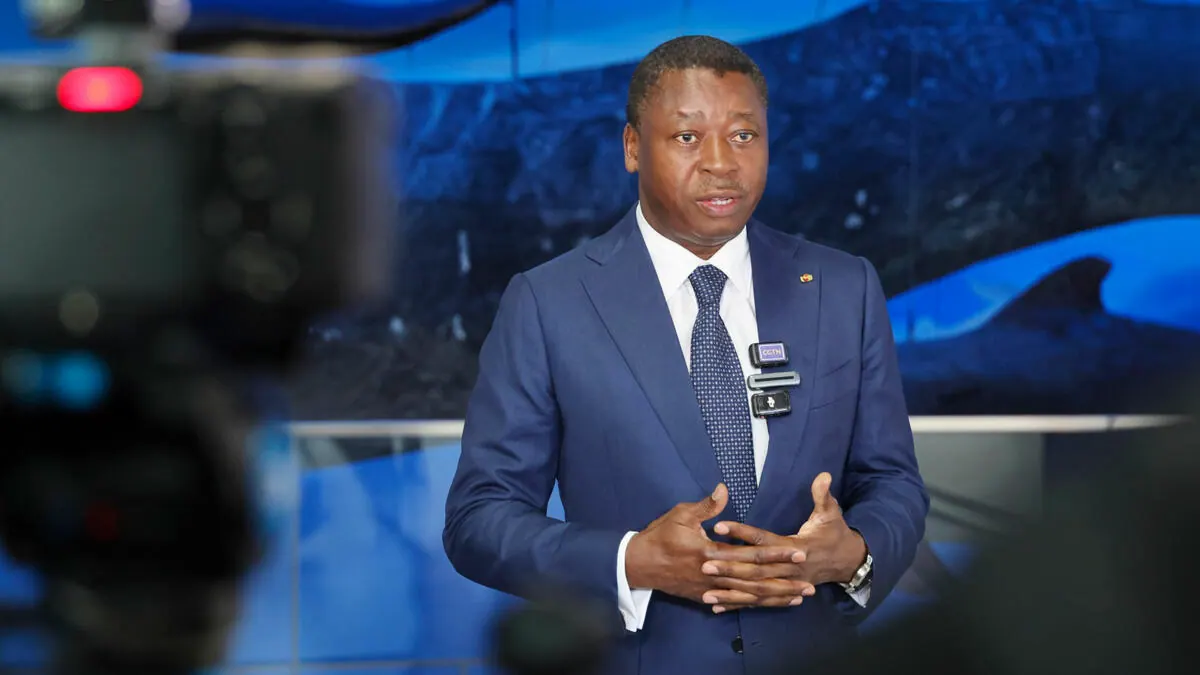
During an official visit to China, Togo's President of the Council, Faure Gnassingbé, shared his vision with Chinese media. He emphasized the need for Togo and Africa to transcend their current role as simple transit zones and become influential actors in global ocean governance. This ambition is centered around three main areas: security, economy, and blue economy. By strengthening its position, Togo aims to contribute significantly to global decision-making processes.
A key aspect of Togo's strategy is enhancing maritime security. The country has engaged in regional cooperation within the Gulf of Guinea, focusing on ensuring freedom of navigation, preventing illicit trafficking, and protecting maritime spaces. Faure Gnassingbé highlighted the potential for China, a major player in global trade, to assist African countries in bolstering their maritime security capabilities. This cooperation is seen as crucial for the economic stability and growth of African nations.
The President stressed that maritime security is intrinsically linked to economic security. Disruptions in major maritime routes adversely affect African economies by increasing transportation costs, energy prices, and impacting supply chains. Togo, with its Port of Lomé being the largest container port in West Africa, aims to move beyond mere transshipment. The goal is to capture more value by developing industrial zones, enhancing logistical services, and fostering a skilled workforce and local enterprises.
Faure Gnassingbé pointed out that China's experience in integrating ports, industrial parks, and productive ecosystems is an area where Togo can draw valuable lessons. The development of the blue economy, he noted, requires mastering relevant knowledge and technologies, particularly in marine sciences. He called upon China to assist in training specialists and sharing data, emphasizing that Africa's participation in global governance is contingent upon this capacity building.
The blue economy initiative is seen as a pathway for Africa to actively participate in global ocean governance. Faure Gnassingbé highlighted the importance of science and technology in harnessing the potential of the ocean. By acquiring these capabilities, African countries can ensure their voices are heard and their interests represented in international forums.
During his visit, Faure Gnassingbé also commented on China's proposal to host the Secretariat of the Biodiversity Beyond National Jurisdiction (BBNJ) Agreement in Xiamen. He viewed the agreement as an opportunity for African countries, provided they are fully engaged in its implementation. The location of the Secretariat, while important, is secondary to its potential impact on African nations, he emphasized.
Faure Gnassingbé concluded his remarks by underscoring the importance of collaboration and knowledge sharing between Togo, Africa, and China. By working together, these nations can create a more inclusive and equitable global governance framework. This partnership is expected to yield significant benefits for Togo and the broader African continent, positioning them as key players in global affairs.
Key points
- Togo aims to evolve from a transit hub to an economic, technological, and institutional actor in global governance.
- Maritime security and the blue economy are crucial areas for cooperation between Togo and China.
- Togo seeks to capture more value from its port activities by developing industrial zones and enhancing logistical capabilities.