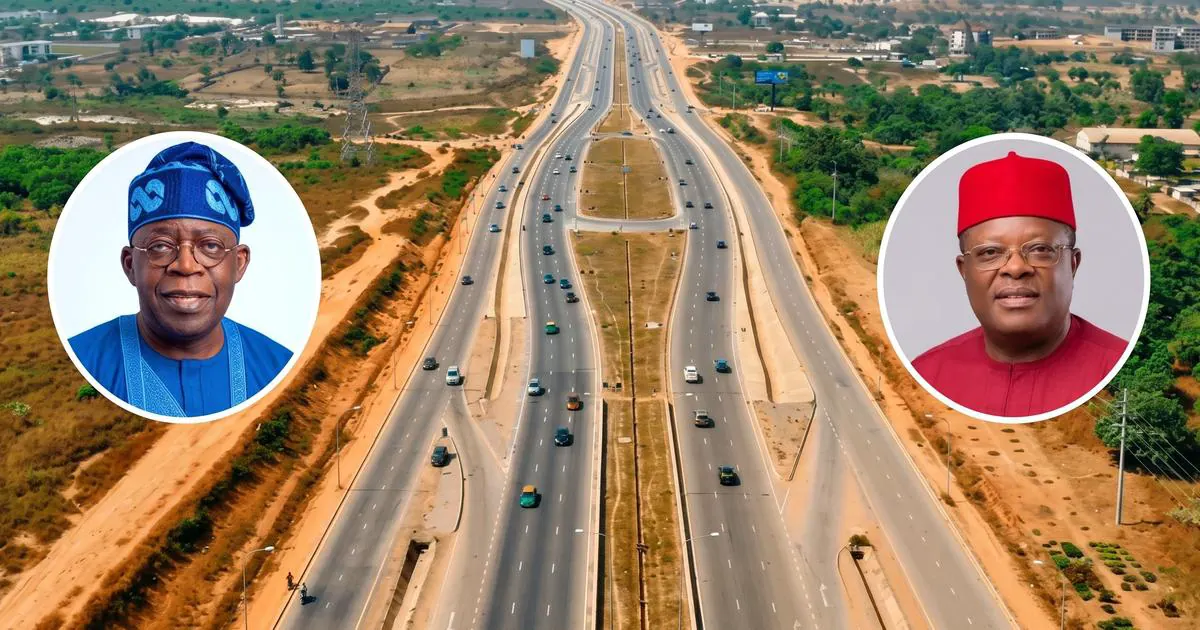
The Nigerian government has moved to clarify its position on the Lagos-Calabar Coastal Highway project, a 750-kilometre road linking communities along the country's coastline. The project, announced by President Bola Tinubu, has come under scrutiny after Minister of Works David Umahi said part of the highway would follow the existing East–West Road. This has sparked concerns that the project may not benefit coastal communities as initially planned.
Umahi's remarks sparked controversy, with many questioning the government's decision to change the original plan. The minister cited difficult terrain and flooding concerns as reasons for using the existing road corridor in parts of the Niger Delta. However, the government has since clarified that the Lagos-Calabar Coastal Highway has not been abandoned in favour of the East–West Road.
According to the Ministry of Works, the proposed reconstruction of 400 kilometres of the East–West Road is an additional project that will run alongside the Lagos-Calabar Coastal Highway. The ministry explained that sections of the existing road would need to be raised to improve their resilience due to flooding and climate-related risks.
Despite the government's clarification, concerns remain about the precise alignment of the affected sections and how the two road projects will connect. Senior Advocate of Nigeria Ebun-Olu Adegboruwa has called on President Tinubu to clarify the approved route and identify the communities that will benefit from, or be bypassed by, the highway.
Critics, including former Vice-President Atiku Abubakar, have questioned the government's handling of the project and raised concerns about a possible $20 billion loan. The government has not confirmed whether it plans to secure a loan for the project.
The controversy has highlighted the need for greater transparency and public engagement in the planning and implementation of major infrastructure projects. The government says work on the coastal highway will continue, while surveying and design work on the remaining sections is ongoing.
The outcome of the controversy will have significant implications for the communities along the proposed route. The government's decision on the final alignment and the communities it will serve will determine whether the project achieves its objective of connecting coastal communities and supporting economic activities in the region.
Key points
- The Lagos-Calabar Coastal Highway project remains on course despite concerns over changes to the route.
- The government has clarified that the project has not been abandoned in favour of the East–West Road.
- Concerns remain about the precise alignment of the affected sections and how the two road projects will connect.