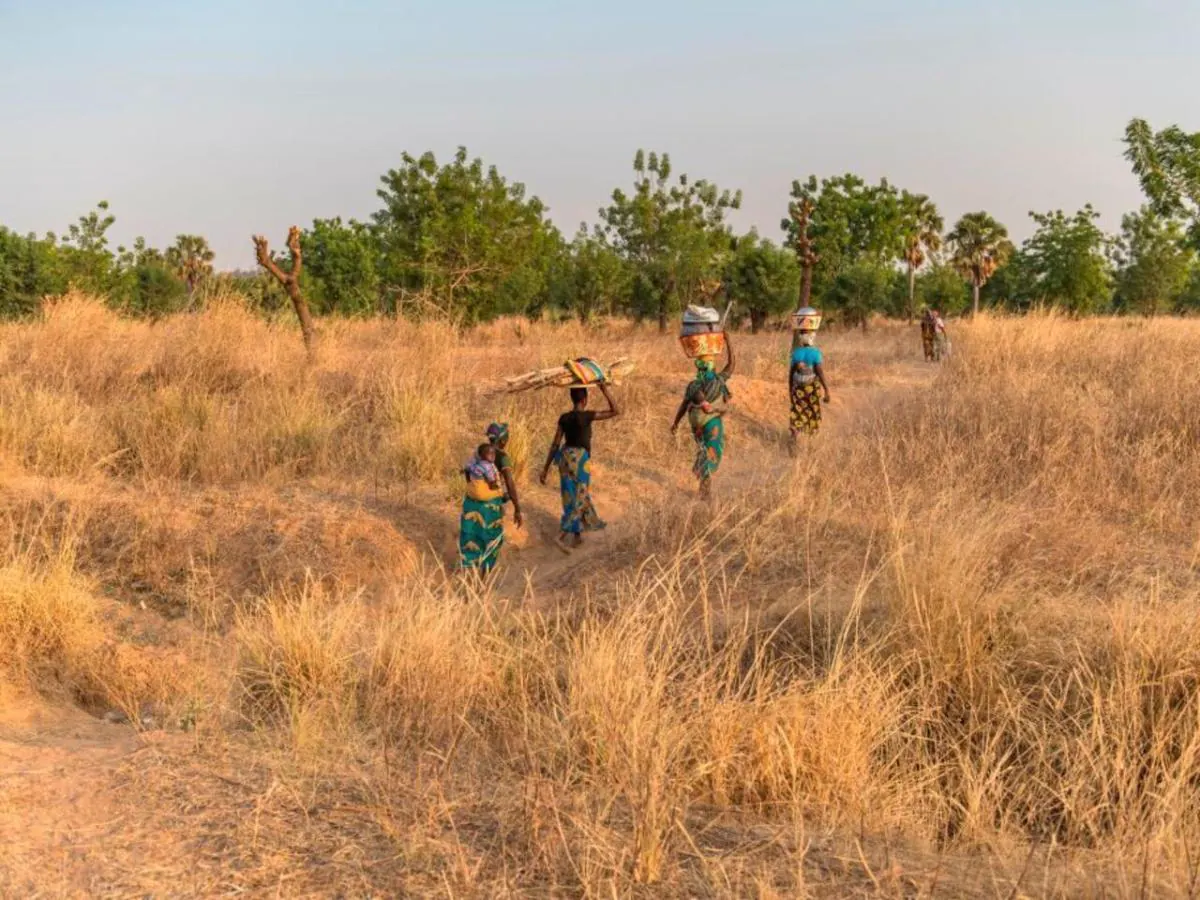
The Togo Savanes region has been experiencing a severe crisis since 2022, with the recent massive influx of Burkinabe refugees exacerbating the situation. As of February 2025, the region recorded 45,934 displaced persons, with 80% being Burkinabe. The increasing competition for resources, particularly land, has raised concerns about the region's stability. The local economy, largely dependent on agriculture, is also under threat.
The Burkinabe refugees have officially been granted refugee status by the Togolese government, with 41,773 individuals receiving assistance from the Coordination nationale d'assistance aux réfugiés (CNAR). However, their presence has put additional pressure on the region's already limited resources. The competition for land, in particular, has become a contentious issue, with local communities and refugees vying for access to agricultural land.
The situation has been described as a ticking time bomb, with tensions between the local population and refugees simmering just below the surface. A local chief noted that when multiple families have to share limited resources, tensions become inevitable. The region's youth have been forced to seek opportunities elsewhere, often working in gold mines in neighboring countries.
However, with the recent crackdown on artisanal gold mining in these countries, many young people have returned to the Savanes region, often without significant savings or professional qualifications. This has raised concerns about their future prospects and the potential for social unrest. Local reports have also noted an increase in armed robberies and motorcycle thefts in the region.
The Togolese government has been aware of the region's challenges, with a delegation visiting Gando and Mango in July 2024 to gather concerns from local populations. The delegation identified poverty and lack of employment opportunities as key factors that could contribute to insecurity. However, the government's response has been criticized as inadequate, with many young people feeling that they have limited options.
A specialist in conflict management noted that the government's approach to security needs to be revised, with a focus on providing economic opportunities for young people. The current approach, which prioritizes security over economic development, is seen as a fragile victory that could ultimately transform the region into a social powder keg.
The situation in the Savanes region highlights the need for a comprehensive approach to address the root causes of insecurity. With many young people feeling that they have limited prospects, the risk of social unrest and violence remains high. The government and international organizations will need to work together to provide support and opportunities for the local population and refugees alike.
Key points
- The Togo Savanes region faces a social crisis due to the massive influx of Burkinabe refugees, putting pressure on limited resources and threatening the local economy.
- The region's youth have been forced to seek opportunities elsewhere, often working in gold mines in neighboring countries, but are now returning without significant savings or qualifications.
- The government's approach to security needs to be revised, with a focus on providing economic opportunities for young people to address the root causes of insecurity.