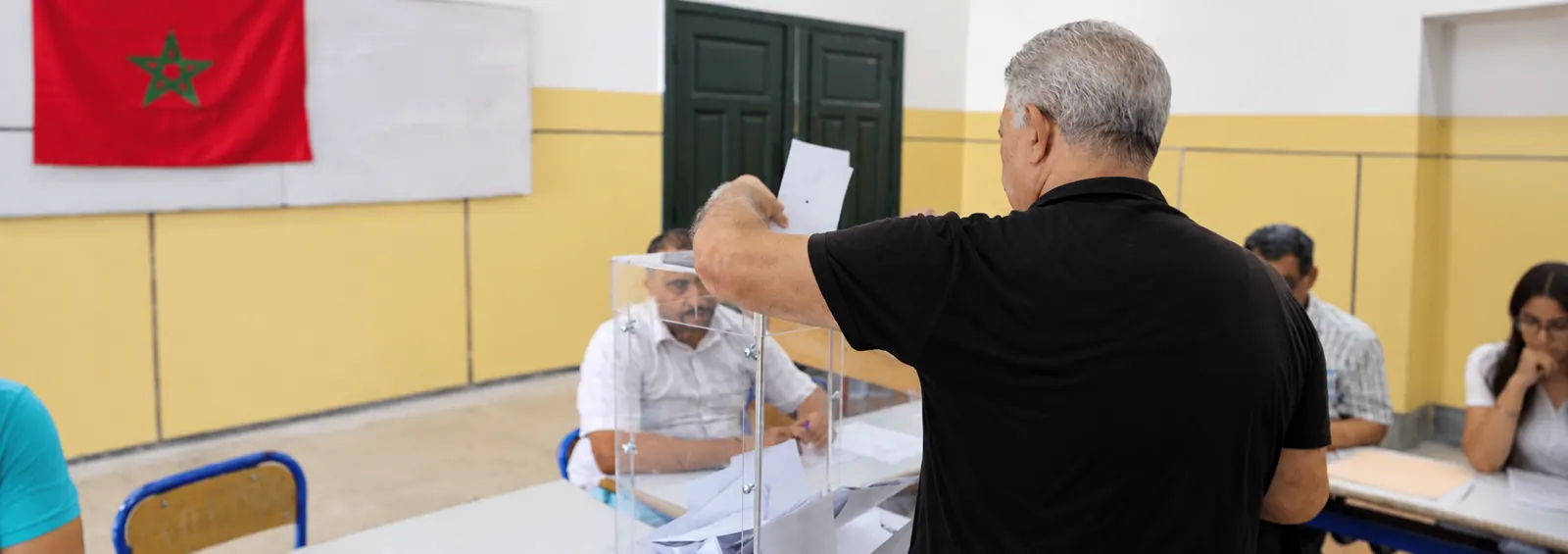
Morocco began voting on Wednesday, September 23, to renew the 395 seats in the House of Representatives, the lower house of parliament. Around 15.8 million registered voters are eligible to participate in the election, which features 28 political parties vying for seats. Polling stations opened at 8:00 AM local time and will remain open until 7:00 PM.
A total of 7,288 candidates have registered to run in the election nationwide. The campaign period, which began on September 10, ended on September 22 at midnight. During this time, participating parties presented their programs and candidates in various constituencies. Key issues discussed during the campaign included employment, economic situation, and public services.
The election is the 12th legislative election held in Morocco since its independence and the sixth since King Mohammed VI ascended to the throne in 1999. Voters will determine the composition of the House of Representatives for the next legislative term. With 28 parties participating and thousands of candidates, the election will measure the representation of different parties in the lower house of parliament.
The election campaign focused on various economic, social, and institutional issues. Employment and public policies were among the topics debated by parties. Voter turnout, particularly among young people, was also a subject of discussion during the campaign. The level of participation will be closely watched, as it will indicate the proportion of registered voters who actually cast their ballots.
After polling stations close at 7:00 PM, vote counting will begin, and preliminary results are expected to be announced on September 24. The results will reveal the distribution of 395 seats among participating political parties in the House of Representatives. This information will provide insight into the new composition of the lower house of parliament.
The election is a significant event in Morocco's democratic process, with various parties competing for representation. The outcome will shape the country's legislative agenda and policies for the next term. Moroccan citizens are playing a crucial role in determining the future of their country's governance.
The newly elected representatives will play a vital role in addressing the country's challenges and opportunities. Key issues, such as economic growth, social development, and institutional reform, will likely be at the forefront of their agenda. As Morocco moves forward, the election results will provide a clear indication of the country's direction and the priorities of its citizens.
Key points
- Around 15.8 million registered voters are eligible to participate in the election.
- A total of 28 political parties are participating in the election.
- The election will determine the composition of the 395-seat House of Representatives.