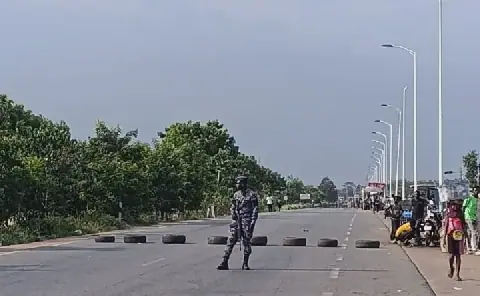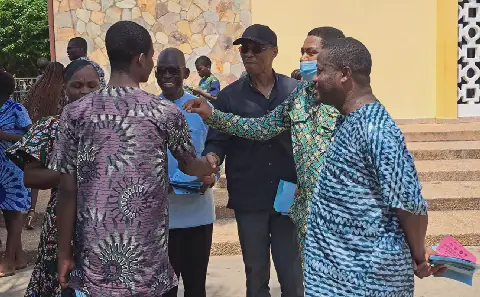
Journalist and consultant Dieudonné Sewonou has expressed concerns over the government's efforts to beautify Lomé, the capital of Togo. In a recent article, Sewonou criticized the authorities for conducting forced evictions of informal sector workers ahead of the festive season. He argues that this approach not only causes human suffering but also fails to provide alternative solutions for those affected. The government's goal of transforming Lomé into a modern, clean, and airy city is noble, but it should not come at the expense of the most vulnerable members of society.
The timing of the evictions, which coincide with the festive season, is particularly cruel, according to Sewonou. For many small traders, vendors, and artisans, the end-of-year period is the only time they can make a decent income. With the rising cost of living and erosion of purchasing power, these micro-activities are essential for their families' survival. By destroying their installations, the government is not only clearing public spaces but also pushing entire households into debt and financial hardship. Many of those affected have taken out microcredits or loans to prepare for the festive season, which will now be rendered useless.
Sewonou also questions the effectiveness of the government's urban renewal efforts, pointing out that many sites cleared since 2023 remain abandoned. Despite the authorities' claims of wanting to build modern infrastructure, the reality on the ground is one of desolation. Major markets, such as Adawlato and Agoè, remain in a state of disrepair and ruin. The lack of concrete action or serious plans for these sites raises concerns about the government's true intentions. It appears that the authorities are more focused on aesthetics than on providing solutions for those affected.
The consequences of the government's approach are already being felt, with small neighborhood businesses multiplying to compensate for the decline of larger commercial centers. However, this only serves to displace the problem rather than solve it. Examples can be seen in areas such as the beach, lagunes, and TP3, which have been transformed into wastelands or illegal dumps. Replacing informal human occupation with unsanitary or insecure conditions does not make Lomé a more beautiful city.
Sewonou advocates for a more humane approach to urban governance, one that prioritizes protection, gathering, and transformation. He argues that the authorities should avoid periods of extreme financial vulnerability, such as the start of the school year or festive seasons, and provide realistic notice periods. The government should also offer viable relocation sites or markets before evicting people, and ensure that sites are valorized immediately after clearance.
The journalist consultant emphasizes that modernizing Lomé is a necessity, but it should not come at the expense of the city's most vulnerable residents. He calls for a more balanced approach that takes into account the needs of all stakeholders. The authorities must prioritize the protection of citizens and ensure that urban renewal efforts benefit everyone, not just a select few.
Ultimately, Sewonou's article highlights the need for a more nuanced approach to urban development, one that balances aesthetics with human needs. The government's efforts to beautify Lomé should not be at the expense of the city's most vulnerable residents, who deserve protection, support, and alternative solutions. By adopting a more inclusive and humane approach, the authorities can ensure that Lomé's transformation benefits all its citizens, not just a privileged few.
Key points
- Dieudonné Sewonou criticizes government's approach to urban renewal in Lomé.
- Forced evictions of informal sector workers ahead of festive season cause human suffering.
- Government's urban renewal efforts should prioritize protection, gathering, and transformation.