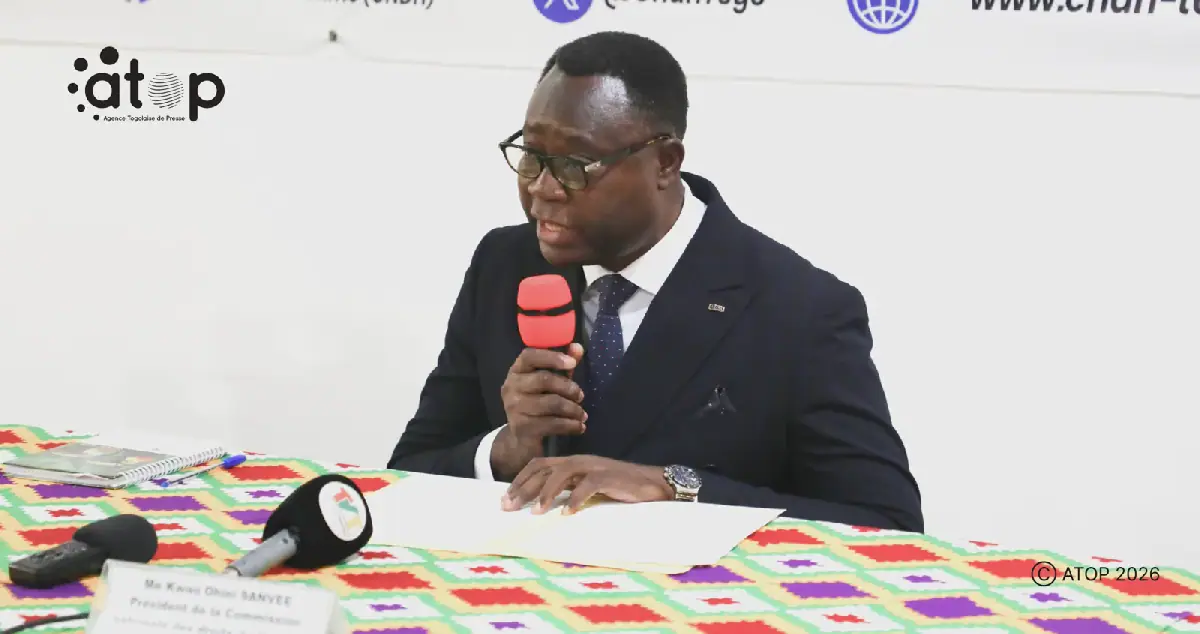
The Togolese National Commission on Human Rights (CNDH) recently conducted a training session in Lomé for 115 traditional chiefs and members of development committees from the cantons of Bè, Amoutivé, and Baguida. The session aimed to equip these leaders with knowledge on protecting women's rights in matters of succession and inheritance. This initiative aligns with the CNDH's 2026 annual work plan and Sustainable Development Goal 16 (SDG 16), which focuses on promoting peaceful and inclusive societies and access to justice for all.
The training, themed "Customary Justice and Human Rights: Resolving Disputes with Respect for Women's Rights in Succession," sought to harmonize customary practices with national legal instruments, particularly the revised Code of Persons and Family. The goal is to enable traditional leaders, who often serve as the first point of contact for populations in family or land disputes, to align their practices with human rights principles. This includes ensuring that women's rights to inheritance are respected and protected.
Three key modules were covered during the training: an overview of the CNDH, essential human rights for traditional chiefs, and the role of traditional leadership in women's succession rights. CNDH President, Me Kwao Ohini Sanvee, emphasized that while traditions are valuable, they should not justify the exclusion of women from family inheritance, which can lead to economic precariousness and gender-based violence. He stressed that protecting women's succession rights is not a favor but a requirement for justice and respect for the law.
Me Sanvee recalled the commitment made by traditional leaders through the "Declaration of Sokodé" to support vulnerable individuals and encouraged participants to use traditional justice as a tool for peace and equity, rather than perpetuating inequalities. He highlighted the significant role of traditional leadership in the Grand Lomé region, where commercial activities are predominantly female-driven, and urged them to internalize legal provisions to prevent conflict escalation and foster social cohesion.
Agbodan Kossivi, Prefect of the Golfe, noted that traditional chiefs possess moral authority and proximity to the population, making their engagement crucial in defending women's rights. He emphasized that their involvement is not only desirable but necessary for evolving mentalities and behaviors. The training was attended by notable figures, including Togbui Louis Mawuko Aklassou Adela IV, chief of the Bè canton, and Togbui Michel Agboli Adjalle IV, chief of the Amoutivé canton.
The CNDH's initiative aims to strengthen the capacities of traditional leaders and community actors in promoting and protecting human rights, particularly those of women. By doing so, the commission seeks to contribute to the creation of a more just and equitable society in Togo. The training session is part of a broader effort to ensure that traditional justice systems align with international human rights standards and national laws.
The collaboration between the CNDH and traditional leaders is seen as a positive step towards addressing gender-based disparities and promoting women's empowerment in Togo. The outcome of this initiative will be closely monitored, as it has the potential to impact the lives of many women and contribute to the country's development.
Key points
- The training session covered three key modules, including the role of traditional leadership in women's succession rights.
- CNDH President, Me Kwao Ohini Sanvee, emphasized that protecting women's succession rights is not a favor but a requirement for justice and respect for the law.
- The initiative aims to harmonize customary practices with national legal instruments, particularly the revised Code of Persons and Family.