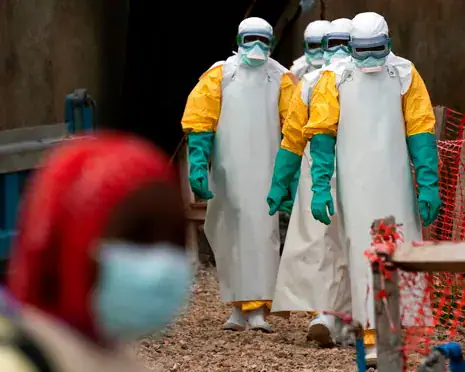
The World Health Organization (WHO) has updated its guidelines on the Ebola outbreak in the Democratic Republic of Congo (DRC), calling for urgent vaccine trials and treatment. The outbreak, caused by the Bundibugyo virus, has resulted in over 12,000 cases and 5,900 deaths as of November 24, 2026. WHO Director-General, Dr. Tedros Adhanom Ghebreyesus, led a meeting of the Emergency Committee under the International Health Regulations of 2005.
The committee emphasized the need for swift and scientifically-backed vaccine trials and treatment, prioritizing safety and professional standards. Engaging with local communities and providing transparent information on vaccine trials and implementation were highlighted as crucial. The security situation in the affected areas has been a significant challenge, impacting access to healthcare and protection for patients, healthcare workers, and medical facilities.
WHO reported that at least 94 attacks have been carried out on healthcare facilities in Congo since the outbreak was declared a Public Health Emergency of International Concern (PHEIC) six months ago. The organization has expressed concern over the continued spread of the disease and the high number of deaths, particularly in areas with compromised security.
Professor Lucille Blumberg, Chair of the Emergency Committee, stated that despite six months having passed since the outbreak, the committee remains deeply concerned about the ongoing transmission of the disease and the significant number of deaths. She emphasized that halting the outbreak will require coordinated and swift action to detect and treat cases early, prevent transmission in healthcare settings and communities, and provide basic care.
The committee stressed the importance of preventing transmission in healthcare facilities, including transmission through unsafe injection practices, and reducing delays in detecting and treating cases. Updated guidelines call for enhanced measures in high-risk areas of Congo and neighboring countries to monitor and assess travelers who may have been exposed to the Bundibugyo virus.
WHO aims to contain the outbreak and protect affected communities and healthcare workers without disrupting international travel. The organization is working to provide support to affected areas and promote a comprehensive response to the crisis.
The situation in Congo remains critical, with the risk of further spread and escalation of the outbreak. WHO and its partners continue to work with the Congolese government to respond to the crisis and contain the outbreak.
Key points
- WHO urges immediate vaccine trials and treatment in Congo to combat the ongoing Ebola outbreak.
- The outbreak has resulted in over 12,000 cases and 5,900 deaths as of November 24, 2026.
- Security concerns have significantly impacted access to healthcare and protection for patients and healthcare workers.
Reporting sources
- OMS yasabye ko hatangira kugeragezwa inkingo za Ebola · https://umuseke.rw/