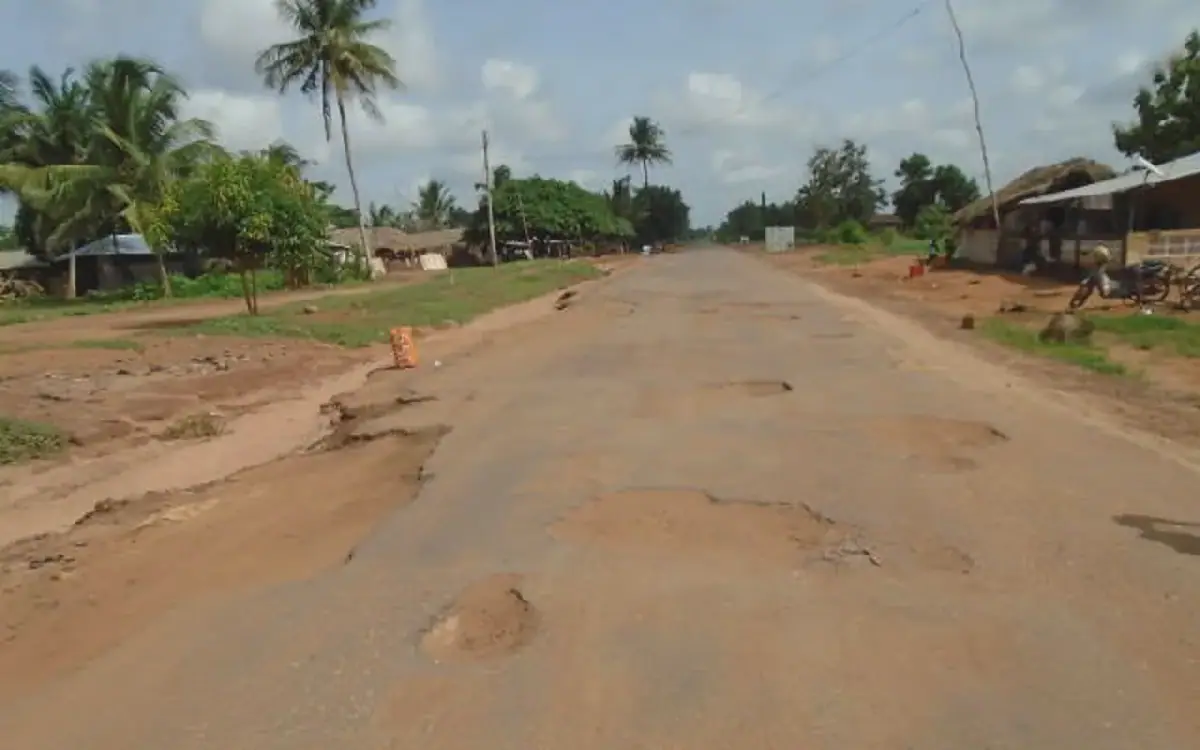
The roads connecting Amégnran to Afagnan and Afagnan to Agomé-Glozou in Togo's Bas-Mono region have deteriorated significantly, with large potholes, mud, and missing asphalt making travel extremely challenging, especially during the rainy season. This situation affects not only the daily lives of residents but also the transportation of agricultural products and access to healthcare services. The roads serve as crucial links to the prefecture's capital and the Saint-Jean-de-Dieu hospital in Afagnan.
The degradation of these roads has severe consequences on the local economy and healthcare. The evacuation of agricultural products from Bas-Mono to other areas is becoming increasingly difficult, resulting in time losses and complications for producers and transporters. The healthcare sector is also impacted, as ambulances and vehicles carrying patients struggle to reach the Afagnan hospital, which can have serious implications for timely medical care in the region.
The difficulties faced by road users, including transporters and patients, are mounting due to the poor state of these roads. Transporters are forced to spend more time traversing the relatively short but treacherous routes. Beyond the daily inconveniences, the degradation of these roads affects population mobility, commercial exchanges, and transportation conditions, ultimately impacting the region's development.
In response to the situation, the Martin Luther King Movement (MMLK), led by Pastor Edoh Komi, called on the government on August 15, 2026, to urgently rehabilitate these roads, with the goal of completing the work by the end of 2026. The MMLK highlights the stark contrast between the road infrastructure on either side of the border, noting that the section on the Beninese side is tarred, while the Togolese part remains in a worrying state of degradation.
The MMLK describes the current state of these roads as "two-faced," emphasizing the need for urgent rehabilitation to address the challenges faced by the local population. The organization's appeal brings attention to the importance of maintaining road infrastructure and territorial equity in planning. Residents now await concrete measures to restore acceptable travel conditions on these roads and facilitate the transportation of agricultural products and access to healthcare.
The rehabilitation of these roads is crucial for the development, mobility, and security of the Bas-Mono prefecture. It is essential to address the difficulties encountered daily by the population, transporters, and healthcare services. The government's response to the MMLK's appeal will be closely watched, as residents hope for improved road conditions that will enhance their quality of life and economic opportunities.
Ultimately, the restoration of these vital roads will require coordinated efforts from the government, local authorities, and other stakeholders to ensure that the Bas-Mono region's infrastructure is upgraded to meet the needs of its residents. The situation highlights the importance of investing in road infrastructure to promote economic growth, improve access to healthcare, and enhance the overall well-being of the population.
Key points
- The roads connecting Amégnran to Afagnan and Afagnan to Agomé-Glozou in Togo's Bas-Mono region are in a state of advanced degradation.
- The degradation of these roads affects not only the daily lives of residents but also the transportation of agricultural products and access to healthcare services.
- The Martin Luther King Movement (MMLK) has called on the government to urgently rehabilitate these roads, with the goal of completing the work by the end of 2026.