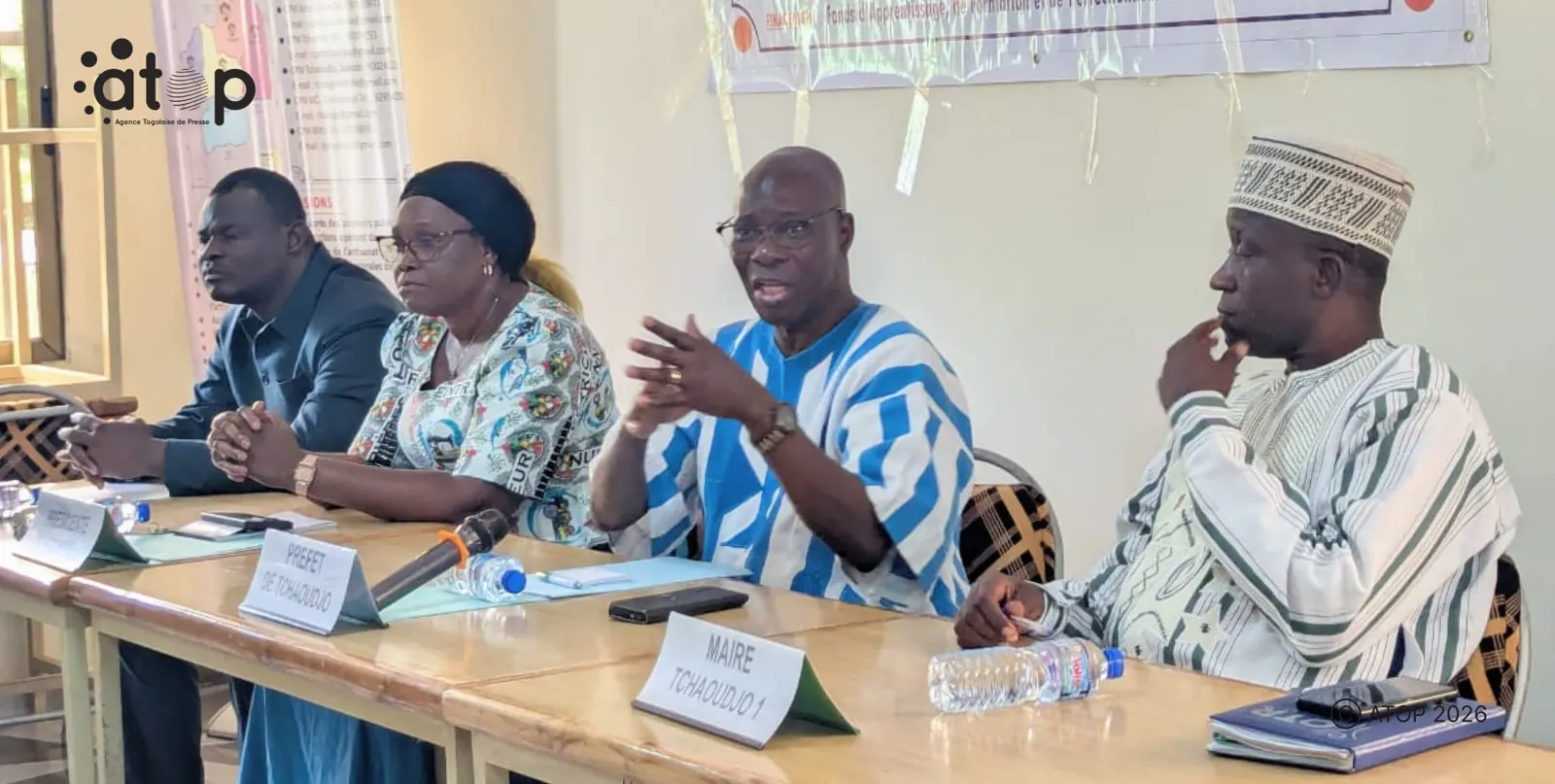
Thirty artisans, comprising masons, plumbers, and blacksmiths from the Central Regional Chamber of Trades (CRM-C), have begun a training program in Sokodé, Togo. The five-day training, which started on September 28 and ends on October 3, focuses on the construction and maintenance of eco-friendly septic tanks and non-drainable wells. The program is a collaboration between CRM-C and the Technical and Professional Institute/Carrefour des Leaders (ITP/CDL), with financial support from the National Fund for Apprenticeship, Training, and Professional Development (FNAFPP).
The training aims to enhance the skills of the artisans in constructing and maintaining eco-friendly septic tanks and non-drainable wells. Participants will engage in both theoretical and practical sessions, enabling them to improve their competencies in their respective domains. The program seeks to address the current and future needs of local communities by promoting sustainable development practices. The artisans will learn new techniques and strategies for constructing and maintaining septic tanks and wells.
The Prefect of Tchaoudjo, Tchimbiandja Yendoukoa Douti, who is also the acting governor of the region, has commended CRM-C and its partners for their support in strengthening the region's human capital. He emphasized the importance of the training, stating that it aligns with the current and future needs of local communities. Douti urged participants to be punctual, diligent, and disciplined throughout the training.
The President of CRM-C, Mme Agnala Bialou, highlighted the significance of the training, stating that it aims to empower artisans to become key actors in Togo's sustainable development. She encouraged participants to capitalize on the knowledge shared by trainers and to disseminate it to their peers upon completion of the program. Bialou emphasized that the training seeks to transform artisans from mere executants to key contributors to the country's development.
The Director of ITP/CDL, Darou Mabourouk, underscored the importance of the training, noting that it introduces a new technology that addresses environmental pollution and promotes eco-friendly practices. He highlighted that the conventional septic tank construction methods are often expensive, making them inaccessible to many households. Mabourouk emphasized that the new technology offers an affordable solution, making it feasible for households to adopt.
The training program is expected to equip artisans with the necessary skills to construct and maintain eco-friendly septic tanks and non-drainable wells. This initiative is part of a broader effort to promote sustainable development and environmental protection in Togo. By enhancing the skills of local artisans, the program aims to contribute to the country's development goals.
The collaboration between CRM-C, ITP/CDL, and FNAFPP demonstrates a concerted effort to support Togo's development agenda. The program's success is expected to have a positive impact on the lives of Togolese communities, particularly in terms of environmental protection and sustainable development. The training program is a significant step towards promoting eco-friendly practices and addressing environmental challenges in Togo.
Key points
- The training program aims to promote sustainable development practices by enhancing the skills of local artisans in constructing and maintaining eco-friendly septic tanks and non-drainable wells.