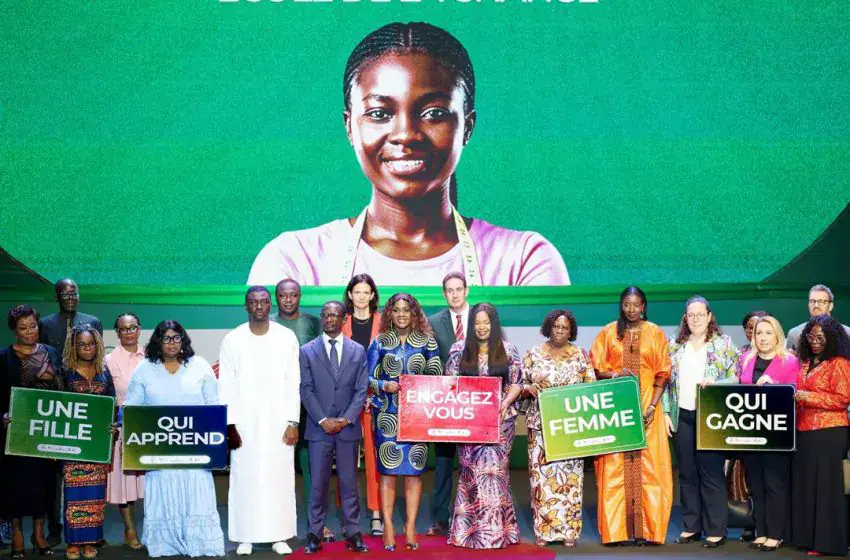
The Togolese government officially launched the national campaign "Une Fille qui Apprend, Une Femme qui Gagne" (FAFG) on November 27, 2026, at the Palais des Congrès in Lomé. The 100-day campaign aims to accelerate girls' education, promote women's entrepreneurship, and strengthen women's economic autonomy. The initiative is supported by the World Bank and several partners. The campaign's four pillars include girls' education, entrepreneurship and financial inclusion, prevention of gender-based violence, and strengthening women's engagement and resilience.
The campaign's launch event was attended by several high-ranking officials, including Minister and Secretary General of the Presidency of the Council, Sandra Ablamba Ahoéfavi Johnson. She emphasized the government's commitment to making women's empowerment a priority, citing the country's progress in education and economic opportunities. Johnson highlighted the government's efforts to provide access to education, finance, and job opportunities, including the allocation of 25% of public markets to young entrepreneurs and women.
Despite progress, challenges persist, particularly in rural areas, where girls face significant barriers to education and economic empowerment. The minister noted that the government is working to address these challenges through initiatives such as the "Ecole de la Chance" (School of Chance) program, which provides vocational training to young girls and women. The program, implemented in partnership with the World Bank and UNFPA, aims to equip girls with skills in areas such as sewing, hairdressing, and beauty care.
The "Ecole de la Chance" program has already reached 1,500 vulnerable young girls in the Grand Lomé district, who are being trained in 220 workshops. The program's goal is to provide girls with the skills and confidence to enter the workforce and become economically independent. The government plans to expand the program to other regions of the country.
The campaign has garnered support from various partners, including the European Union, Ecobank Togo, and Bank of Africa. These partners have pledged to provide financial support, training, and job opportunities to empower women and girls. The World Bank has also announced its intention to support Togo's efforts to empower women and girls over the next decade, with a potential investment of $200 million.
The launch event featured testimonials from beneficiaries, entrepreneurs, and government officials, highlighting the importance of supporting women's empowerment. Participants emphasized the need for sustained support to address the challenges faced by women and girls in Togo. The campaign aims to mobilize stakeholders around a common goal of empowering women and girls to contribute to the country's development.
The government's efforts to empower women and girls have yielded positive results, with Togo ranking second in Africa and first in West Africa in the 2026 "Women, Business and the Law" report by the World Bank. The report highlights the country's progress in improving women's rights and access to economic opportunities. KEY_POINT: The Togolese government has launched a national campaign to empower women and girls, with a focus on education, entrepreneurship, and economic autonomy. KEY_POINT: The campaign is supported by the World Bank and several partners, and aims to address the challenges faced by women and girls in Togo. KEY_POINT: The government has also launched the "Ecole de la Chance" program, which provides vocational training to young girls and women.